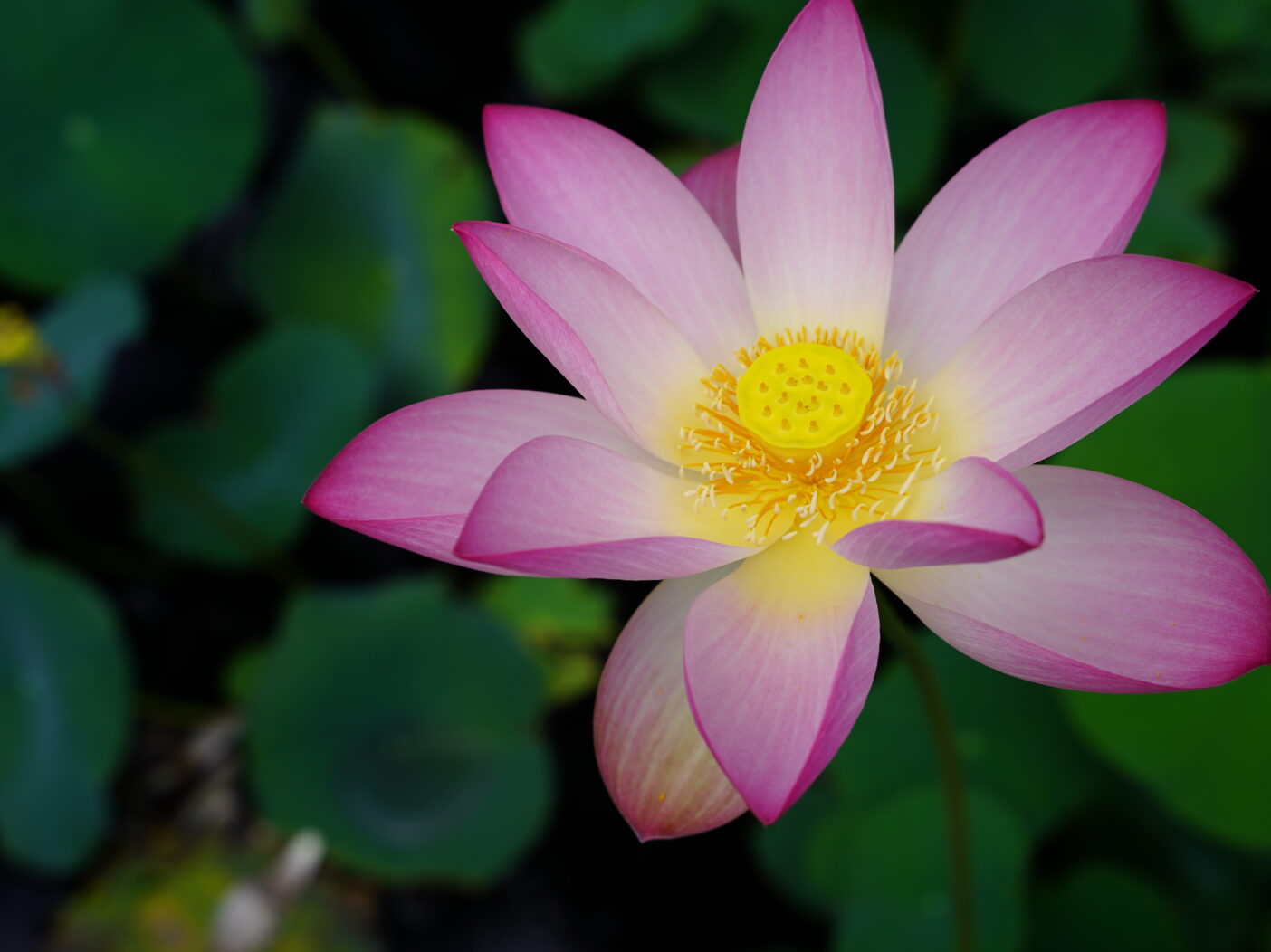
Meet the lotus, an aquatic marvel
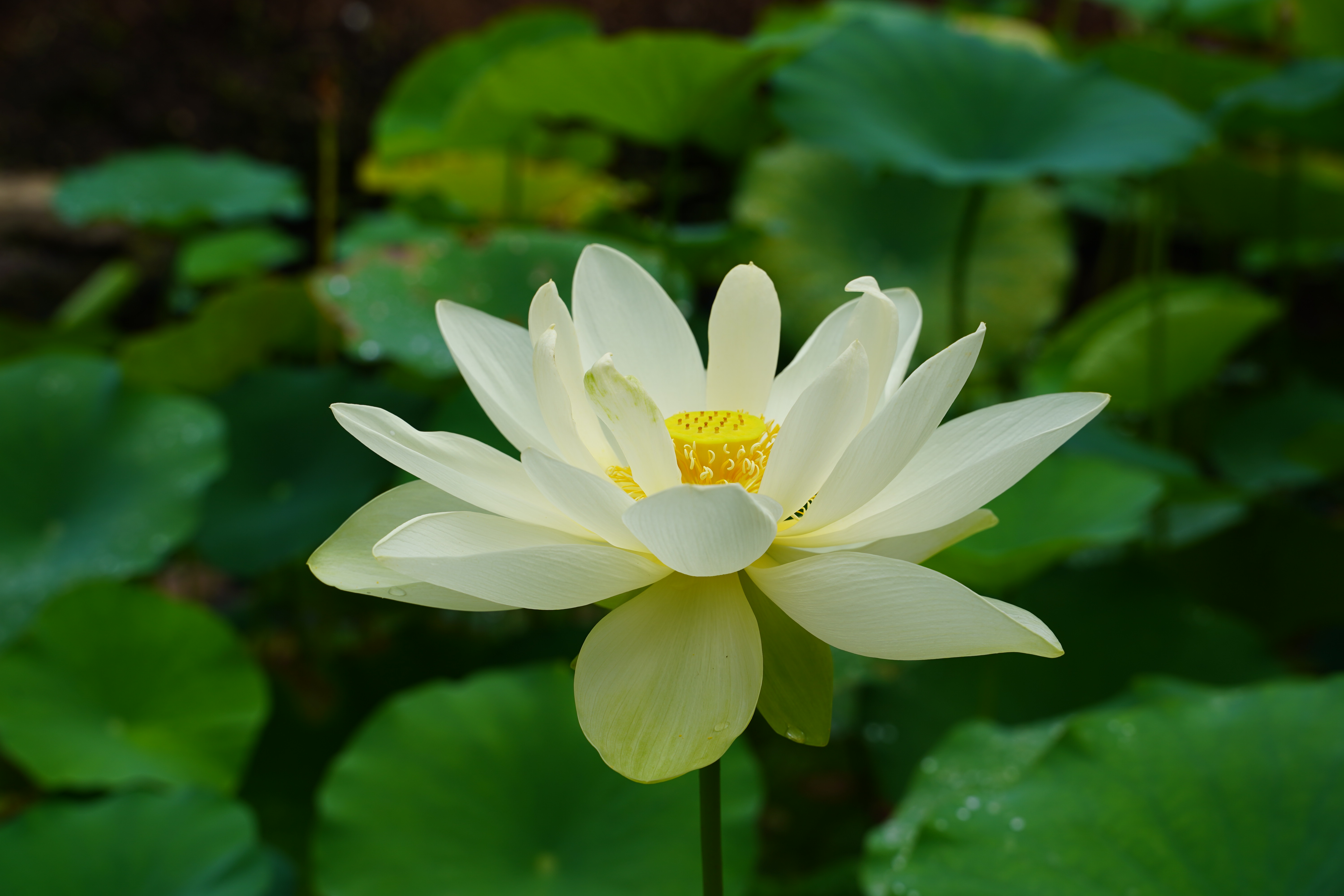
The enchanting blooms and curious leaves of the lotus (Nelumbo nucifera) greet you from the water as you wander through the Lea Asian Garden. These remarkable plants, often mistaken for waterlilies (Nymphaea sp.), emerge and grow tall above the waterline, while waterlilies float on the surface.
The serene, inviting flowers of the lotus are much more than meets the eye. From inspiring scientific advancements to culinary creations, the contributions of this plant go far beyond its aesthetics.
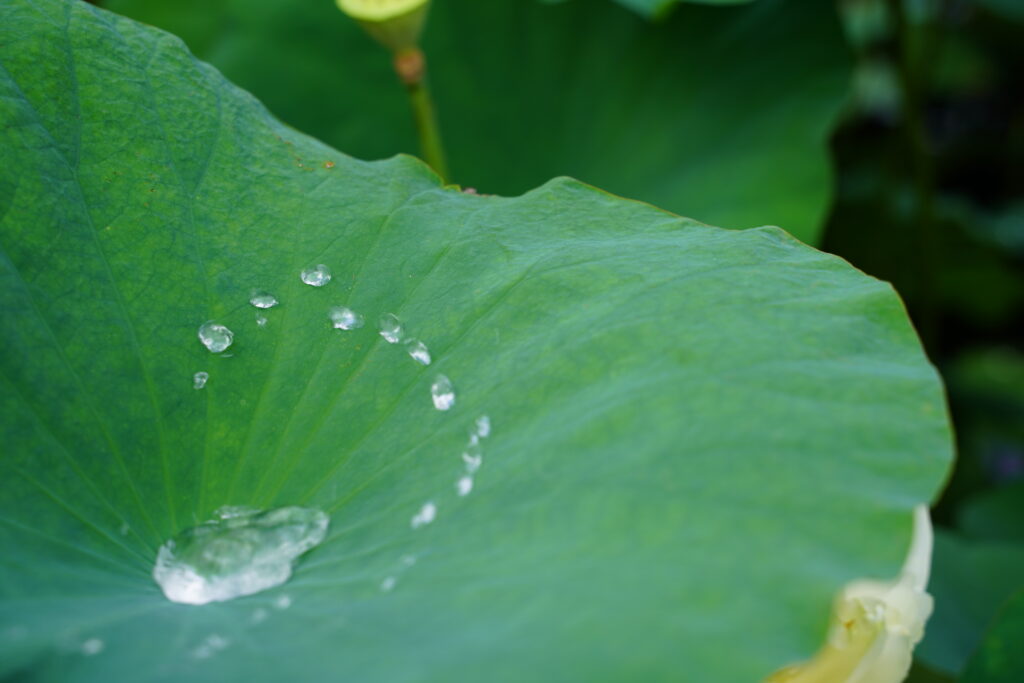
The Lotus Effect
You may have heard of the term “the lotus effect.” Lotuses have large, platter-like leaves that are rough and waxy, giving the surface a water-repellant property. When water hits a lotus leaf, it beads up and rolls off, taking any dirt and debris with it. This discovery has led to scientific innovation aimed at imitating this natural phenomenon in daily life.
Dinner is Served
Lotus is a staple food source in China, India, and Southeast Asia. The entire plant is edible, with two go-tos:
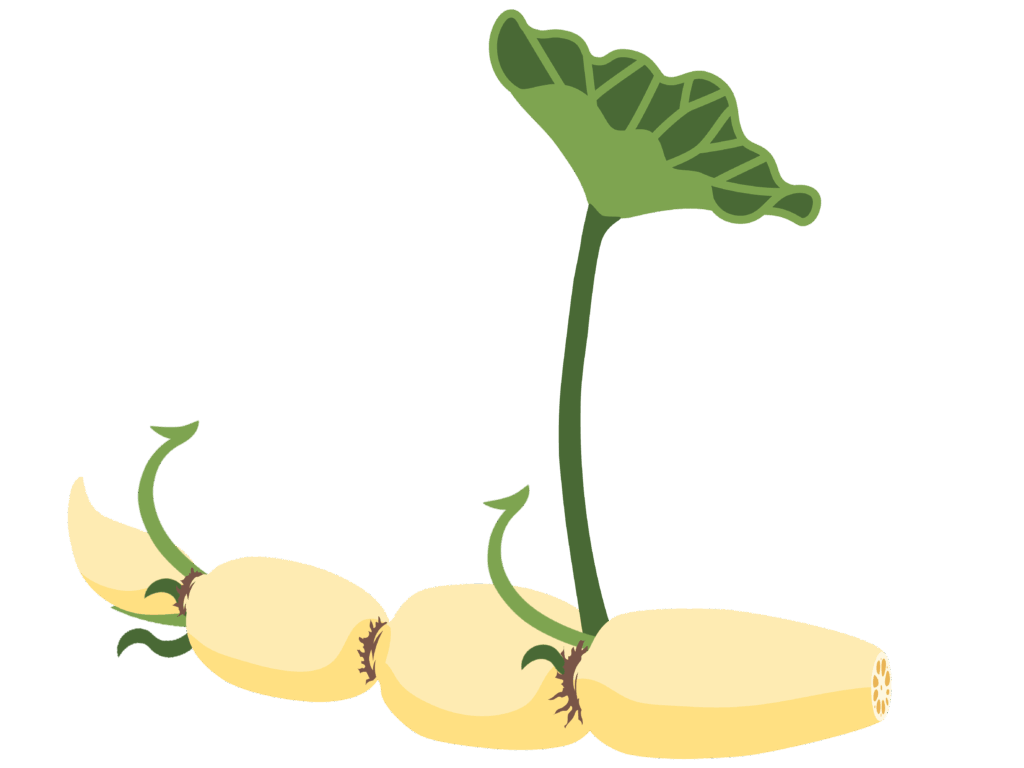
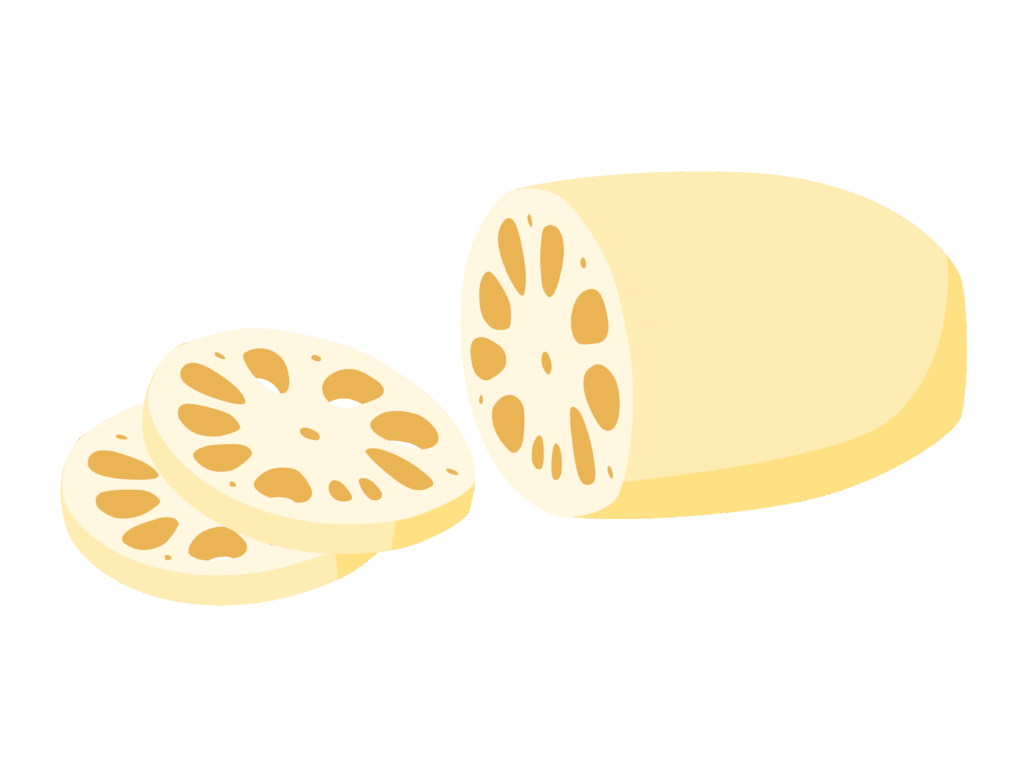
Rhizomes
- Grow beneath the mud in long, linked chains
- Have a crunchy, potato-like texture and mild sweet flavor
- Uses range from stir fries and soups to pickling and baking
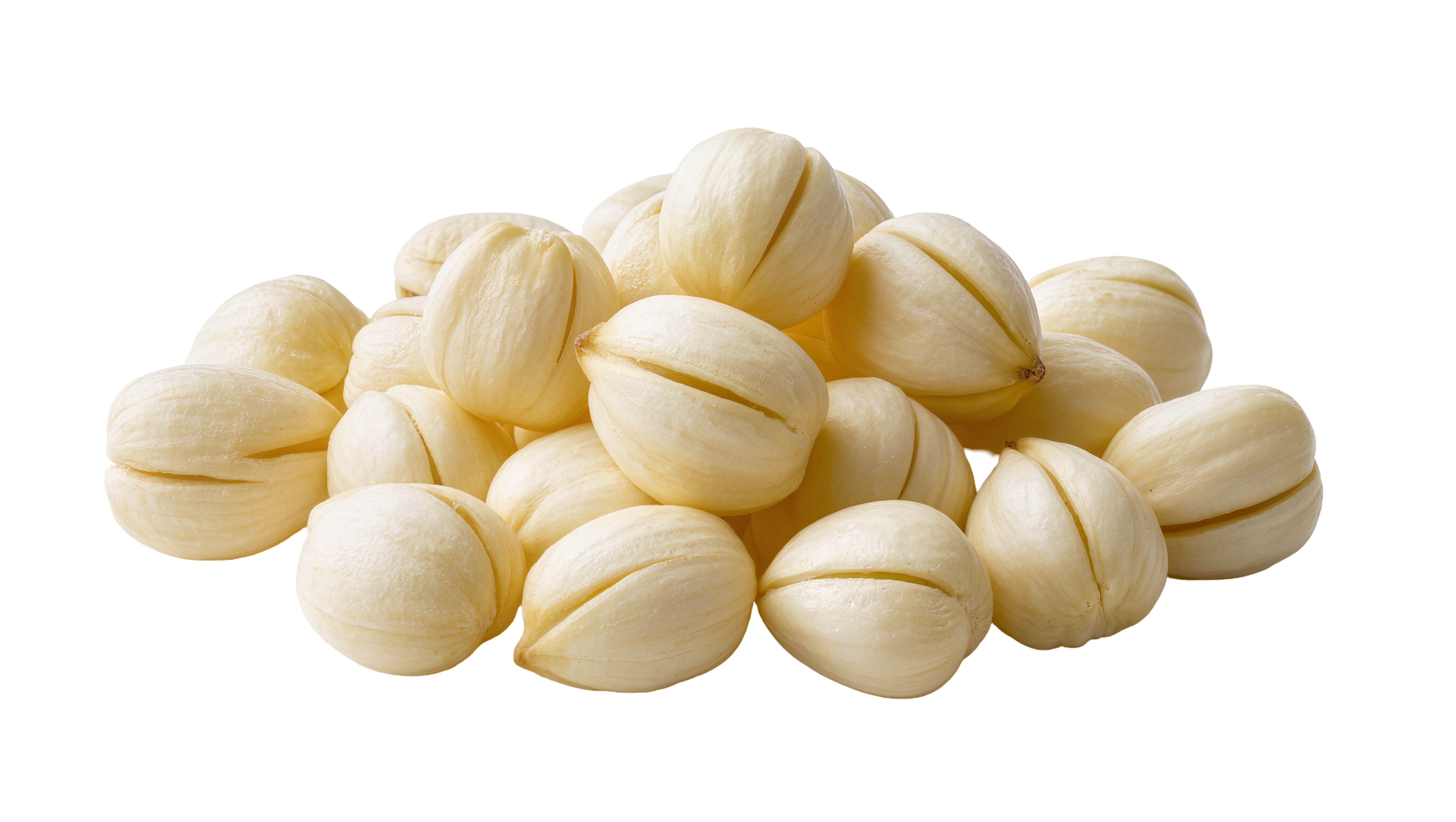
Seeds
- Have a mildly sweet taste
- Are eaten fresh, dried and popped, or ground into a powder for flavoring desserts
Cultural Icon
Lotus, often called sacred lotus, has deep cultural and religious significance in Hinduism and Buddhism, and has been in cultivation for over 3,000 years. It serves as a symbol of life, rebirth, and enlightenment as it grows from muddy waters and blooms into light and beauty.

Photo by John Eder
This article first appeared in the Summer 2026 issue of Cultivate, the Garden’s magazine.