
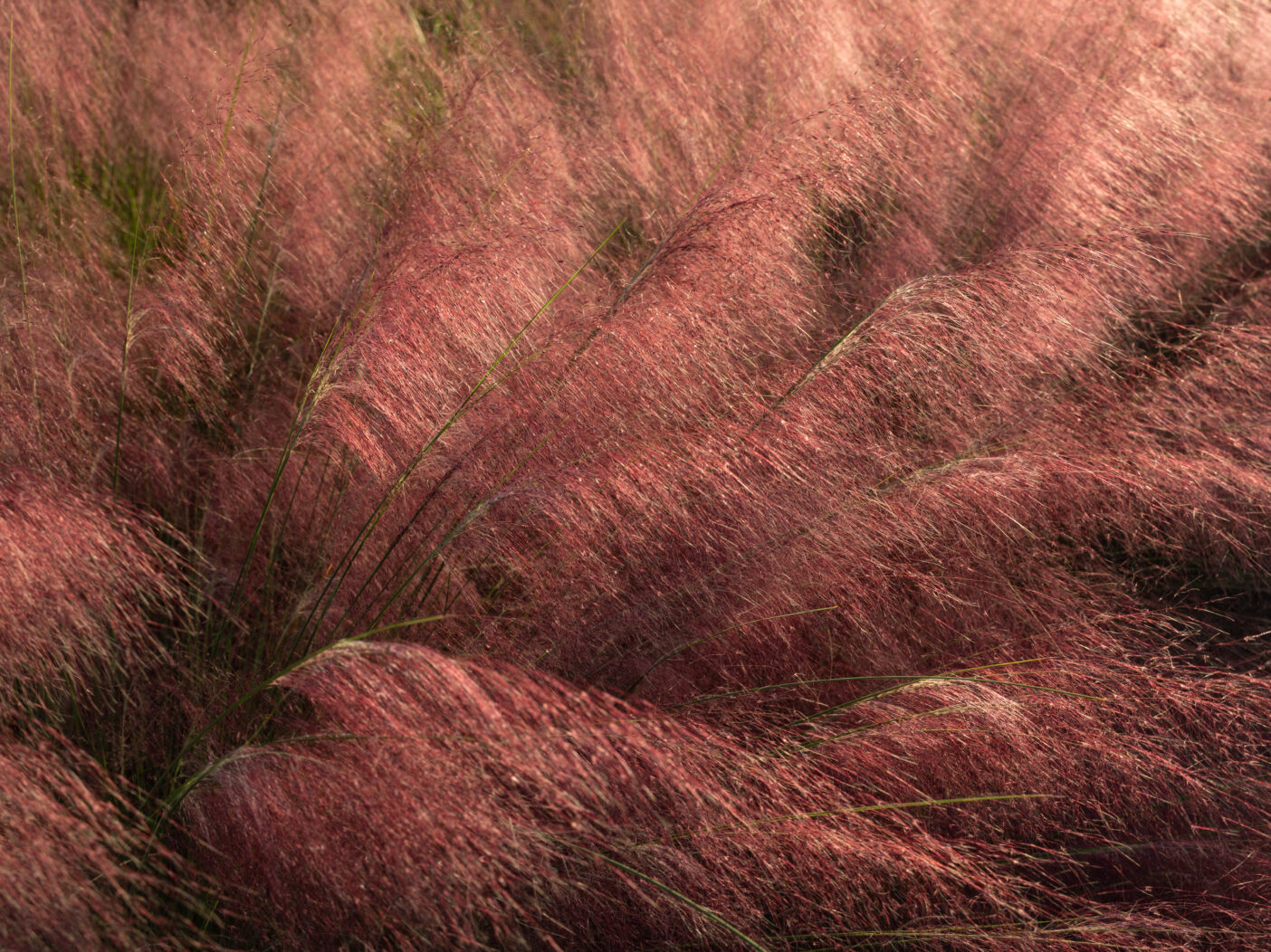
Throughout spring and summer, muhly grass sits back quietly, allowing other native plants to blossom in the spotlight. As fall approaches and rain subsides, the cotton-candy blooms burst onto the scene, decorating landscapes and natural areas. Muhlenbergia capillaris, commonly known as pink muhly grass, is an ornamental grass that grows in large, feathery, clumps. Its annual blooming marks the arrival of fall in Southwest Florida.
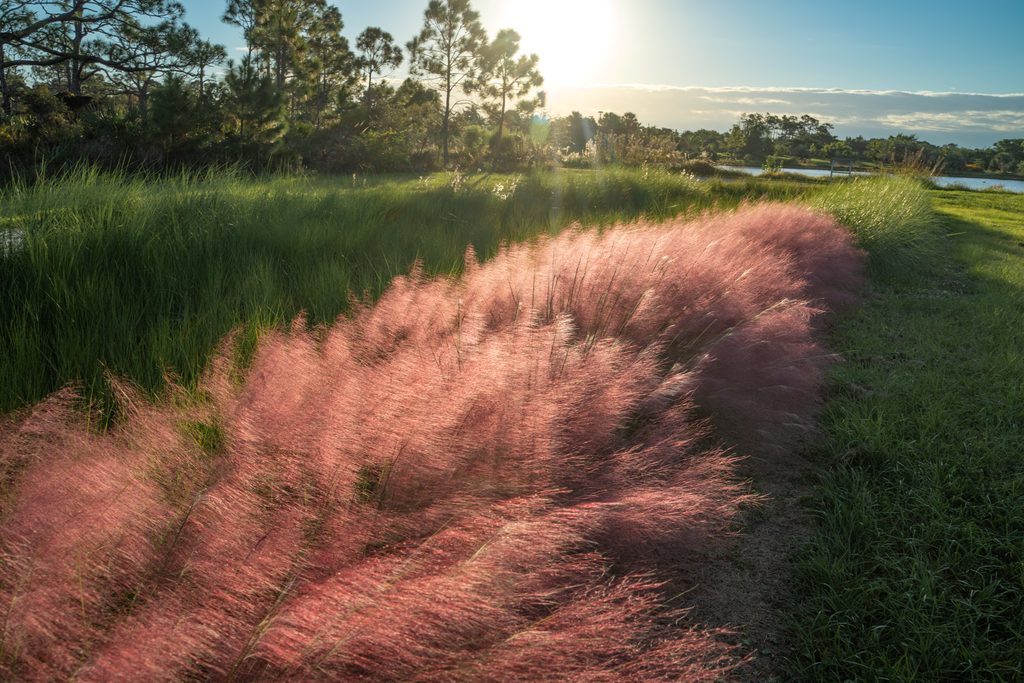
Photos by John Eder
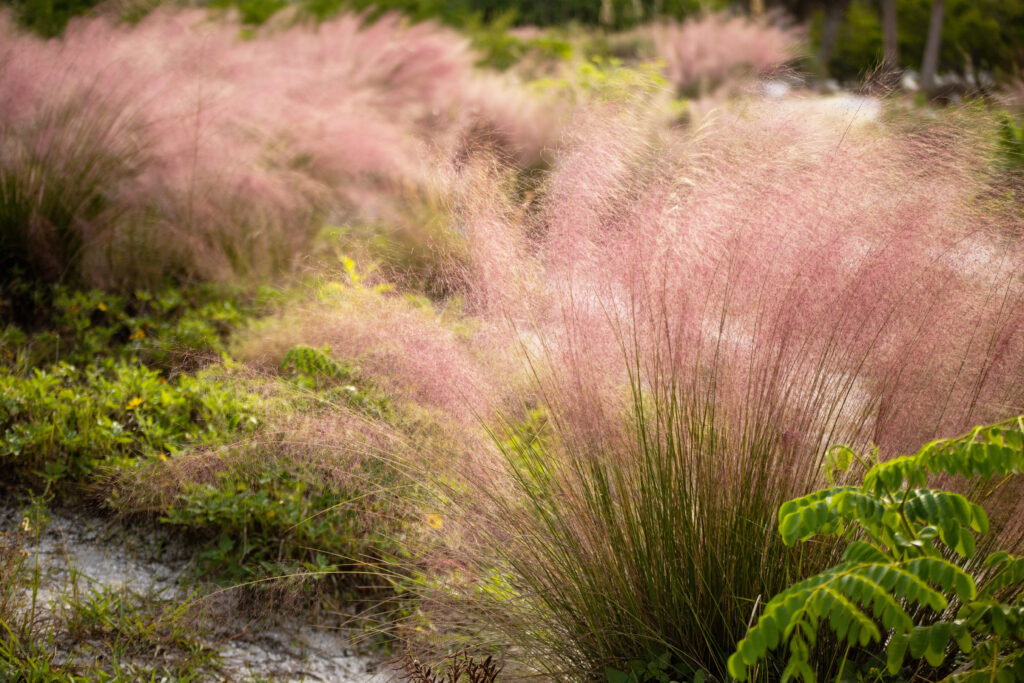
Not only visually attractive, muhly grasses also provide refuge, food, and hunting grounds. Insects, including native butterflies, birds, and small mammals, all benefit. The dense grass protects small prey from predators, allowing them to rest and recharge. The ecosystem services don’t stop there! Muhly grass aids in water filtration, doing its part to keep our waterways clean. When planted along the edges of ponds, in a littoral zone, these plants filter debris, prevent soil erosion, and absorb excess nutrients that could harm water quality. Plants are often more than meets the eye.
See muhly grass bloom this fall along the shorelines of Deep Lake and Lake Tupke in the Preserve.
Other Blooms for Fall
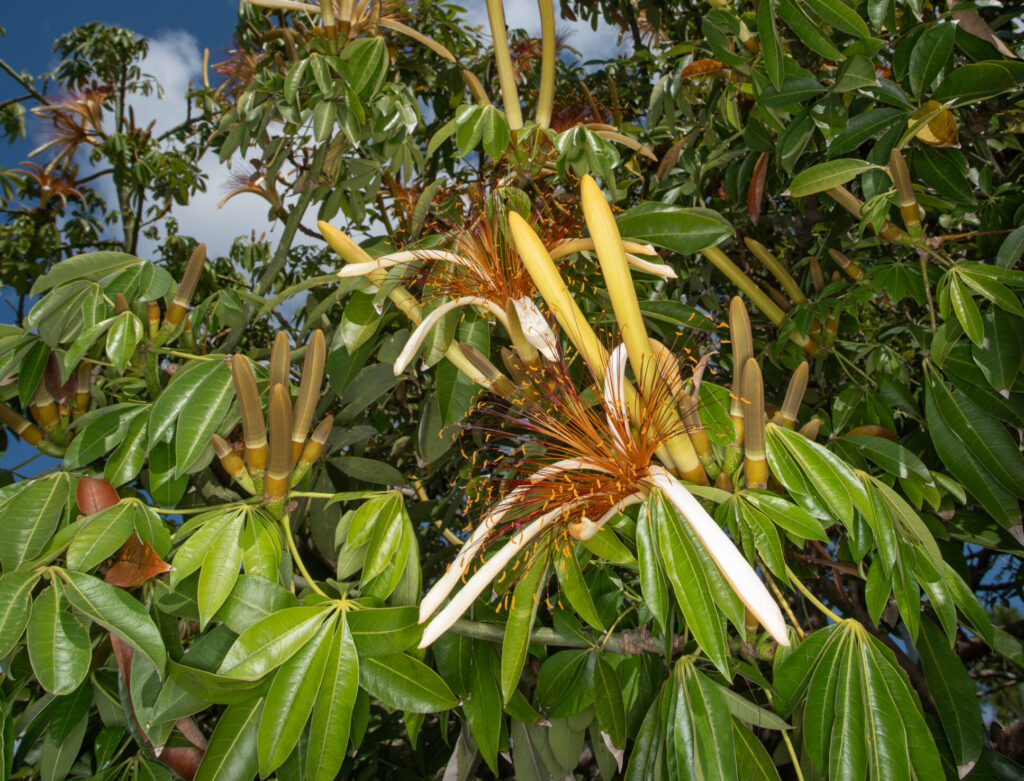
Water chestnut or money tree (Pachira aquatica)
Kapnick Brazilian Garden
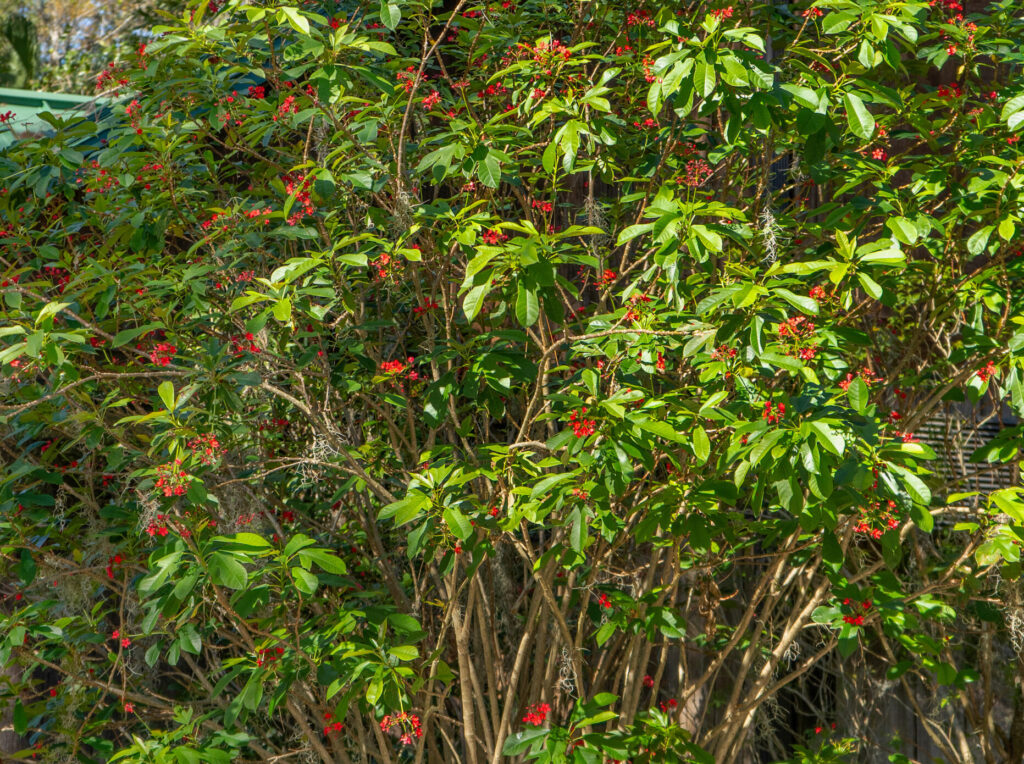
Peregrina (Jatropha integerrima)
Kapnick Caribbean Garden, year-round
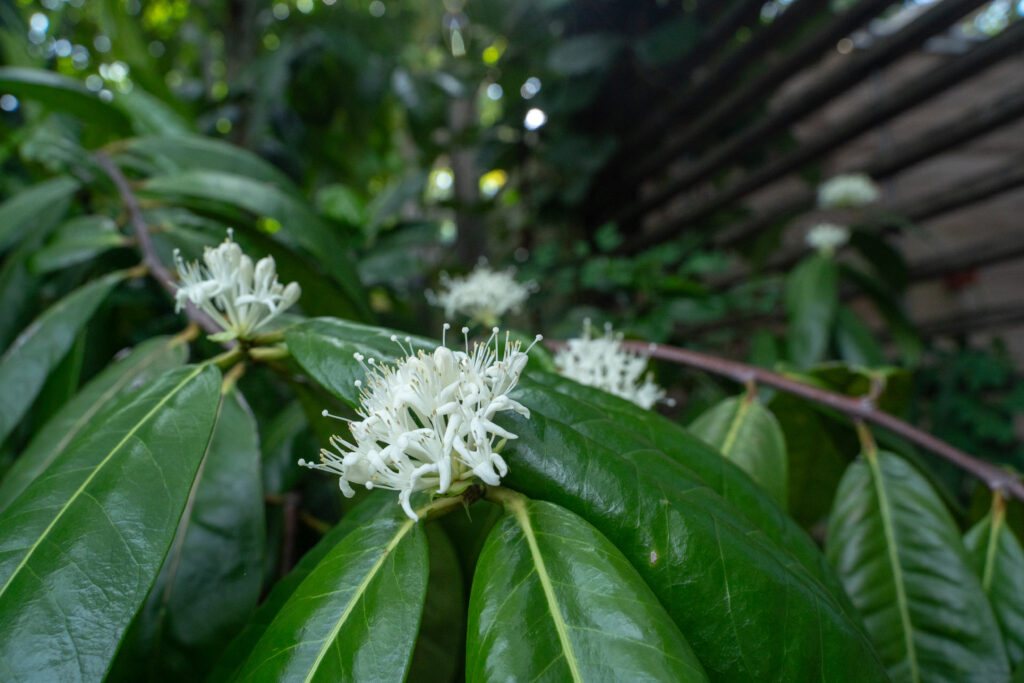
Dwarf phaleria (Phaleria octandra)
Chabraja Visitor Center
The article first appeared in the Fall 2025 issue of Cultivate, the Garden’s magazine.