Conservationists comb the wilds of Rookery Bay gathering native seeds threatened by rising seas and rampant storms.
Pine tree skeletons loom over Rookery Bay National Estuarine Research Reserve. Once hard as nails and tufted with green needles, today they are bare branched and deteriorating from within.
At their base, the understory is sparse, thinned by the same saltwater that had killed the pines. Several common flatwoods species, such as gallberry (Ilex glabra) and staggerbush (Lyonia fruticosa), have vanished. Others, including saw palmetto (Serenoa repens) and live oaks (Quercus virginiana) persist. But among the survivors, an odd mix of things—golden leather fern (Acrostichum aureum) and white mangrove (Laguncularia racemosa)—have sprouted. These are coastal species that rode inland on floodwater and took root in storm-altered ecosystems.
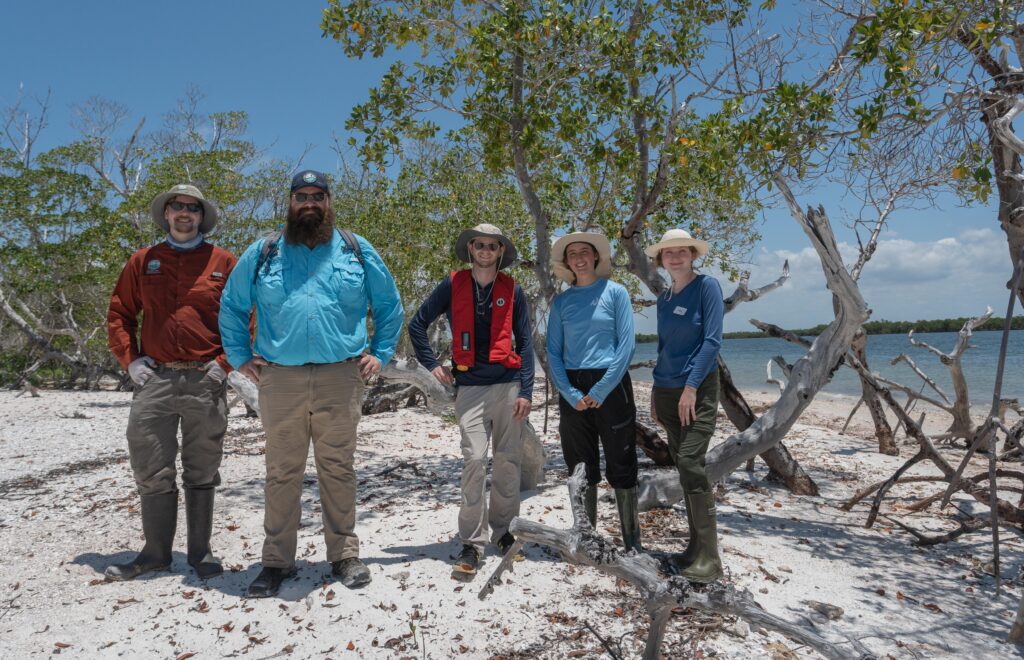
A team from Naples Botanical Garden and the Reserve stands amid the wounded landscape.
Photos by John Eder
“It’s shocking,” says Grace McCoy, the Garden’s former Conservation Horticulture Manager, who oversaw the processing of the seeds and cuttings during these summer 2025 trips.
Floods from Hurricanes Ian, Helene, and Milton in 2022 and 2024 inundated this flatwoods habitat of Rookery Bay. Elsewhere within the Reserve, rising seas threaten to shrink or swallow islands—one, Round Key, is already submerged. Other risks include the not-yet-understood ramifications of shifting habitats. Mangroves are taking over marshes, and marsh species are creeping into uplands.
The conservationists can’t suppress these climatic changes, so they’re focusing on what they can do: save plants.
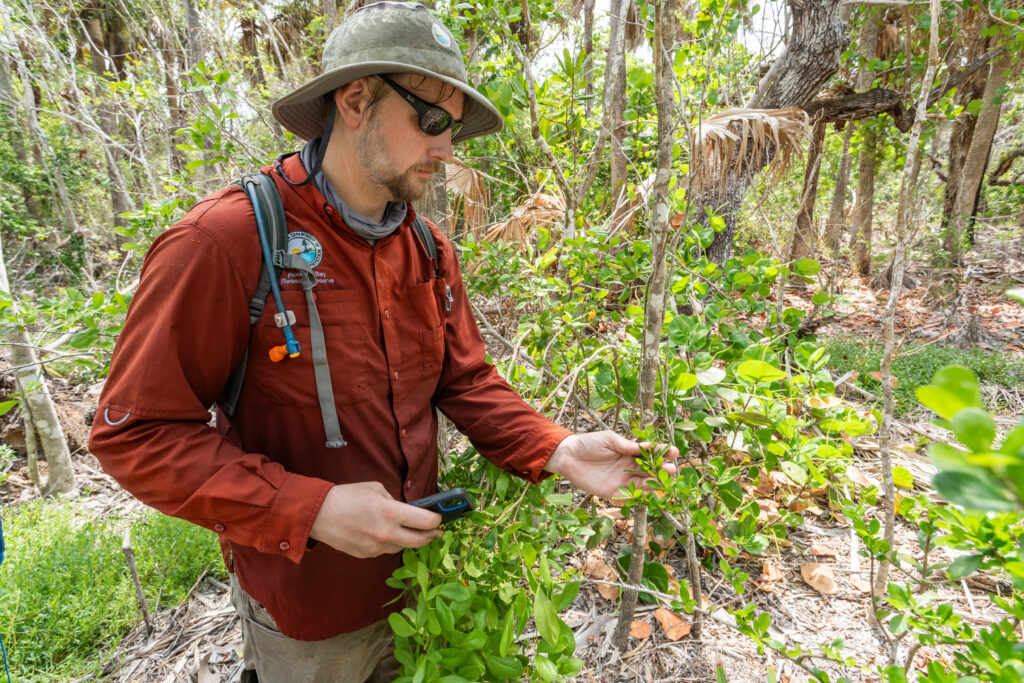
Every few weeks, Garden and Reserve specialists venture into Rookery Bay, gathering seeds and cuttings of native species from the most imperiled portions of the 110,000-acre Reserve. The genetics will be stored at the Garden to ensure they are not lost as their habitats morph—or disappear. The collection can be tapped for future restoration projects, reintroduced to areas where they’ve declined or used for other climate adaptation strategies.
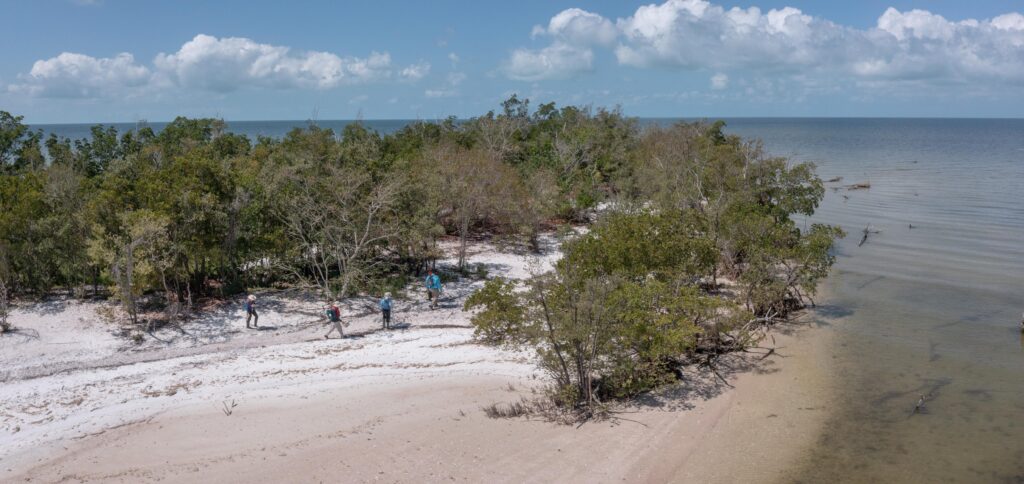
The Garden and Reserve have worked together on similar collecting projects, most recently, a beach dune restoration effort. But a new urgency underpins this venture.
The United States’ East and Gulf Coasts are experiencing some of the world’s fastest and most pronounced changes in sea level, putting Florida at the epicenter of flooding, erosion, habitat loss, and the associated decline of plants.
Gulf waters near Naples rose 7.1 inches between 1970 and 2022, with most of that change happening since 2000, according to earth.gov, a federal website. If the current trajectory holds, local Gulf waters could rise another foot between 2020 and 2050.
Scientists expect that about a quarter of the native species examined in a 2017 Florida Climate Institute report will lose at least half their habitat due to sea-level rise. The figure is likely higher today. The projected loss has significant implications for Rookery Bay, home to more than 760 plant species and the hundreds of bird and wildlife species that depend on them.
“We likely won’t get another chance to collect these plants,” says Chad Washburn, the Garden’s Vice President of Science & Conservation. “We are seeing them disappear, or seeing their habitats change faster than we can keep up with them.”
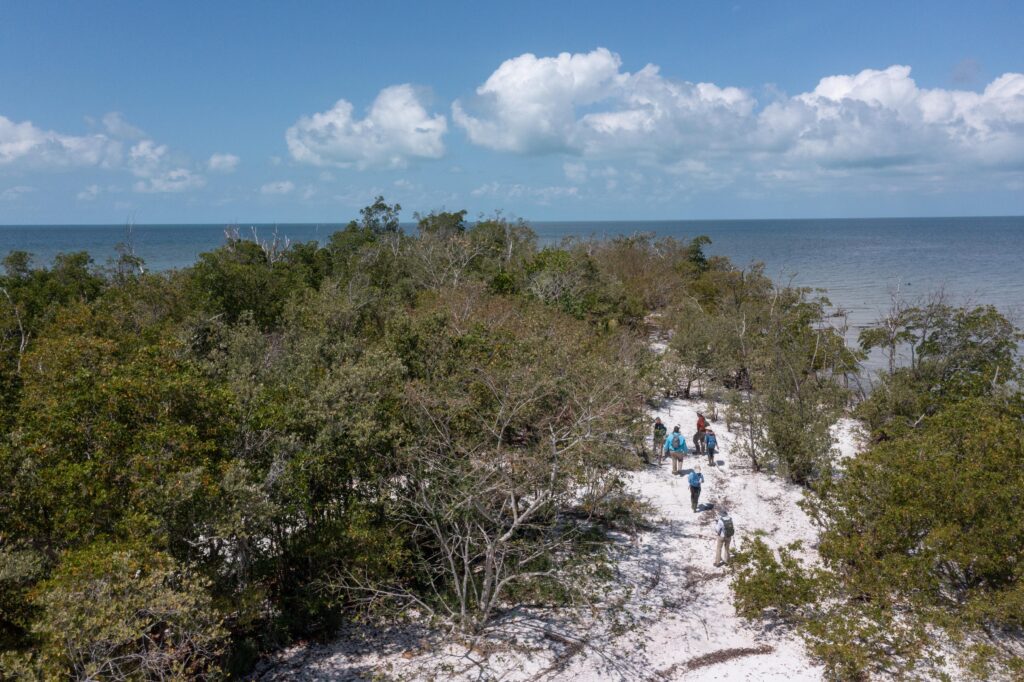
On a sultry morning, the team anchors at Cannon Island, north of Marco Island, and clambers over mangrove roots to reach dry ground.
At about 180 acres, Cannon Island is the Reserve’s largest maritime hammock. Hardwoods like gumbo limbo (Bursera simaruba), live oak, and false mastic (Sideroxylon foetidissimum) loom over the landscape.
Although the mainland dock is a mere 20 minutes away, the excursion feels like an exploration. The underbrush is so thick in places that Jared Franklin, the Reserve’s Stewardship Coordinator and leader of these expeditions, unsheathes his machete. The group treks through various habitats, each with its own mystique and set of plants inviting examination.
To the Garden team, first-time visitors, the landscape looks vibrant. Franklin knows better. He points out scraggly twigs, once lush beautyberry (Callicarpa americana), and the absence of wild coffee (Psychotria nervosa). Hurricanes Helene and Milton thwarted the shrubs’ post-Ian comeback.
The team is armed with a list of more than 250 target species. Most have little to no presence in botanical collections, meaning if they’re lost in the wild, they may be gone for good.
A few dozen targets have more immediate applications: They could be multiplied and used to revegetate beaches, buttress eroded landscapes, or adapt communities to changing conditions. Washburn, for example, is interested in floodable parks, designed to take on water during storms or floods.
“But to do that,” he says, “we need the building blocks.” Those are water-absorbing native plants.
On Cannon Island, the team continues its search.
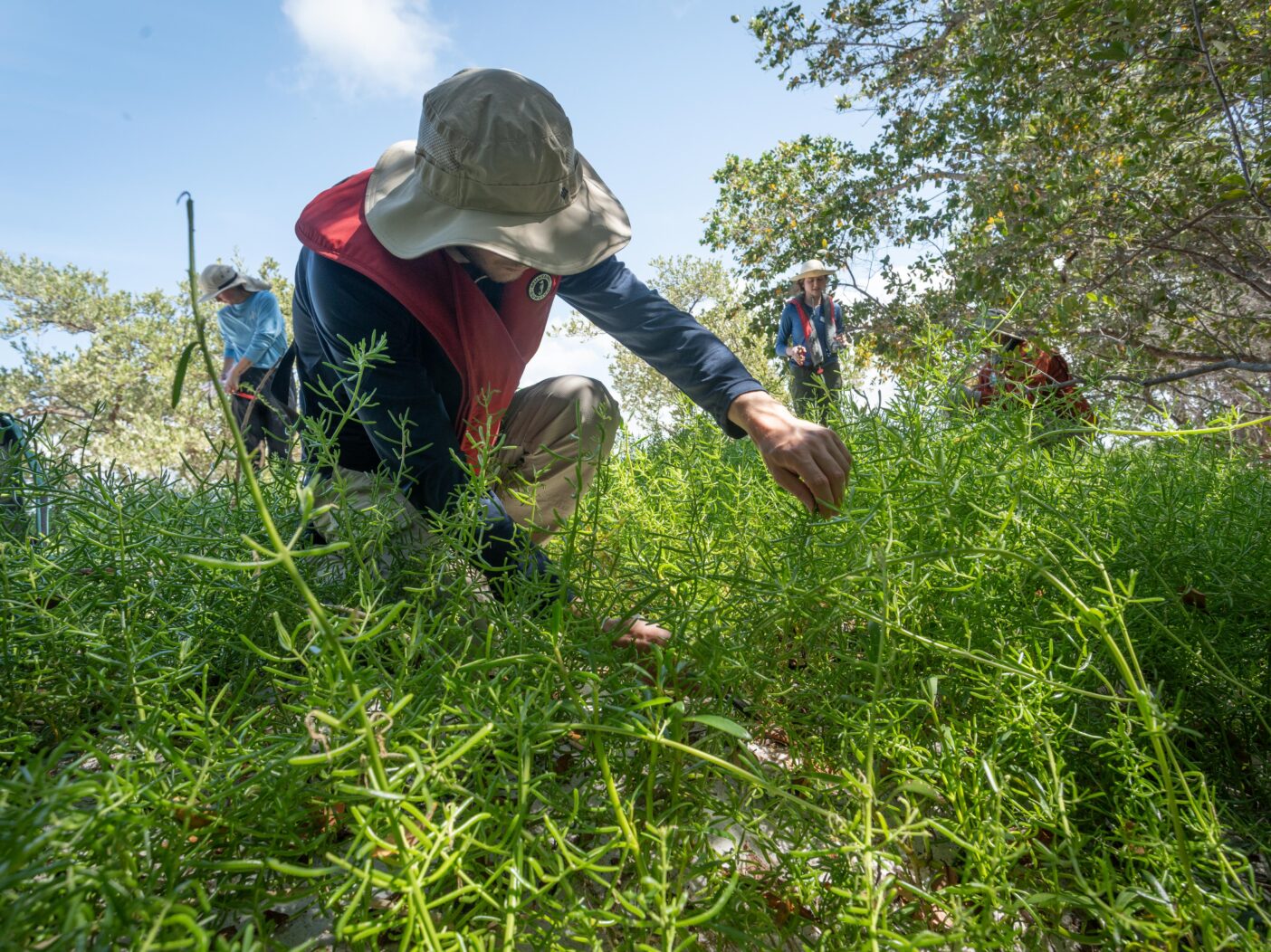
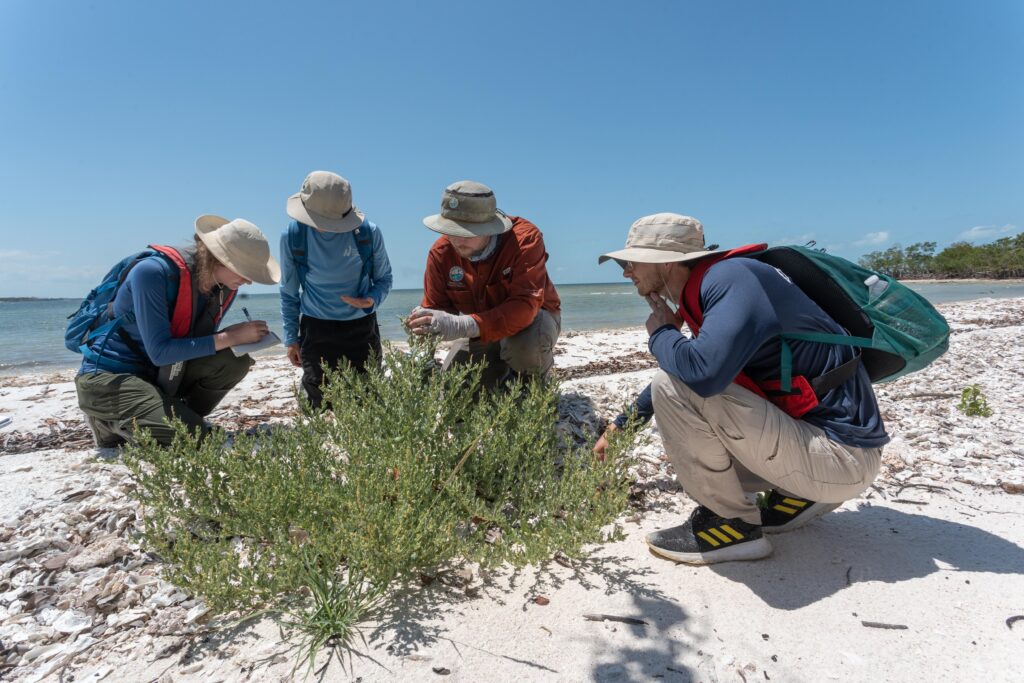
Garden Conservation Associate Jonathan Farquhar finds a tuft of lacey green stalks. It’s sea blite (Suaeda linearis), useful for stabilizing coastal areas. The team crouches to examine them and take cuttings.
They push deeper into the interior where they encounter the state-threatened Florida Keys blackbead (Pithecellobium keyense) tree. It is not in fruit, so they take a few cuttings, hoping they’ll sprout roots.
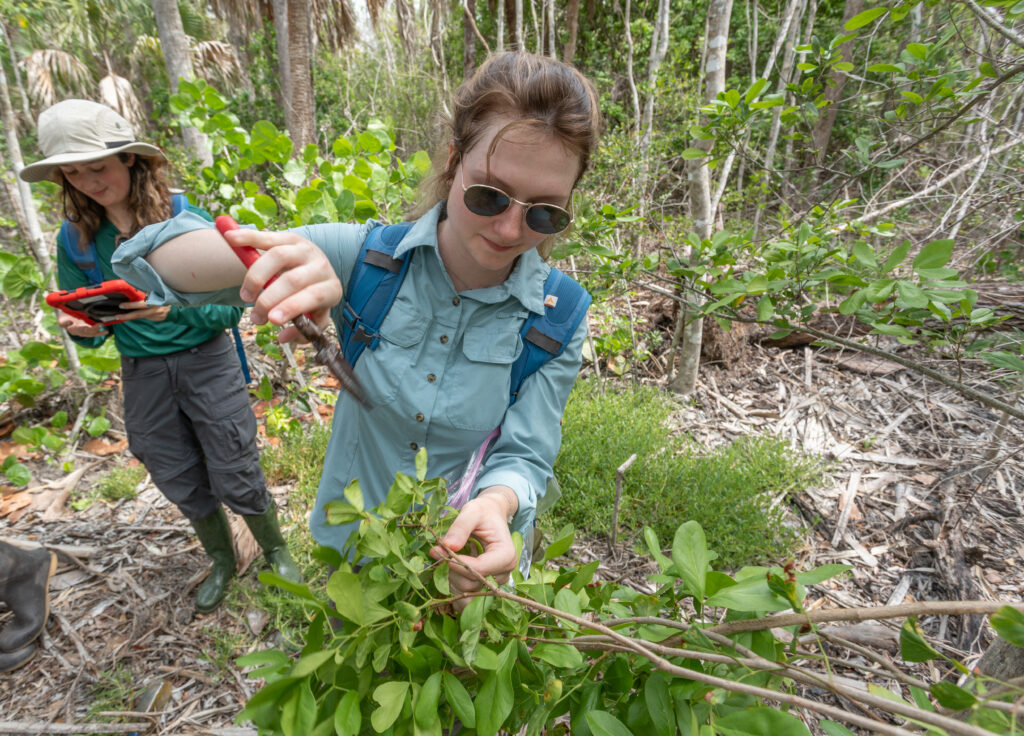
This kind of trial and error is common; there’s little existing research on Southwest Florida native plants to guide them. In their first three trips, the team collected seeds and cuttings from 12 species. Some sprouted. Others withered. Each outcome helps them understand the plants a little better. The Garden conservationists intend to make what they learn publicly available—a how-to manual for growing Southwest Florida natives.
“There just aren’t a lot researchers doing this kind of work,” McCoy says.
Few understand botanical gardens’ conservation imperative. These institutions are best known as community gathering spots and horticultural showcases. But quietly, botanical gardens lead the monumental task of saving the world’s plants. Some 40% of plant species worldwide are at risk of extinction.
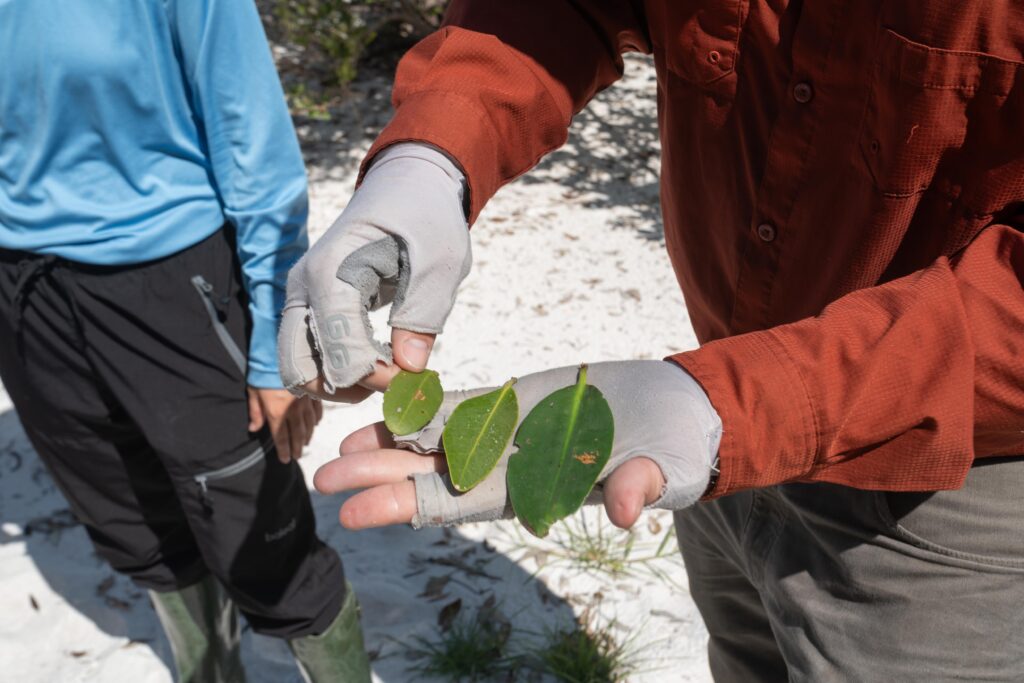
Gardens and related institutions, such as universities, hold at least 105,634 plant species, representing a third of all known land-based plant types. A 2025 study published in the journal Nature Ecology and Evolution suggested that’s not nearly enough. The researchers analyzed a century’s worth of records from 50 of the world’s biggest botanic gardens and arboreta. They warned that these institutions are not keeping pace with biodiversity loss. In 40 years, for example, the proportion of threatened species in living collections grew by just 1%.
“This study points to a collective failure of leadership,” Paul Smith, the Secretary General of Botanic Gardens Conservation International, wrote. He hopes the findings rally his industry and catalyze “long overdue” changes to conservation practices and priorities.
The study didn’t surprise Washburn. In a way, he’s heartened by the attention it drew to botanical gardens and their outsized importance in climate adaptation and resilience.
“So many of the challenges that we face—whether they’re economic or whether they are environmental or whether they impact people—can be addressed by using plants and botanical gardens,” he says.
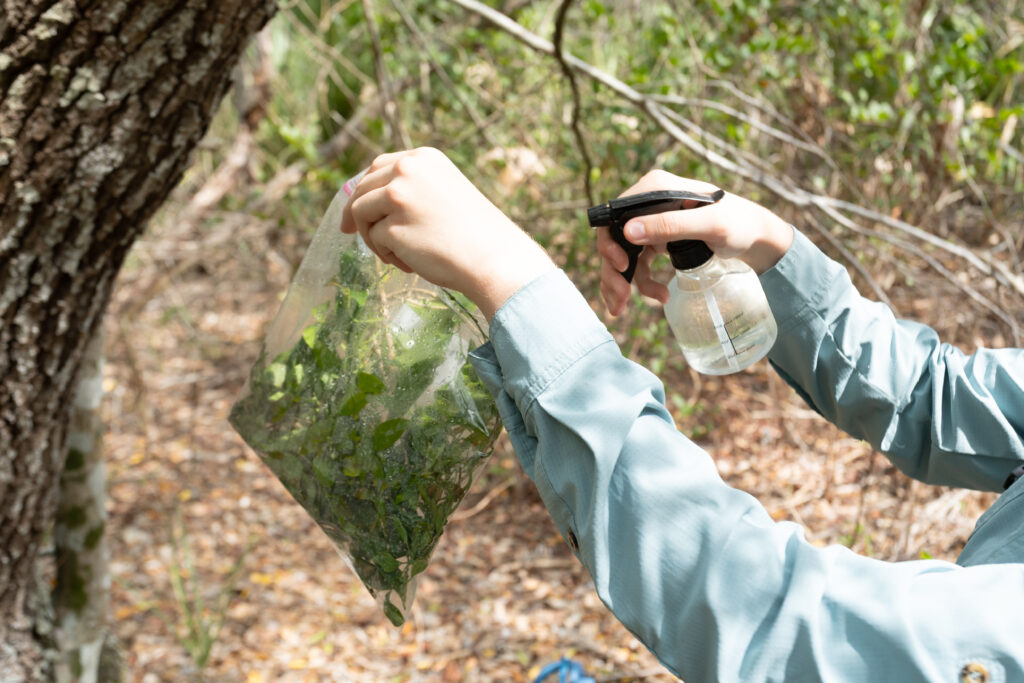
Amid the storm damage and climate change concerns are moments of hope.
During a late-spring trip to Camp Lulu, near the Reserve’s boundary with Everglades National Park, a population of seven-year apple (Casasia clusiifolia)—the only known in the Reserve—is intact and in fruit despite the jarringly eroded coast.
The morning they’d surveilled the devastated pine flatwoods, the team also saw this: tiny pinkish-purple flowers sprouting alongside a nearby trail. They gathered its ripe seeds.
This plant, pineland twinflower (Dyschoriste angusta), is among the first species Garden conservationists collected at Rookery Bay several years ago. The conservation group NatureServe ranks it as “Imperiled”; the Center for Plant Conservation included it in its Florida Plant Rescue, focused on conserving the state’s 200 most at-risk native plants.
Farquhar considers the contrast between the flowers’ rebound—they’d not been spotted since Hurricane Ian—and the loss of the pine trees and other upland species.
“It could be a good research opportunity,” he says, thinking about what these altered ecosystems could reveal about plant and landscape adaptation.
Katie Luttrell, a Florida Gulf Coast University environmental studies major and summer 2025 Garden intern, also reflects on the changed landscapes and the urgency for action.
“This mission is rooted in hope,” she says. “That’s what gives me hope.”
This article first appeared in the 2025 issue of Conserve, the Garden’s conservation magazine.