On a misty January morning, a trio of conservationists forged a path through the sandy uplands of Railhead Scrub Preserve in North Naples.
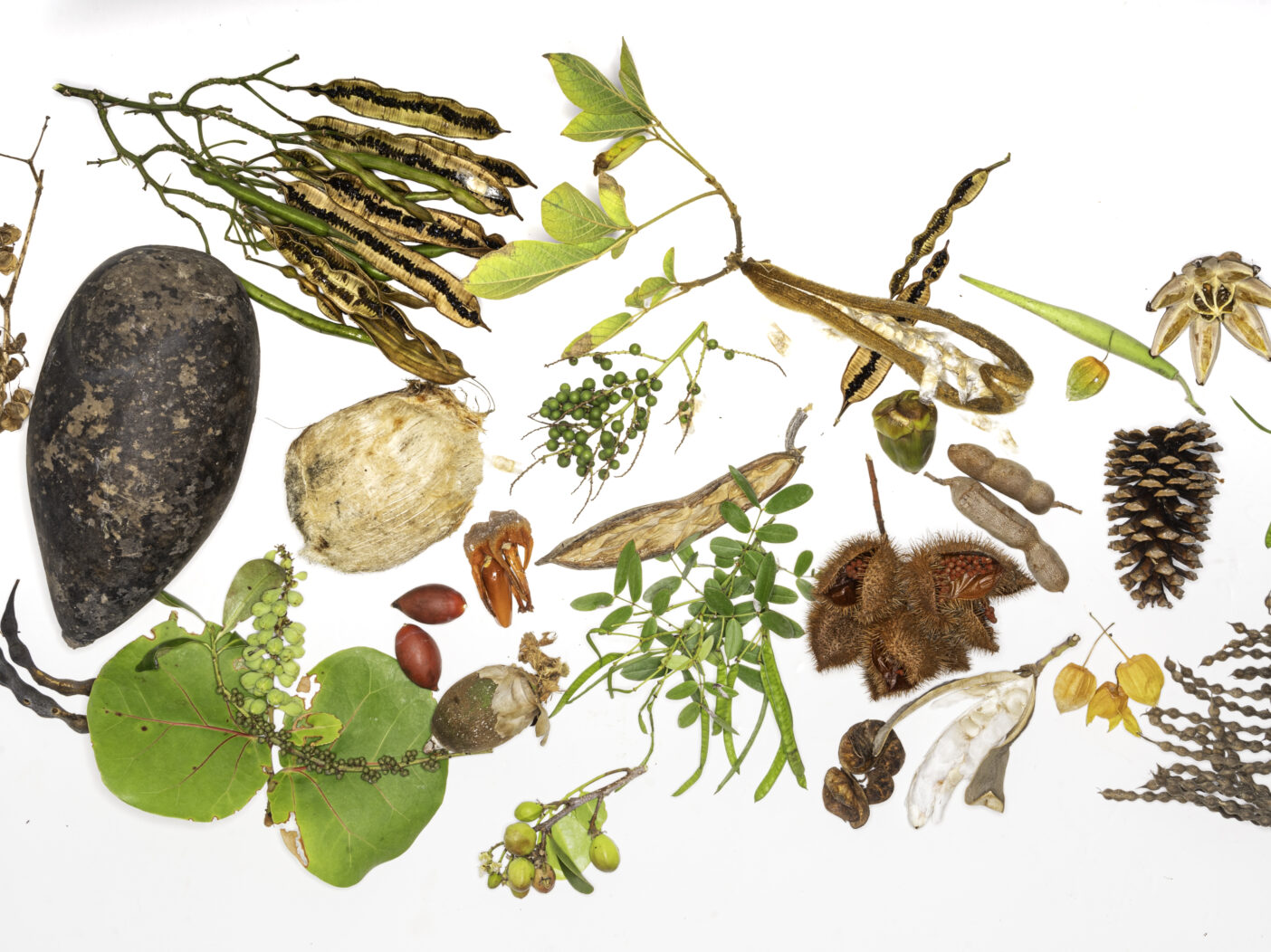
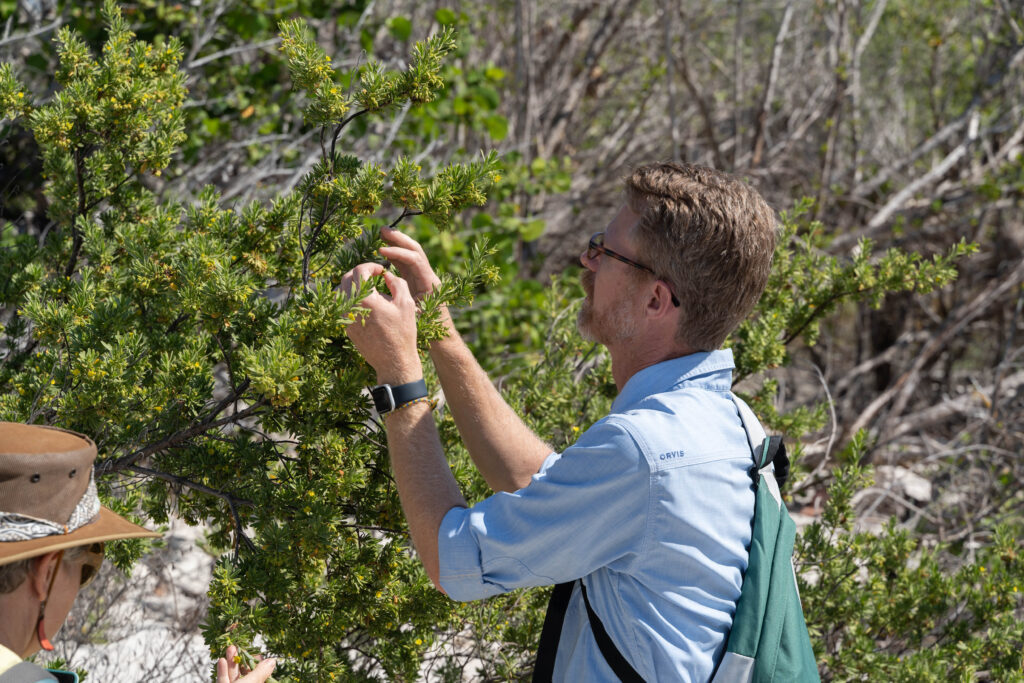
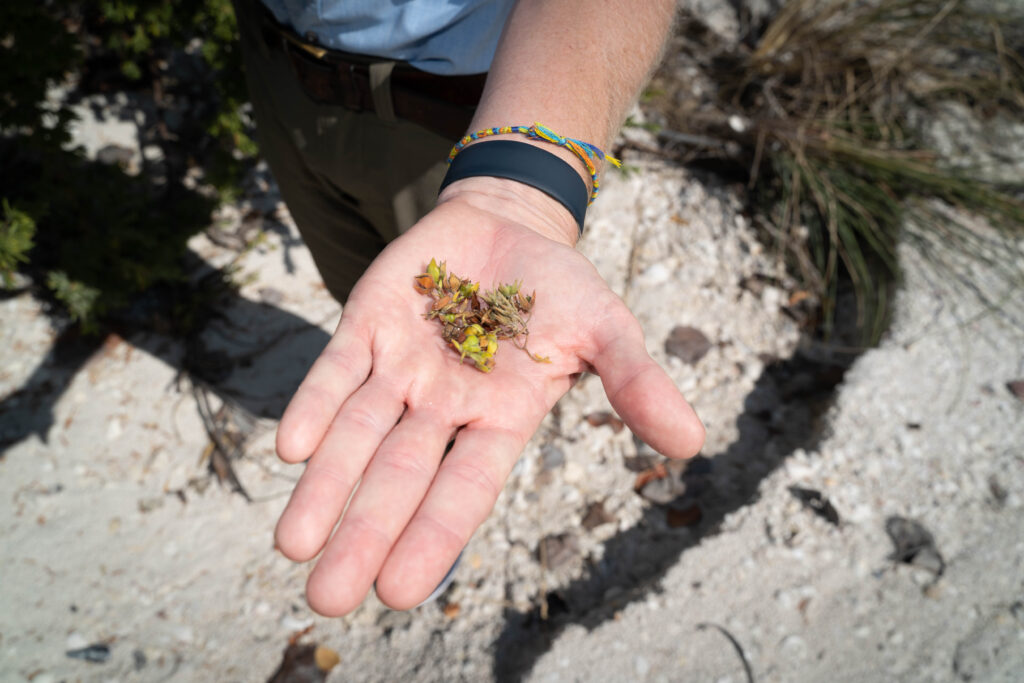
Their eyes scanned the landscape, on a scavenger hunt of sorts. The prize? Native seeds, ripe and ready for harvesting. Over the next few hours, the specialists—Garden Conservation Associate Jonathan Farquhar, Garden Natural Resources Associate Bella Danaher, and Victoria Carter, an Environmental Specialist for Conservation Collier, which owns the preserve, would amass some 4,000 seeds, representing seven native species, new to the Garden’s conservation collections.
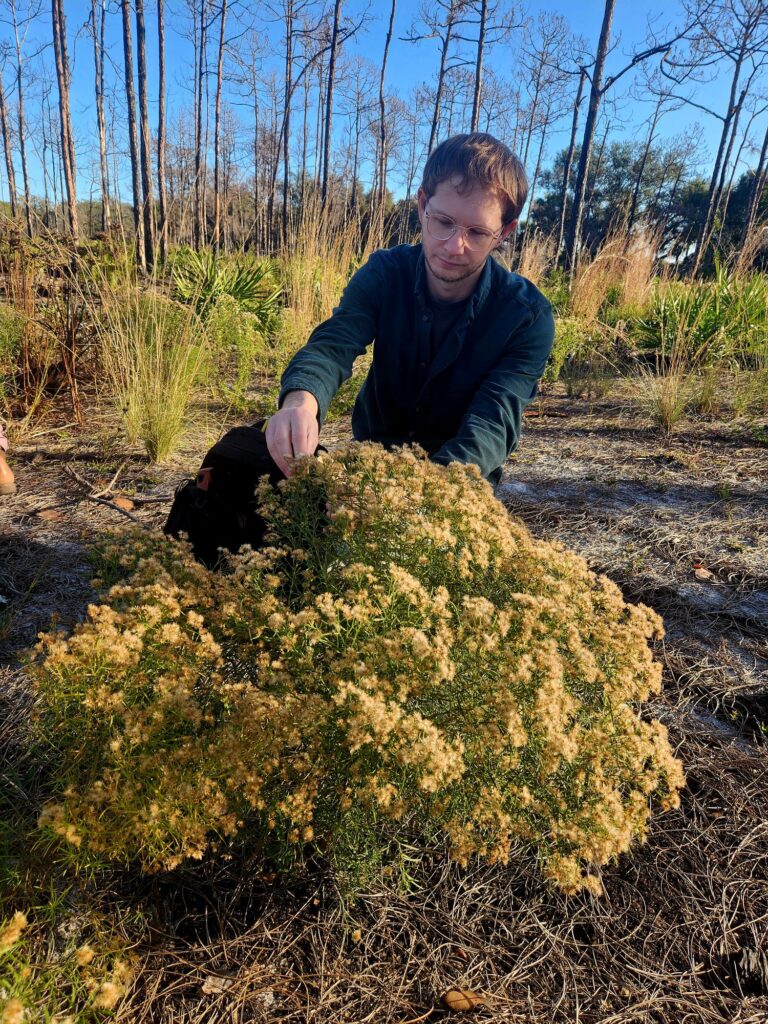
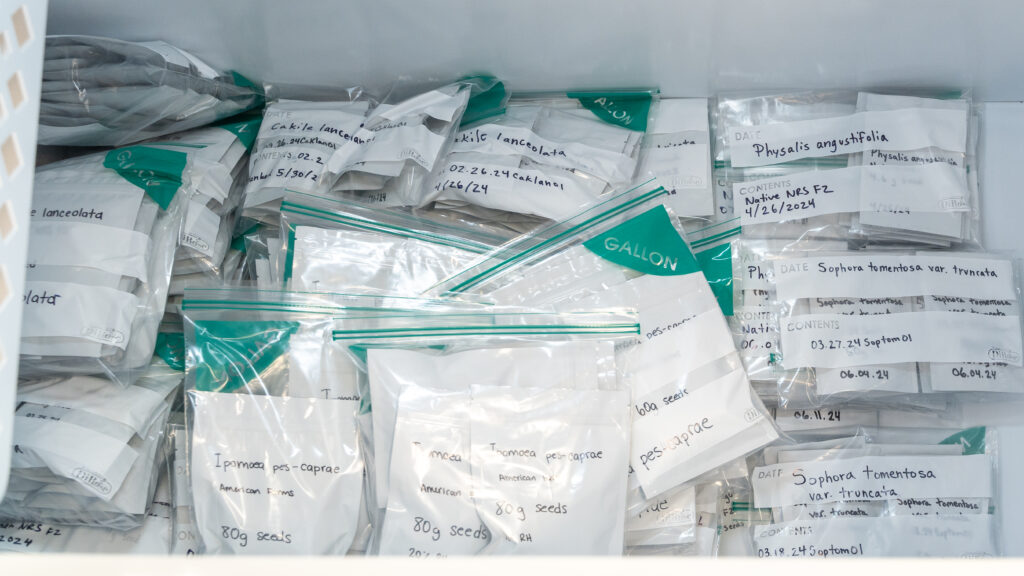
This scrub habitat, once common in Florida, is now exceedingly rare, threatening the species that depend on it. The seeds gathered that morning are now warehoused in the Garden’s seed bank along with hundreds of thousands of others, for long-term safekeeping or for restoration projects.
But this conservation success has a thorny underside. A new perspective piece, written by plant conservation experts from 50 institutions worldwide, including Naples Botanical Garden, spotlights a serious obstacle to efforts like this: fragmented technology.
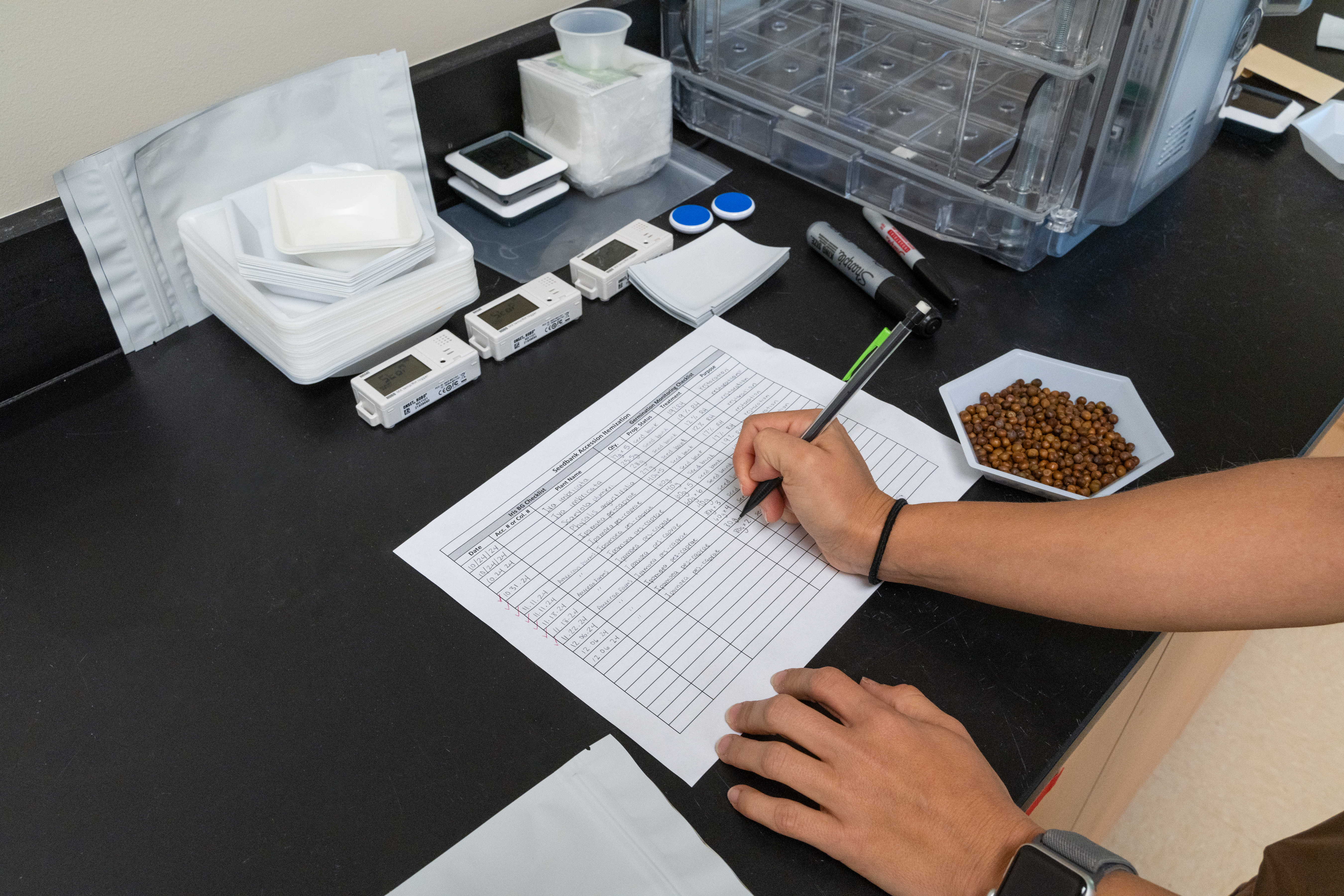
The paper, published in the January 9 issue of Nature Plants, warns that individual garden databases don’t connect with each other, that under-resourced gardens lack the technology or staffing to maintain electronic plant records, that record-keeping practices vary from institution to institution, and that a history of competition and exploitation hinders transparency and openness.
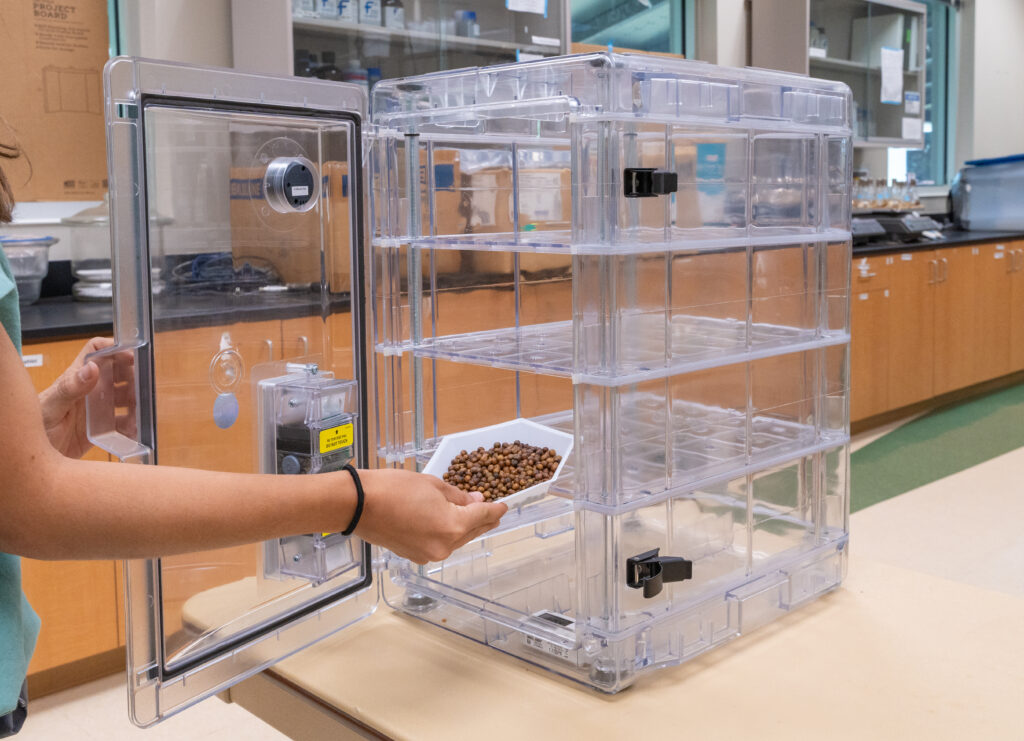
Those shortcomings mean that conservationists in Naples—like their peers around the world—work largely in isolation. The information about the seeds they found that January morning will be uploaded into the Garden’s database but not automatically linked to any global information repository.
“The trouble,” said Samuel Brockington, the paper’s lead author and a professor and curator at the England’s Cambridge University Botanic Gardens, “is what Naples is using as a database system is probably different to what Cambridge is using, and what Cambridge is using is different to what the Royal Botanic Gardens, Kew, is using, and that’s different to what New York Botanical Garden is using. So, we have a lot of fragmentation, and getting those very different systems to talk to each other is a challenge.”
Moreover, some two-thirds of the botanical world is “undigitized,” Brockington added. “They’re growing all these plants, and they’re hugely important, and they’re just not on anyone’s radar.”
The lack of shared information is hindering conservation progress as plants are disappearing faster than ever, Brockington and his fellow authors warn. Some 40% of the world’s plant species are at risk of extinction.
Conservationists can’t prioritize which plants to collect if they don’t know which ones are already secure.
Chad Washburn, the Garden’s Vice President of Conservation and a co-author of the Nature piece, recalled a plant collecting decision he faced a few years ago. He was weighing whether to send a staff member out to collect Bastardiopsis eggersii, a shrub or small tree found in the Caribbean and listed as “endangered” by the International Union for Conservation of Nature. A baseline records search revealed that multiple gardens had the species in their collections, suggesting the plant was well protected and the Garden should focus on more vulnerable species.
But Washburn wanted to know if these collections were genetically diverse. To learn that, he had to reach out to each garden individually. Once the data trickled in, Washburn discovered the plants were clones, genetic twins grown from cuttings from a single tree. He sent his specialist into the field after all, with instructions to increase the gene pool.
“That’s just one plant!” he said, shaking his head over the legwork. “Imaging trying to look at all the flora of Rookery Bay (National Estuarine Research Reserve).” That 110,000-acre property, where our Garden is prioritizing seed collecting, is home to more than 700 species. “There’s no standard way to do a gap analysis,” Washburn added.
The paper on the technological shortcomings is part of a bigger reckoning.
Beginning in 2020, Brockington and a research team investigated a century’s worth of plant records from leading botanical institutions. Their findings, published last year in Nature Ecology & Evolution, were stark: The proportion of threatened plant species in living collections had grown a mere 1% over the past 40 years.
To come to that conclusion, the researchers analyzed 2.2 million plant records.
“It took about four years, and about three years of that was simply trying to get hold of other people’s data,” Brockington said.
“Data,” he added, “becomes a really important way of staying truthful.”
Patricia Malcolm, Head of Membership & Conservation Services for Botanic Gardens Conservation International (BGCI) and second author of the Nature Plants perspective, said the slow pace of conservation stems from a variety of issues, including how botanical gardens define themselves and their missions. As recently as 40 years ago, gardens focused more narrowly on horticultural displays and public enjoyment. Botanist Peter Wyse Jackson, who served as BGCI Secretary General in the 1990s, pushed gardens to expand into plant conservation, living collections, and science during his tenure. But shifting an industry’s culture takes time and requires tools, training, and common standards, Malcolm said. Naples Botanical Garden, for example, opened in 2009 largely as a botanical showcase. Following the catastrophic Hurricane Irma in 2017, our leadership launched a conservation department and developed enhanced collection management practices as they recovered, reorganized, and reassessed our mission.
BGCI has developed accreditation standards to help gardens succeed on many fronts, including conservation, public engagement, and horticultural excellence. To date, 126 institutions across 35 countries have achieved BGCI accreditation. Our Garden is working toward it.
Improving data collection and sharing will help gardens become more strategic, Malcolm said. “Resources are limited,” she said. “If we all focus on the same species, then we’re kind of losing the battle.”
Gardens know what conservation success looks like. BGCI has launched Global Conservation Consortia, international networks of experts and institutions, working to save 12 categories of plants, ranging from cycads to conifers. The action plans depend on shared data. Participants begin with a gap analysis to pinpoint species that are likely to vanish without intervention. Then, they work to assemble “meta-collections” of species, focusing on the most vulnerable. A meta-collection is one spread among multiple institutions. Our Garden, for example, has used the findings of the global oak consortium to target species for collection.
BGCI has committed to addressing the problem and finding data solutions that are accessible and equitable to all users. On February 20, the organization announced that it will convene a Living Collections Data Advisory Group and a Living Collections Data Working Group to chart a path forward.
The long-term vision is to connect individual collection management systems and to enhance large, global databases such as BGCI’s Plant Search. That tool houses 1.5 million open-access records from more than 1,100 institutions. But it has limitations. Namely, it requires gardens to voluntarily upload and update their collections records (a practice Naples Botanical Garden follows). And that, in turn, assumes the gardens have digitized systems to upload, which, as the authors noted, is not universally true.
Back in Naples, Garden conservation specialists routinely visit vulnerable ecosystems to gather native seeds, while horticulturists tend some of the world’s most at-risk tropical plants in our display gardens. These are important steps, botanical leaders say. The next leap: Figuring out how to better work together.
The progress described here is made possible in part through the vision and generosity of donors who recognize the urgency of plant conservation and Naples Botanical Garden’s role in advancing it. To learn more about supporting this work, please contact Rhea Merrill, Vice President, Chief Strategic & Philanthropic Officer.
To learn about BGCI’s grants to support individual botanical gardens, visit the Global Botanic Garden Fund.