A gopher tortoise burrow is far more than the reptile’s home. These burrows become shelters for wildlife that can’t dig their own nests, such as snakes, those that prefer to move into existing holes, such as burrowing owls, and den-dwelling mammals like foxes that expand upon the tortoises’ work.
A keystone species like a gopher tortoise plays a pivotal role in an ecosystem. Without that species, the entire system would interact in a much different way—or may not exist at all. Owls, for example, rely on tortoises for homes and, in turn, keep rodent and insect populations under control. Ecosystem engineers create, destroy, or change an environment.

We often think about animals as keystone species, but trees play this part, too. Keystone trees provide resources for other plants and animals to thrive, such as shade, structure, and nutrients. In fact, trees represent just 14% of plant life but support 90% of moth and butterfly species and 96% of terrestrial birds, according to research by entomologist Doug Tallamy, a professor of agriculture and natural resources at the University of Delaware.
When we talk about keystone trees, we’re referring to native species that are adapted to the local ecology. This means they have morphed over time to tolerate different environmental conditions, like saltwater exposure, flooding, drought, and soil composition. Bald cypress trees in the Everglades are a good example.
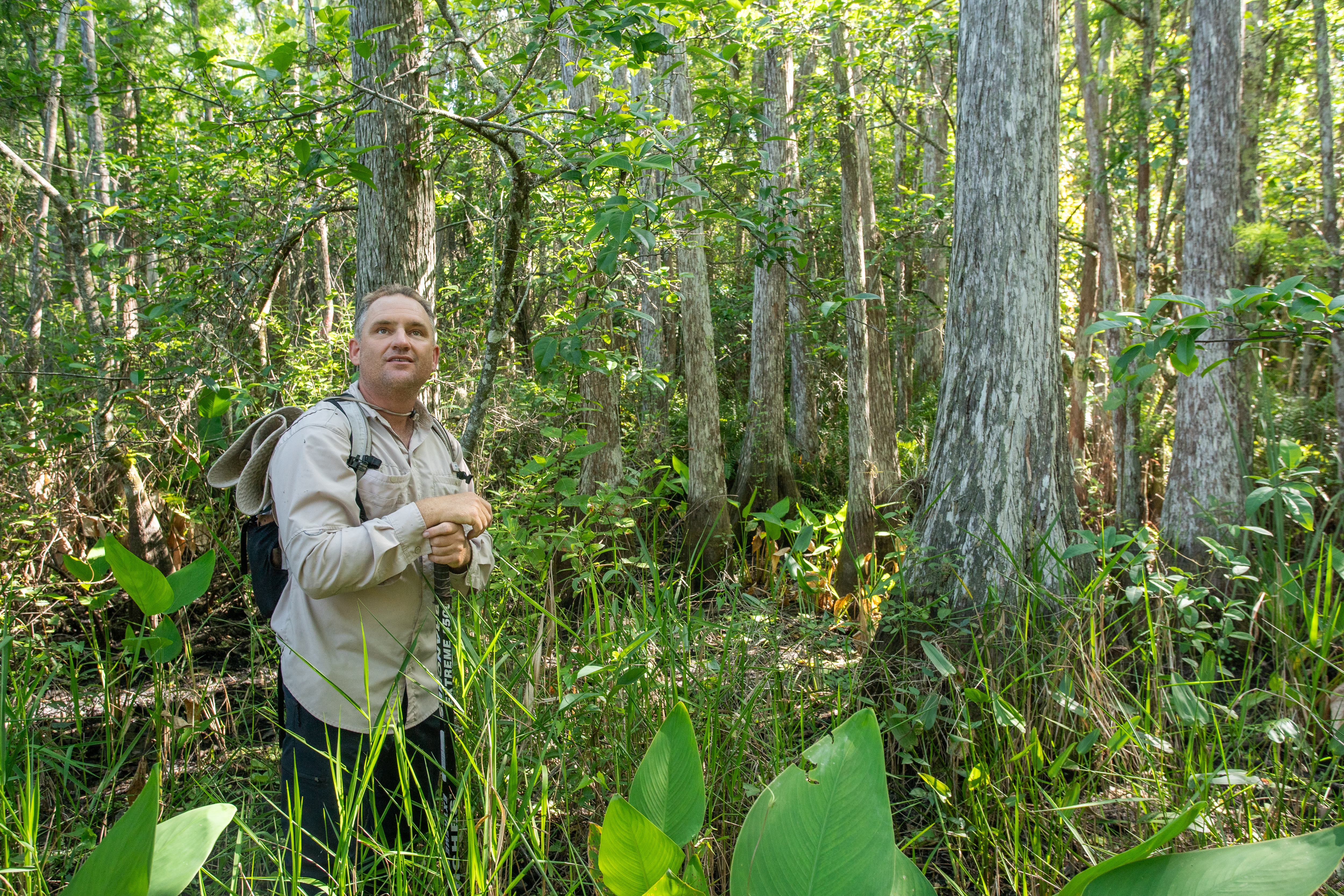
These keystone trees function in harmony with other elements in the ecosystem, too. Their roots, for example, connect to underground networks of plant roots and beneficial fungi. Through these networks, trees can exchange valuable nutrients with one another, which supports the entire ecosystem.
You may think I’m only talking about nature preserves when I refer to keystone trees, but that’s not the case. Your neighborhood could be home to these important trees, too. If so, help protect them! Larger and older trees provide pivotal support for the environment and assist young trees in their development. Your neighborhood keystones may help span the gap between developed areas and conservation sites, increasing the populations of these native species and protecting the wildlife that depend on them. We encourage you to preserve these trees whenever possible.
Tree diversity is equally important. If you are planning to add to your landscape, take note of existing trees and try to plant a species that’s compatible, yet different. Ensuring variety within your yard allows for maximum ecological benefit. Species diversity reduces the risk of disease and pests and maximizes benefits, such as providing a variety of food and pollen for wildlife.
Meet Some of Southwest Florida’s Keystone Trees
Bald cypress (Taxodium distichum) plays a crucial role in our ecology. They thrive in wetlands and are excellent at absorbing floodwater and preventing erosion. They also trap pollutants and prevent them from spreading. Frogs, toads, and salamanders use bald cypress swamps as breeding grounds. Tillandsia, air plants, and ferns grow in the canopy and would not survive in wetland habitats without the raised elevation provided from these trees.
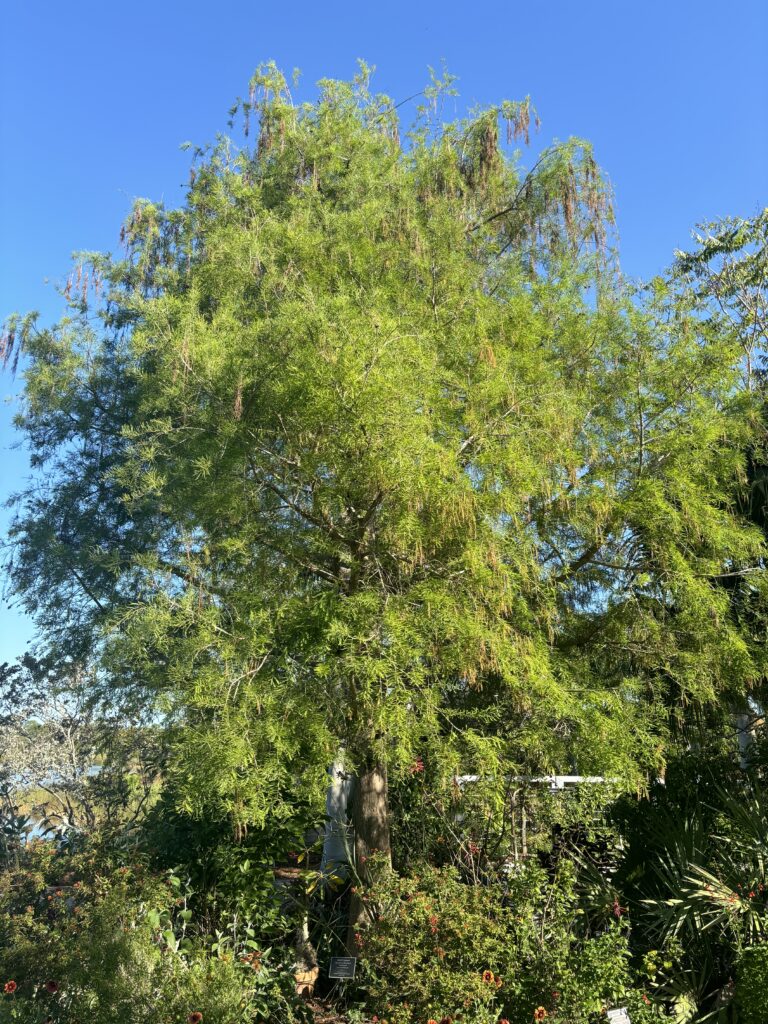
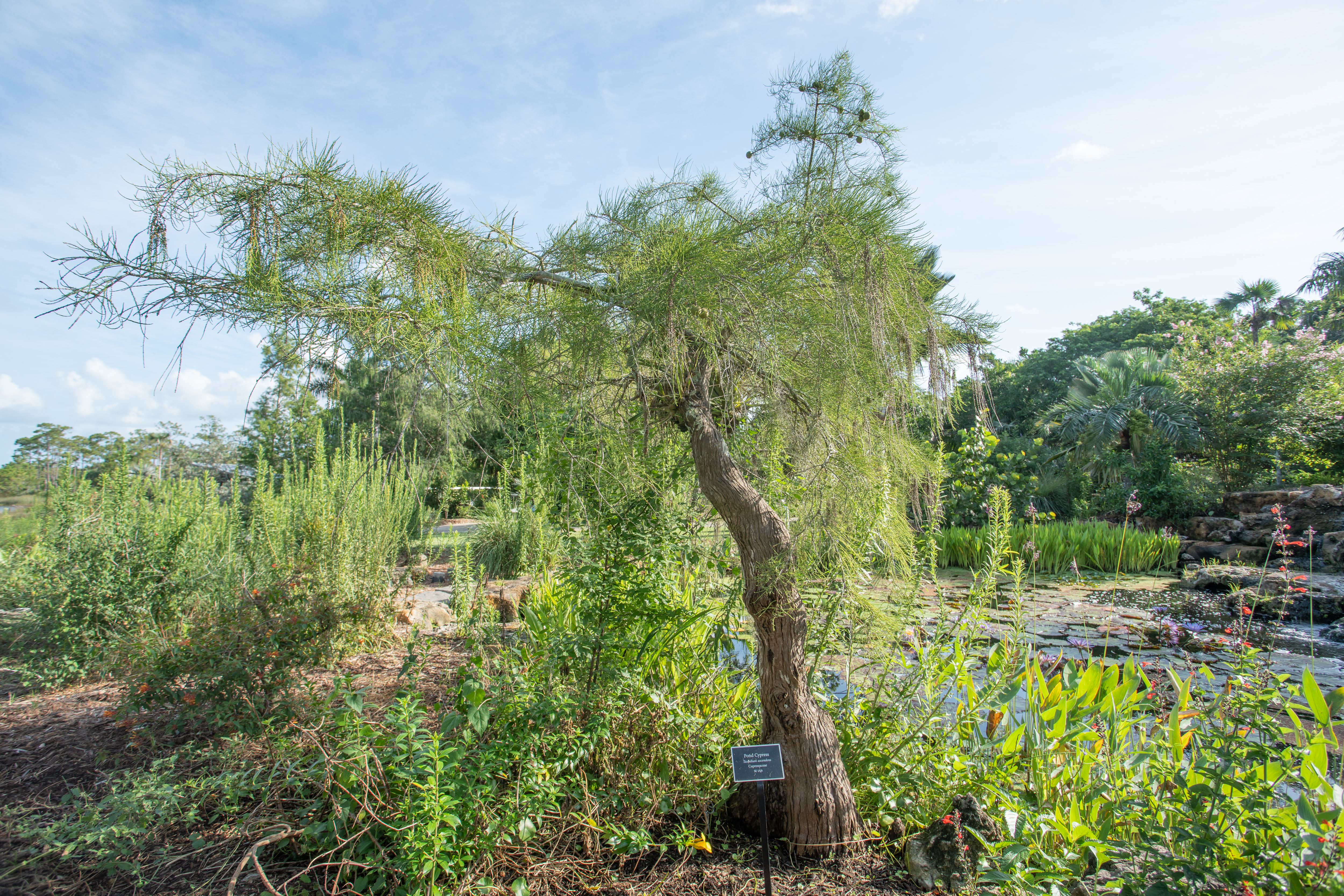
Pond cypress (Taxodium ascendens) can be more frequently found in nutrient-poor shallow depressions. Like bald cypress, they provide habitat for native animals and epiphytic plants.
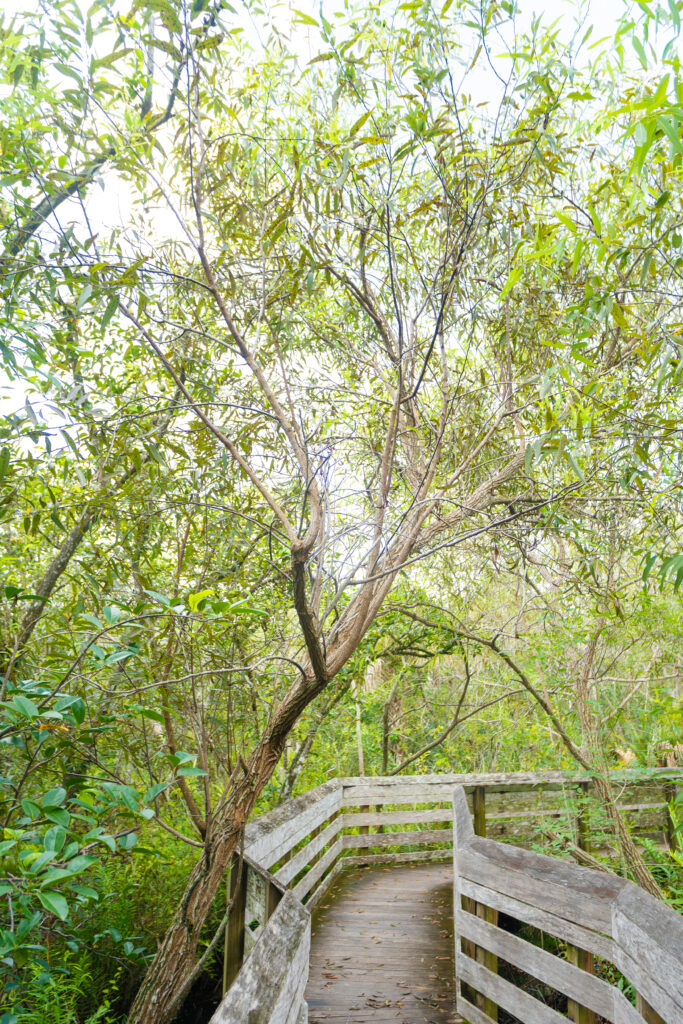
Salix caroliniana are our native coastal plain willow and host 111 bee, butterfly, and moth species, including the viceroy butterfly.
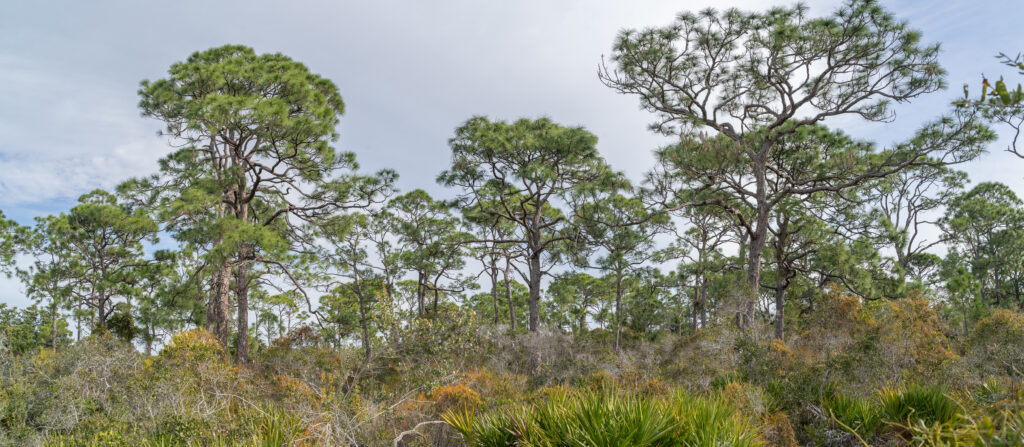
Slash pine (Pinus elliottii var. densa) supports native wildlife, like the Pileated woodpeckers and federally endangered Red-cockaded woodpecker by providing habitat and nourishment. Their canopy provides shade for understory plants, and thick leaf litter enriches the soil below. The seeds are a valuable food source for birds, small mammals, and deer.
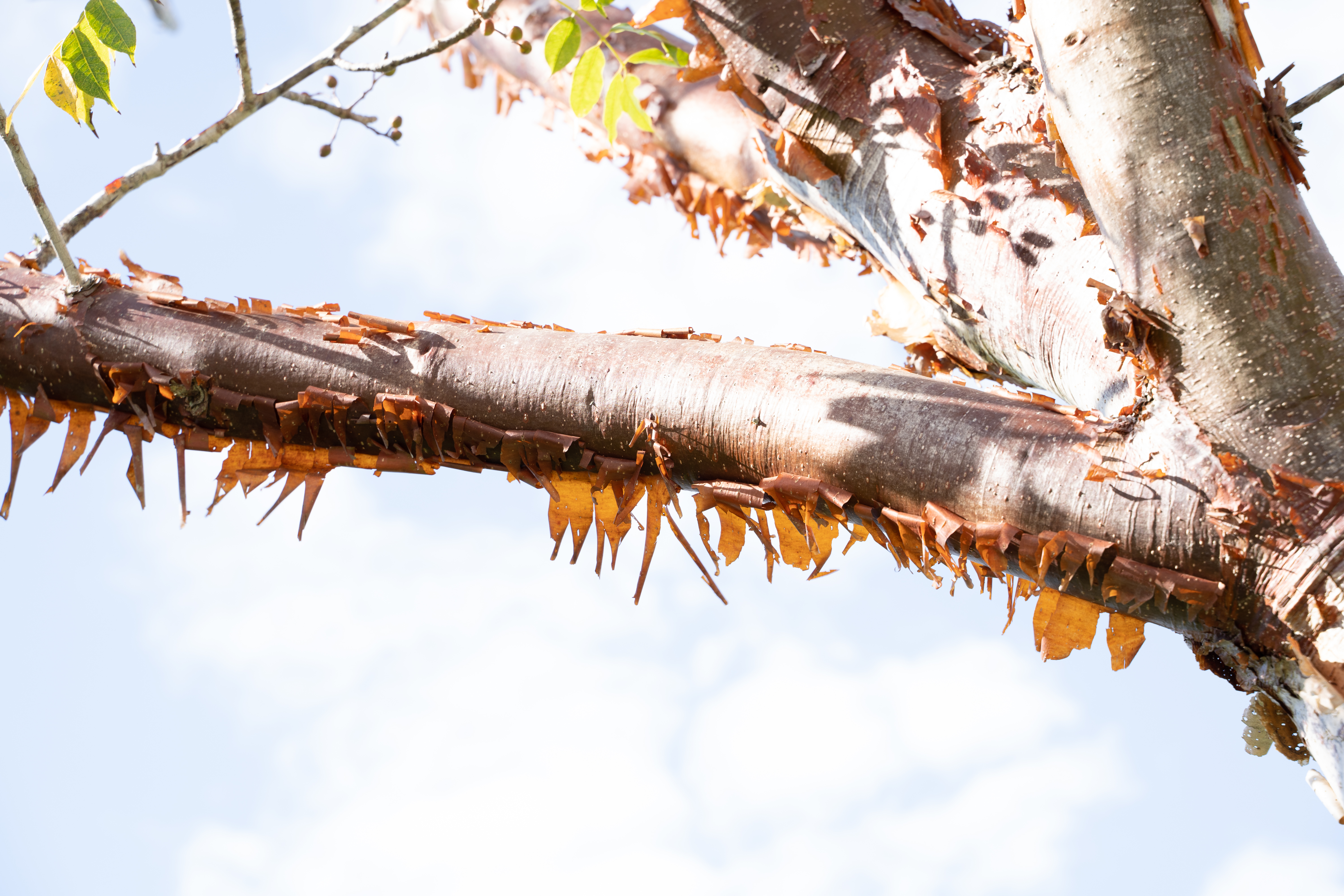
Buttonwood (Conocarpus erectus) can be grown as a tree or shrub and is a host for butterflies like the martial hairstreak (Strymon martialis) and tantalus sphinx moth (Aellopus tantalus). It is a key element of coastal forests. It is one of the most important host trees for epiphytes in South Florida and provides food and refuge for birds and insects.

Gumbo limbo (Bursera simaruba) is a crucial part of the ecosystem. It is a refuge for various birds and insects, including the federally endangered Miami blue butterfly. Their leaves also benefit the soil by adding nutrients back into it. (Side note: In general, we encourage leaving leaf litter in place or having a dedicated area of the yard where they can decompose and increase soil quality.)
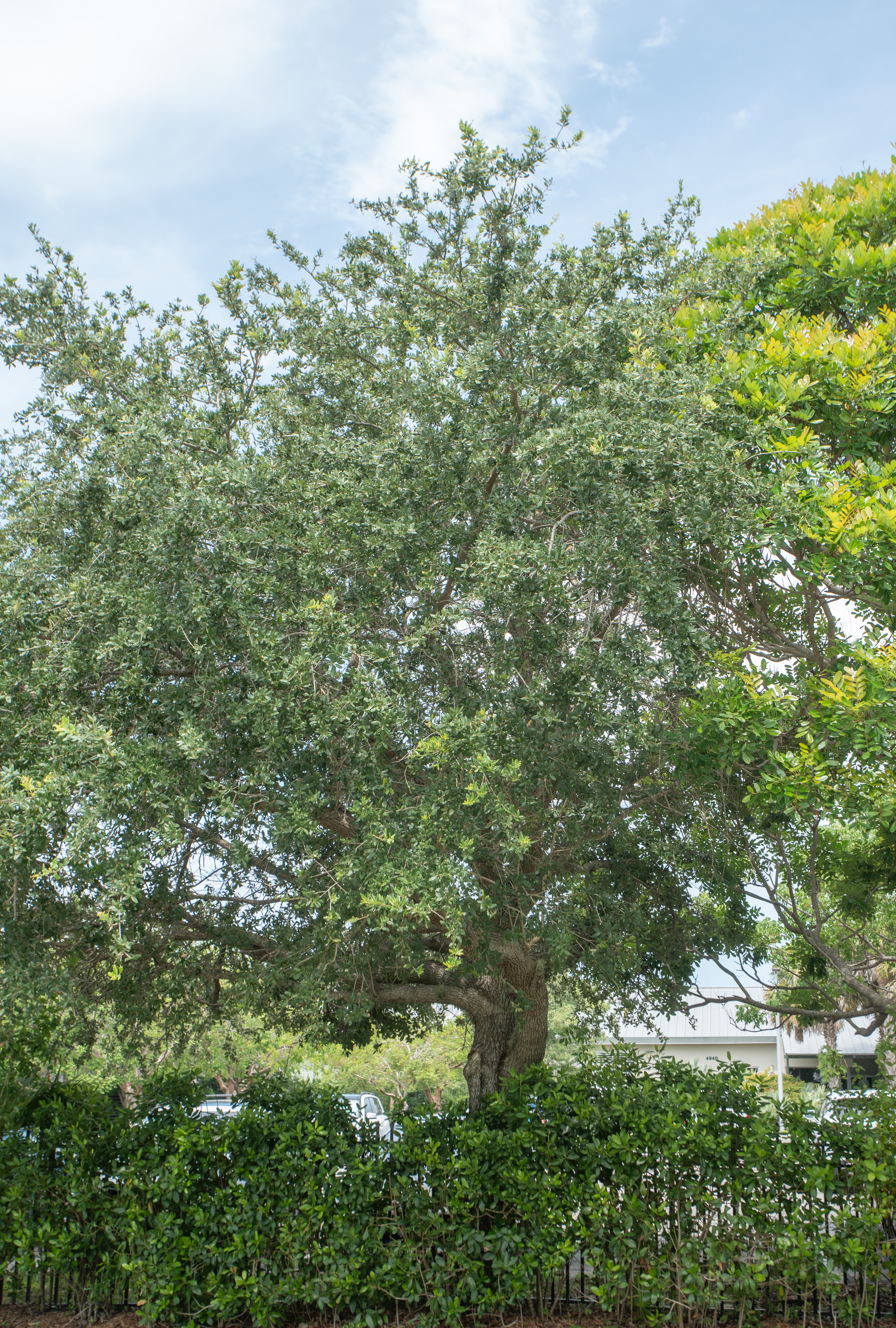
Oaks in the genus Quercus support thousands of insects, birds, and mammals—more than any other keystone tree. South Florida is at southernmost tip of the range for Quercus in the United States, though with the rising temperatures and an increased risk of disease, like fatal oak wilt, these species may not be able to endure into the future. Southern live oak (Quercus virginiana) is considered to be at particular risk; laurel oak (Quercus laurifolia) or live sand oak (Quercus geminata) might provide more heat-tolerant alternatives.
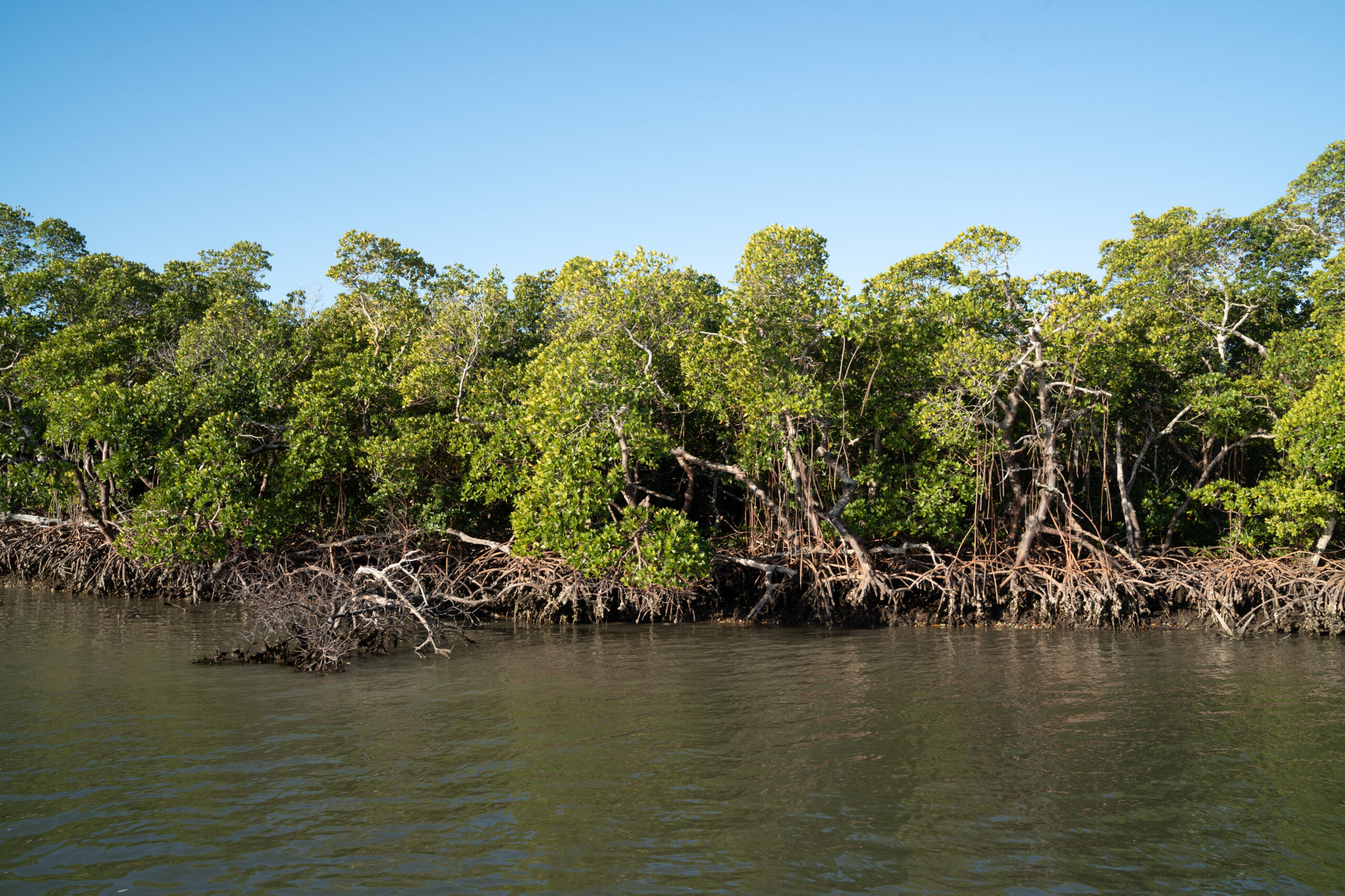
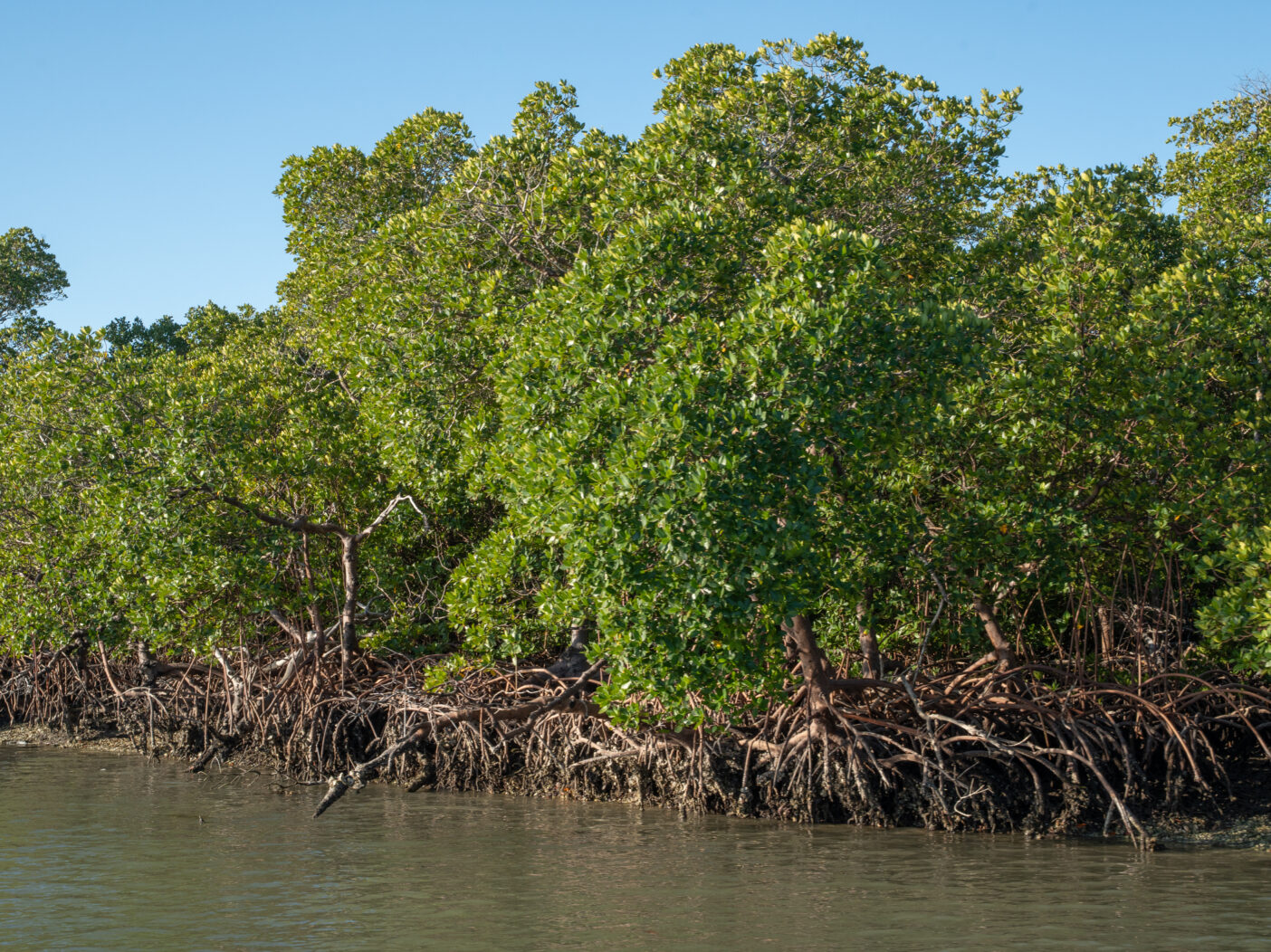
Mangroves provide essential structure for estuaries. They help to clean pollutants from water systems and provide habitat for reptiles, shore birds, and breeding areas for fish. There are three species native to Florida.
They are:
- black mangrove (Avicennia germinans)
- white mangrove (Laguncularia racemosa), and
- red mangrove (Rhizophora mangle), the most iconic of the three.