
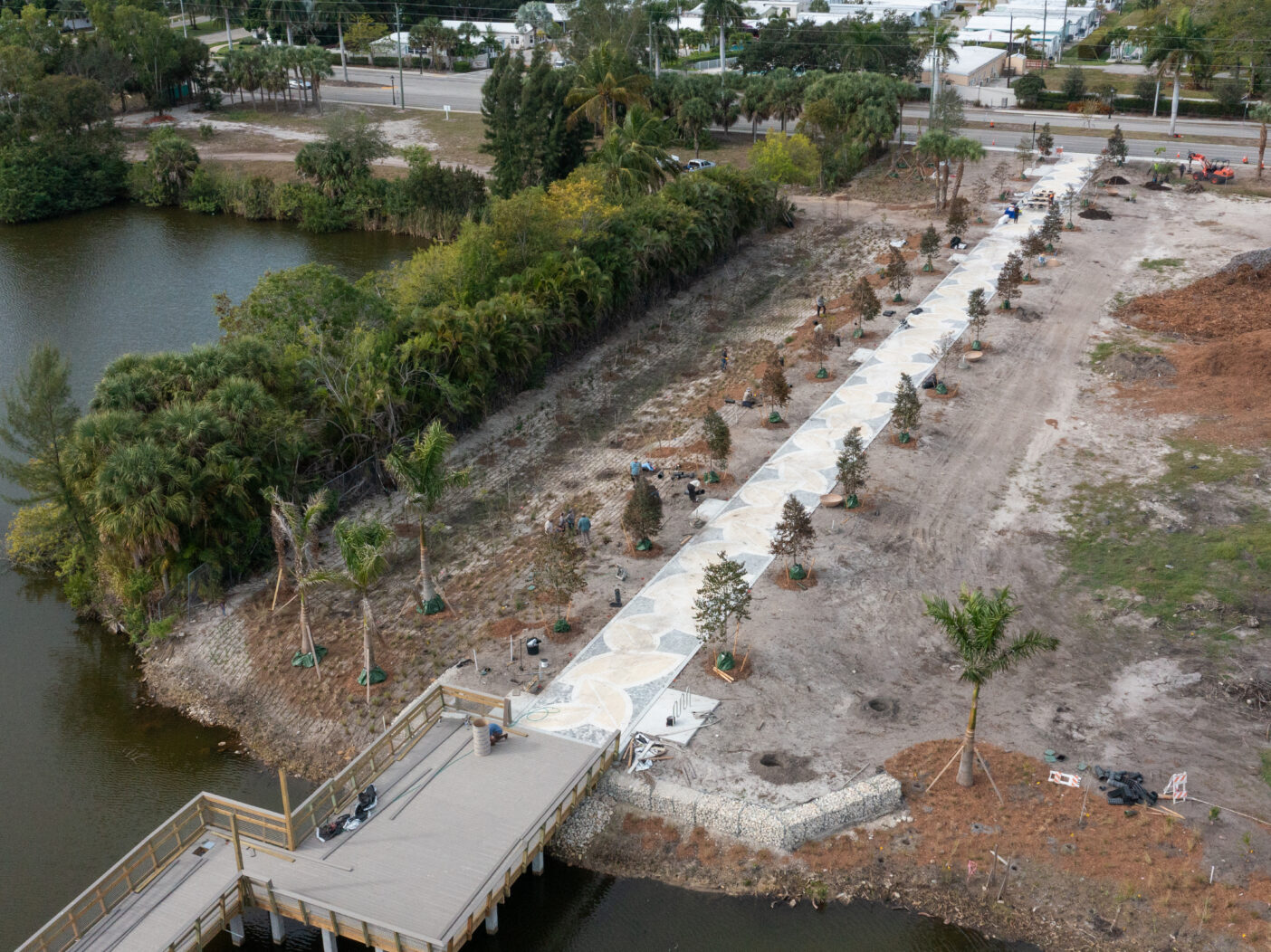
New pedestrian walkway will link Bayshore District with Sugden Regional Park
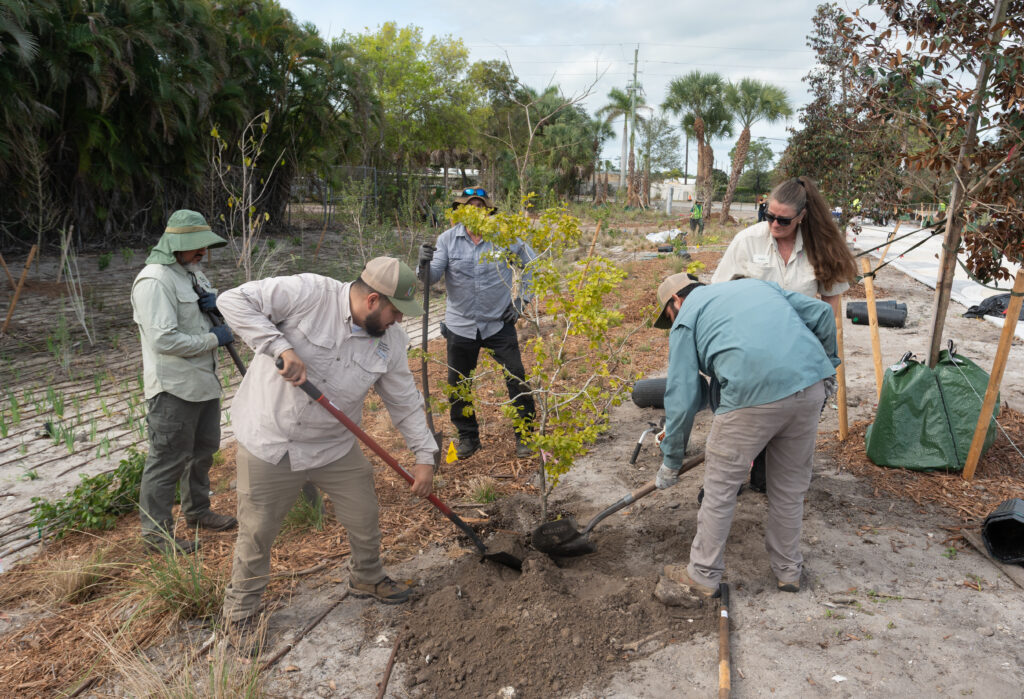
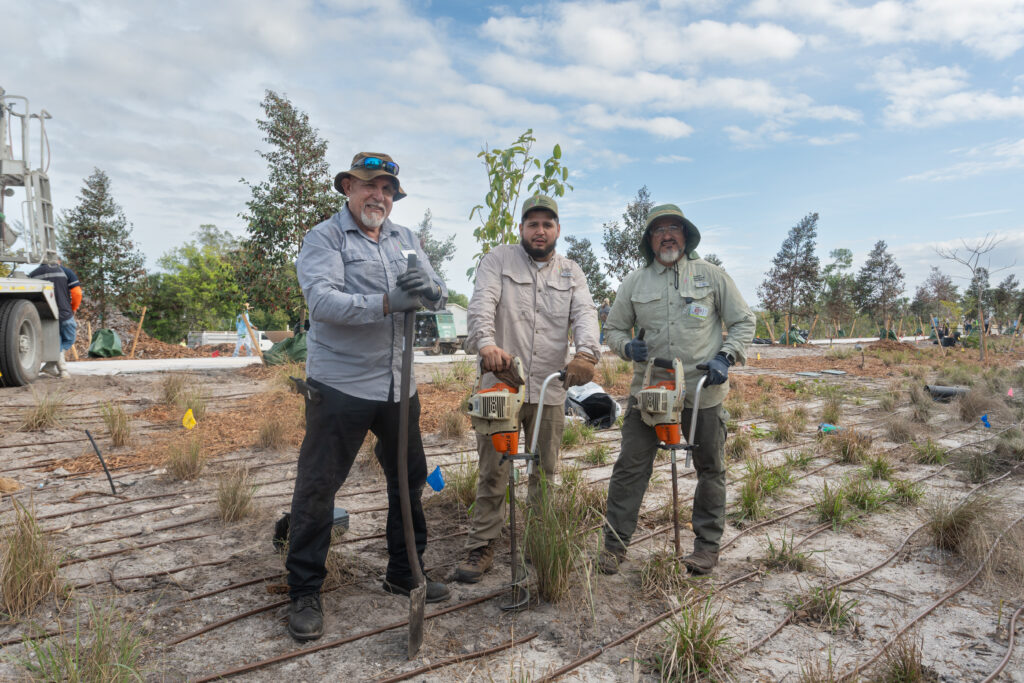
For three days in mid-January, Naples Botanical Garden staff took their plants and planting operations to a 17-acre parcel just north of our Bayshore Drive campus to help turn a longtime neighborhood vision into reality.
The property is owned by the Bayshore Gateway Triangle Community Redevelopment Agency, which has long aspired to create a pedestrian walkway linking the fast-growing Bayshore District to Sugden Regional Park. The Garden has been setting aside plant material for years, ultimately providing about a thousand trees, shrubs, and groundcovers.
Our involvement is fitting: That property, located between Lunar Street and Jeepers Drive, was the Garden’s original site. Our founders in the late 1990s had begun to plant (there’s a remnant row of palms along Bayshore Drive) but halted development once the late business executive and philanthropist Harvey Kapnick Jr. offered a bigger vision and a financial gift to buy the 170 acres where the Garden sits today.
But the property will bear the Garden’s stamp after all, and, in a way, expand our footprint and mission.
“We’re mixing in some of the very iconic species that you don’t see much anymore, like the mastic tree (Sideroxylon foetidissimum), which is just a very stately, beautiful, large tree,” Brian Galligan, the Garden’s Vice President of Horticulture, said of the Florida native hardwood.
The property, he added, provides a unique opportunity to showcase species not commonly used in landscape design. To that end, Galligan said he is glad CRA officials and Landscape Architect Kevin Mangan elected to plant an allée of satinleaf trees (Chrysophyllum oliviforme) framing a newly constructed promenade. It’s a favorite of his, and the Garden has been working to get the slender and shapely native, with its coppery foliage, more widely available in the nursery trade.
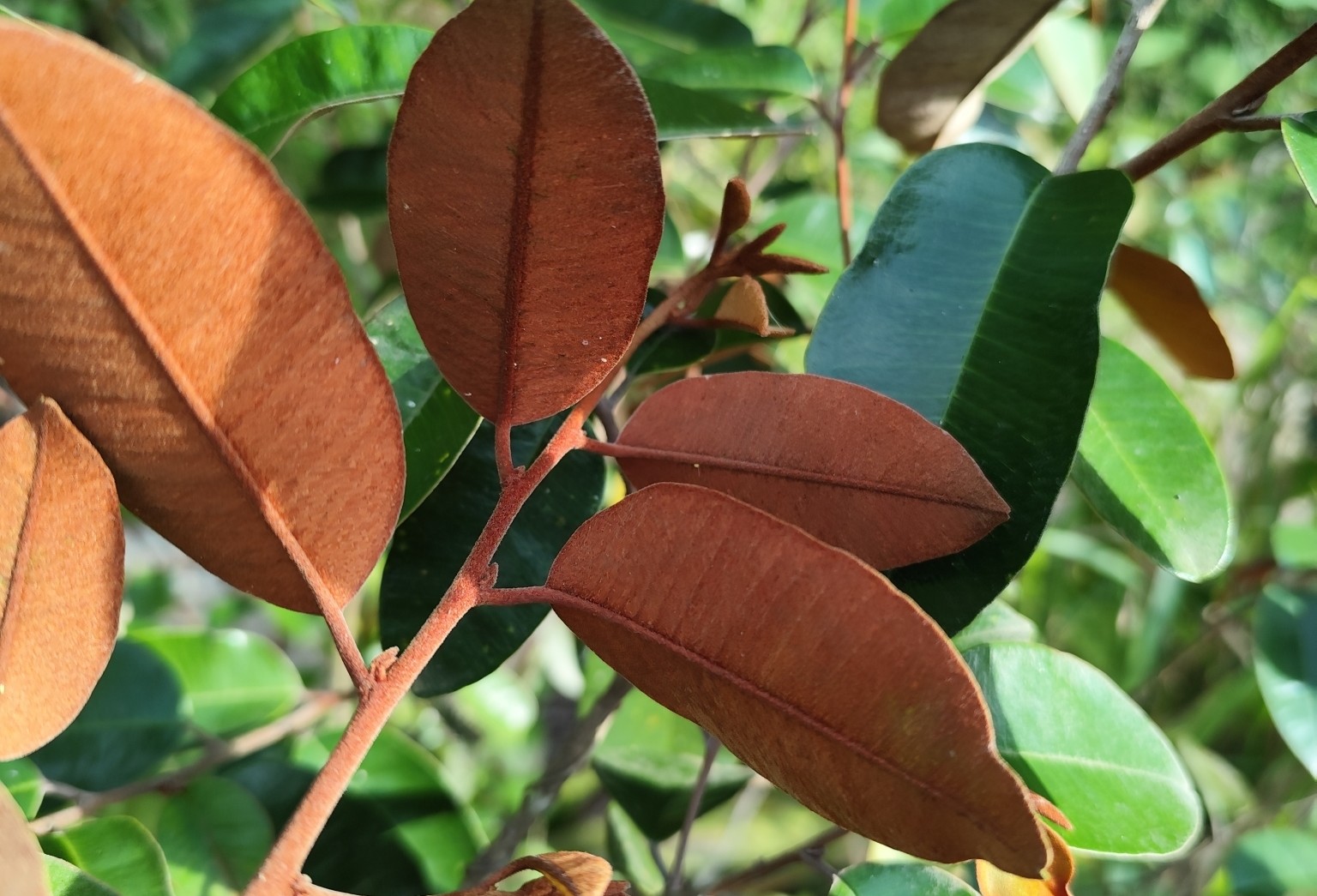
Photo by mreith, iNaturalist
For color and visual interest, the Garden provided some unique flowering trees, such as the pink and white Tabebuia bahamensis. In addition to the Garden’s contribution, some 175 new trees and 13,000 shrubs, aquatic plants, groundcovers, and other plant types will be added to the site by other firms involved in the project.
The redevelopment agency aspires to create an arts district populated with studios, artist cottages, and, potentially, larger regional arts institutions. This pedestrian walkway was a critical first step in soliciting arts-minded developers to share in this vision, said CRA Project Manager Tami Scott. “It’s the old saying: ‘If you build it, they will come.’”
The site will offer a new neighborhood amenity and increase walkability and accessibility between Bayshore and Sugden. Development, both commercial and residential, has surged along Bayshore in recent years, transforming this once blighted slice of East Naples into a destination point. “I’m really thrilled to be able to do this for the community,” Scott said.
The site’s development has important ecological implications, too.
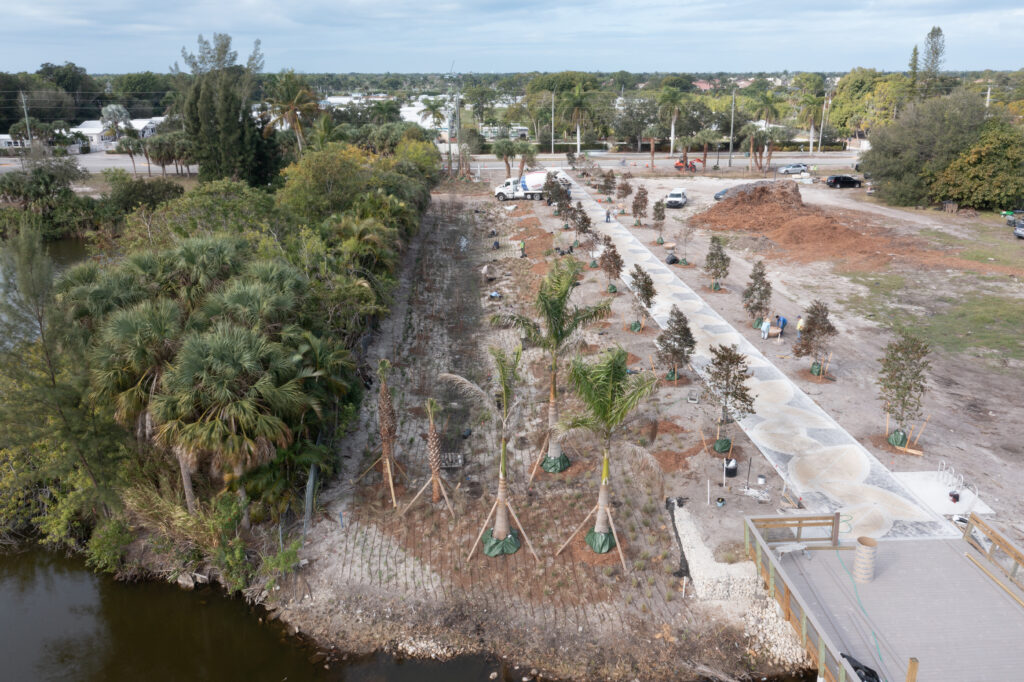
The parcel was clogged with invasive species so dense that Mangan said it took him some 45 minutes to pick his way through just a few acres, trying to get to a single royal palm (Roystonea regina) by the water. He, Garden staff, and representatives from other contracted firms, such as Natives of Corkscrew, combed the site, flagging native plants to preserve and exotic, invasive plants to remove. The former proved to be scant—a smattering of palms, including the royal. Some 95% of plant matter was deemed invasive and removed and ground into mulch, which will be used both at that site and in the Garden.
“(Invasive plant material) grows quickly, and it shades out and competes for sun and water soils in a manner that keeps the natives at bay,” said Mangan, a Vice Senior Principal of Stantec, a global engineering, architecture, and environmental firm with a focus on sustainability. Removing the exotic invasive plants will allow newly planted natives and regionally appropriate plants—species that co-exist with our native flora—to thrive.
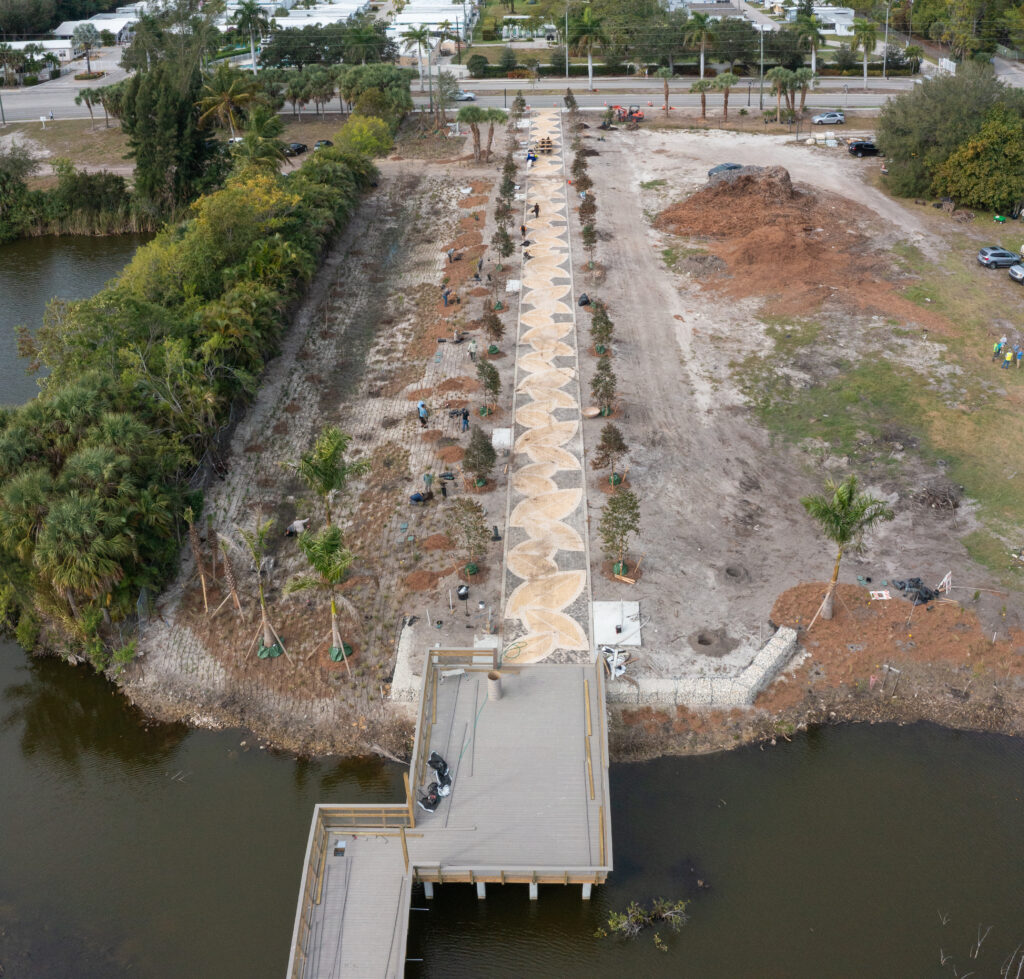
A sizeable portion of the site will be resculpted for stormwater collection and storage—important for flood protection—and the edges of waterbodies will be planted with species that help filter contaminants before stormwater flows into a small pond on the site, known locally as Lake Kelly. The pond connects with Halderman Creek, which leads to Naples Bay.
The walkway begins with a more formal, designed stretch fronting Bayshore Drive. There, Stantec designed a 15-by-500-foot promenade reflective of the Garden’s history on that site and its present-day importance to the Bayshore District.
“Imagine, if you took a bunch of tiny oak leaves in the cup of your hand and dropped them on the ground, how they would fall and overlay each other. That’s what we used as a driver for this pattern,” Mangan explained. As pedestrians walk east, toward the park, they will come to a 1,500-linear-foot boardwalk. That portion of the site, replanted entirely with natives, will be naturalistic in appearance—the landscape as it might have looked before invasive plants overran it.
“Once we took out the exotics, we just discovered this jewel,” Scott said.
Work will continue at the site through February; a ribbon-cutting ceremony is scheduled for February 26 at 9am.