
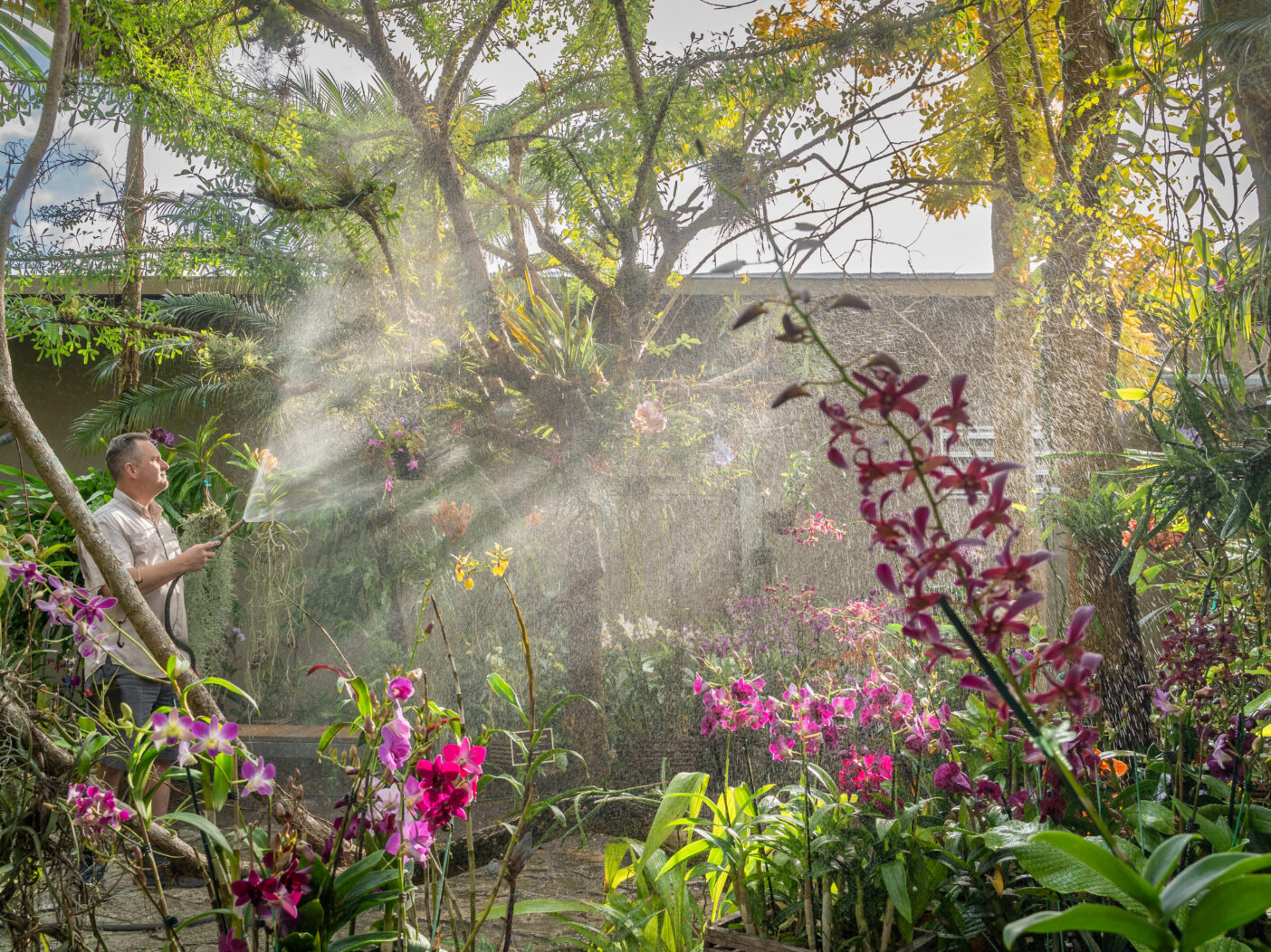
Even with recent showers, Florida is under its most severe drought in 25 years with two-thirds of the peninsula—including all of Southwest Florida—classified as “extreme.” The South Florida Water Management District issued a water shortage warning in February and imposed watering restrictions throughout the region.
You may be wondering how to care for your yard amid these conditions. We’re going share some of our strategies for weathering this prolonged dry spell, as well as offer suggestions for how to drought-proof your yard in the future. The state, historically, sees about one severe drought each decade. The La Niña weather pattern, which we are currently under, can exacerbate dry conditions. We typically fluctuate between La Niña and its opposite, El Niño, every two to five years.
Plant Care in a Drought
- Follow local watering restrictions. We need to work together during droughts to prevent water shortages, maintain local aquifers, and preserve wells. This South Florida Water Management District page provides links to watering regulations for Collier and Lee counties and their municipalities. Charlotte County can find information here.
- Know the signs of drought stress. Plants may dull in color, turn yellow, or wilt when they lack adequate water.
- Consider hand-watering vulnerable species. Several common landscaping staples and ornamental plants are especially vulnerable to drought. They include: crotons (Codiaeum variegatum), cordyline, begonias, gingers, heliconia and aroids such as philodendron, alocasia, anthurium, and dieffenbachia. To conserve water, consider hand-watering these sensitive plants and scaling back on irrigation in other parts of your yard.
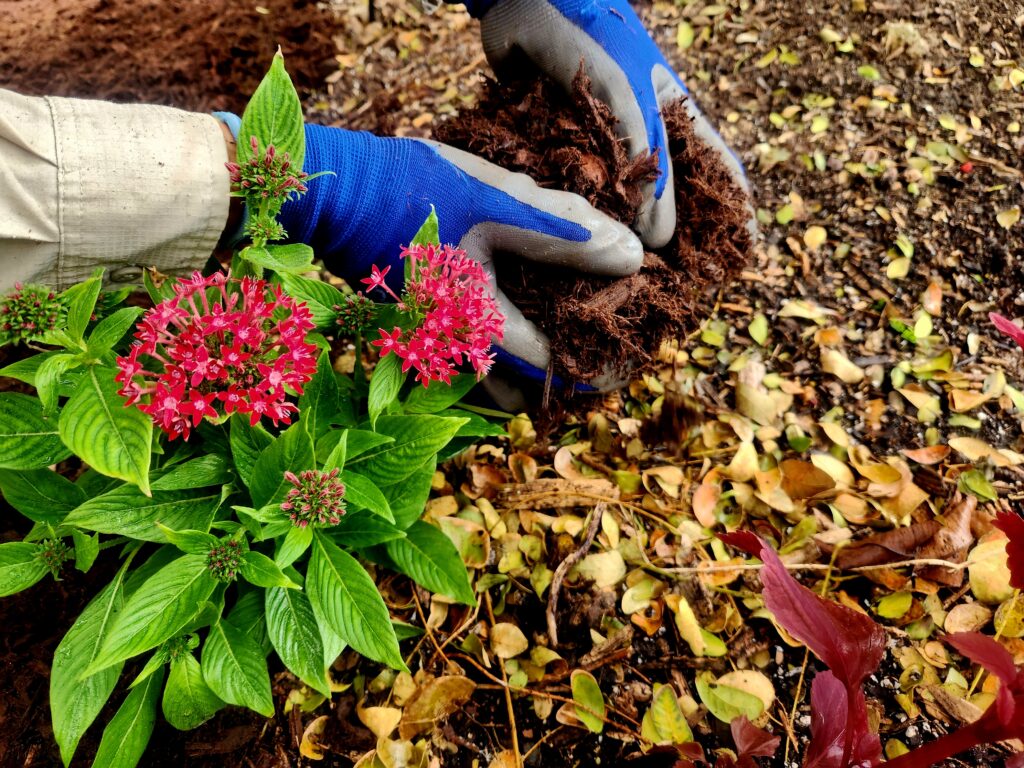
- Mulch! A generous layer of mulch can help retain moisture after a rainstorm or after you irrigate. Mulch and leaf litter add organic matter to the soil, building an intricate—and resilient—community of microorganisms. Without this groundcover, soil can become so dry that it repels water. One way to ensure water reaches the roots of the plants you wish to irrigate is to dig a ring around the plants to hold water. This little trench will prevent water runoff and encourage percolation.
- Avoid pruning. Don’t trim plants under drought stress. Only remove what is dead or diseased. Taking away foliage exposes more tissue and light to penetrate and further dry out the plant.
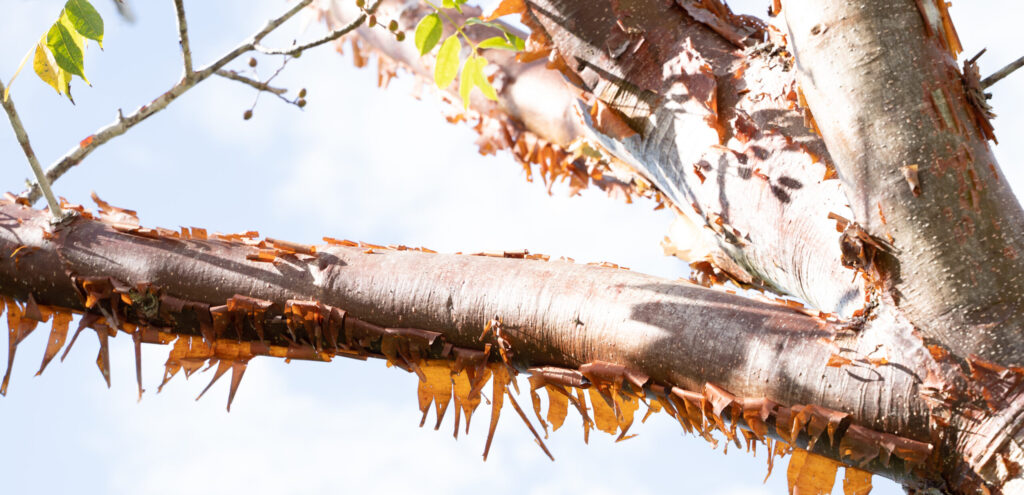
- Don’t assume your dry plant is dead. Some plants, including mature trees, will shed their leaves during a drought to reduce vulnerability to water loss. Wait until the rainy season begins and watch for a leaf flush. To see if a shrub or tree is irreversibly damaged, scrape the bark close to the bottom. If the tissue is green, the plant is likely to make it. If it’s brown, however, recovery may be unlikely.
- Adapt your plant-care regimen when rainy season starts. Once spring showers commence, it’s important to reduce irrigation to prevent overwatering. Too much water can create its own plant-health complications, like fungus and root rot.
Ways to Drought-Proof Your Yard
You may want to consider long-term strategies to minimize your yard’s susceptibility to future droughts. A few modifications can make a significant difference.
- Plant densely and in layers. The best way to shield plants from drying out is to reduce water loss from excessive heat or sun penetration. This can be accomplished through density—installing lots of plants in a section of yard—and by layering. A high tree canopy will shield shrubs; the shrubs, in turn, will offer some protection to groundcovers.
- Rethink irrigation throughout the year. To encourage roots to grow deep into soil, water less often but for longer periods of time. Constant, superficial irrigation results in shallow roots. A longer, penetrating irrigation session will prompt a plant to put down deeper, more resilient roots. If you’ve ever noticed a hardwood tree like a live oak with visible surface roots, it may be a sign of overwatering.
- Build soil. Mulch and leaf litter build an intricate microbiota in the soil and help plants withstand stressors such as drought. We recommend leaving grass clippings and fallen leaves in place whenever possible.
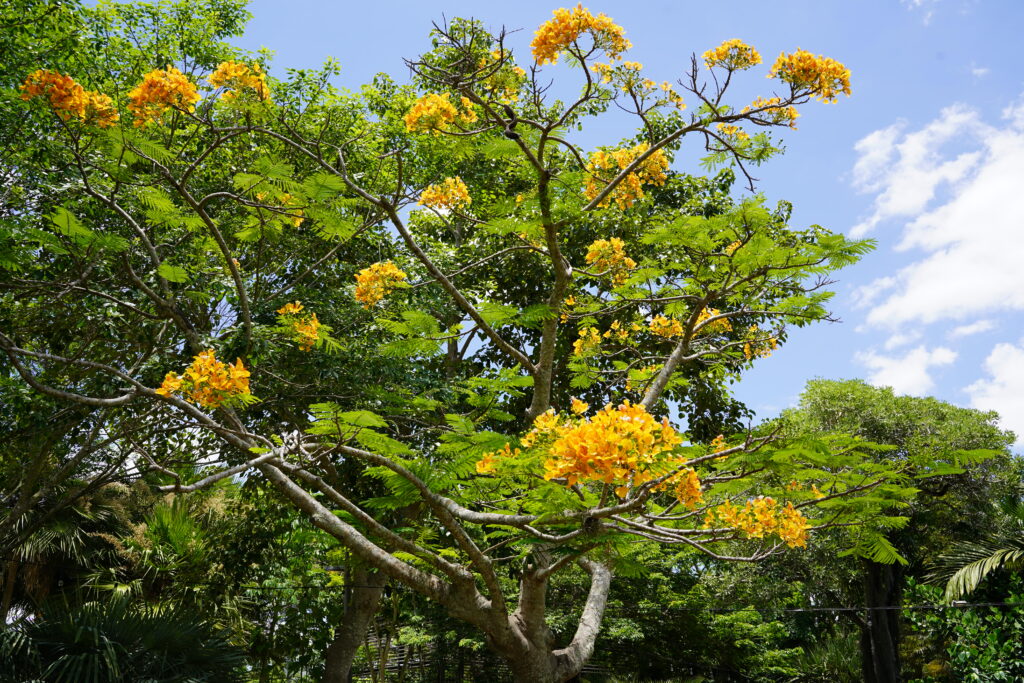
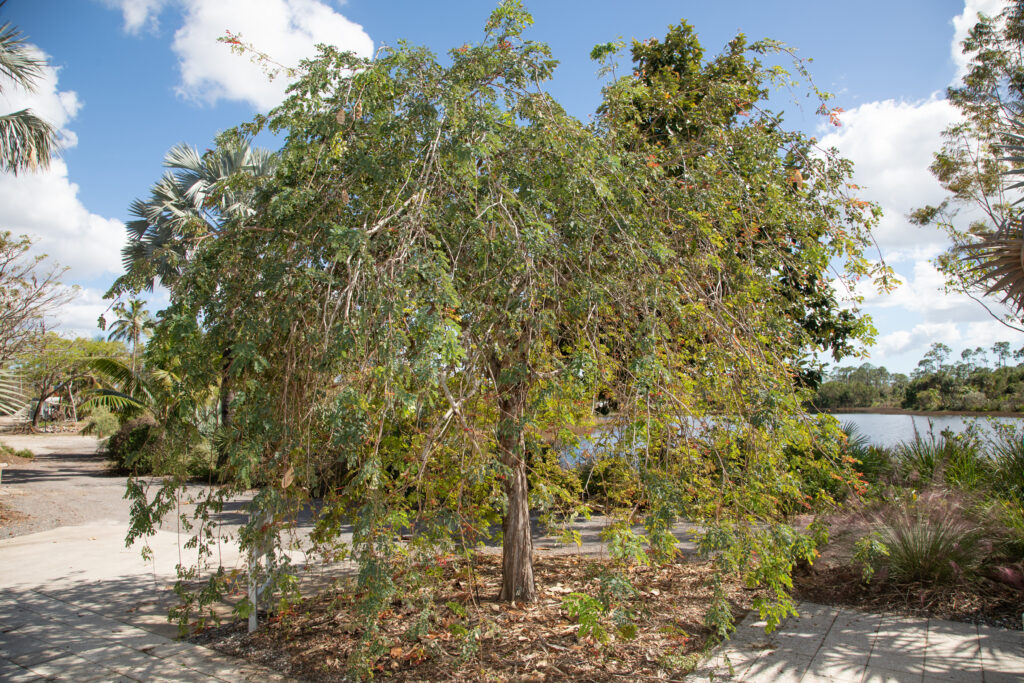
- Protect lawns with diffuse light. Trees with fine, delicate foliage, such as poincianas and wild tamarinds, create light-penetrating canopies that support the growth of turf grass while protecting it from excessive light exposure.
Drought Tolerant Landscape Options
Many trees, shrubs, and groundcovers native to Florida and the Caribbean are drought tolerant (though they may require irrigation when young).
Native trees
- Lignum vitae (Guaiacum sanctum)
- Spanish stopper (Eugenia foetida)
- Simpson’s stopper (Myrcianthes fragrans)
- Gumbo limbo (Bursera simaruba)
- Coccoloba spp. (a genus of tropical and subtropical plants, including sea grape, characterized by large leaves and grape-like fruits)
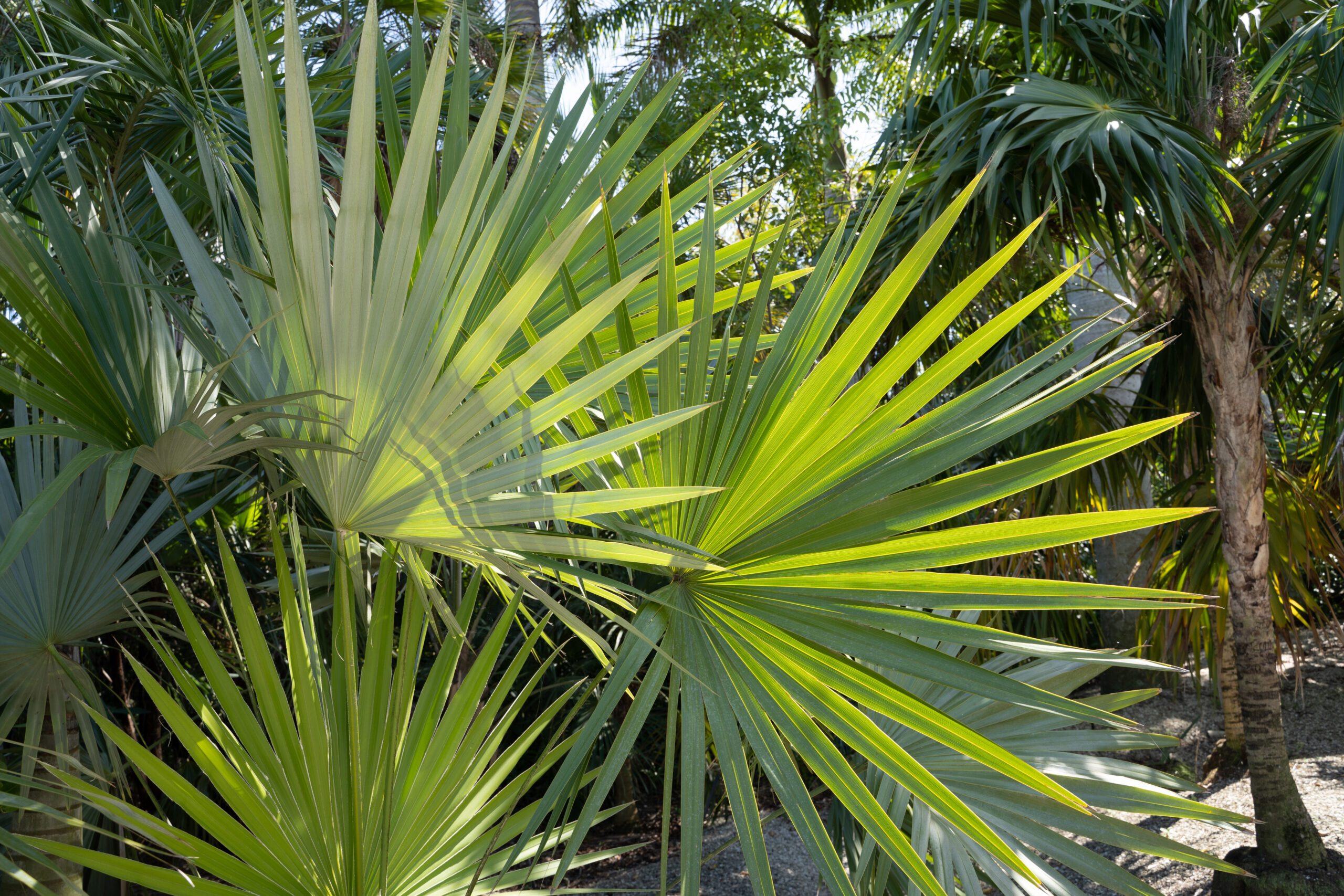
Palms
- Saw palmetto (Serenoa repens)
- Thatch palm (Thrinax radiata)
- Copernicia spp. (a genus of fan palms)
- Sabal palm (Sabal palmetto)
Non-native, SWFL-compatible trees
- Handroanthus spp. (a genus of flowering trees known as “trumpet trees”)
- Bahama tabebuia (Tabebuia bahamensis)
- Wild tamarind (Lysiloma sabicu)
- Silk floss (Ceiba speciosa)
- Plumeria spp.
Shrubs
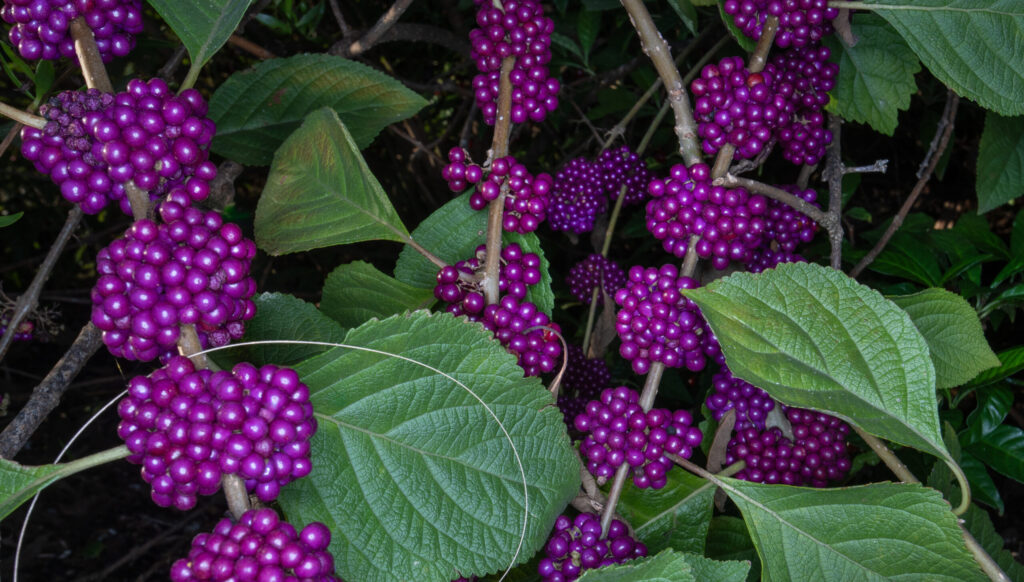
- American beauty berry (Callicarpa americana)
- Bougainvillea spp.
- Ficus microcarpa ‘Green Island’
- Firebush (Hamelia patens)
- Jamaican raintree (Brya ebenus)
Perennials
- Pitcairnia spp. (a genus of bromeliads)
- Orandeade bromeliad (Aechmea blanchetiana)
- Aloe spp.
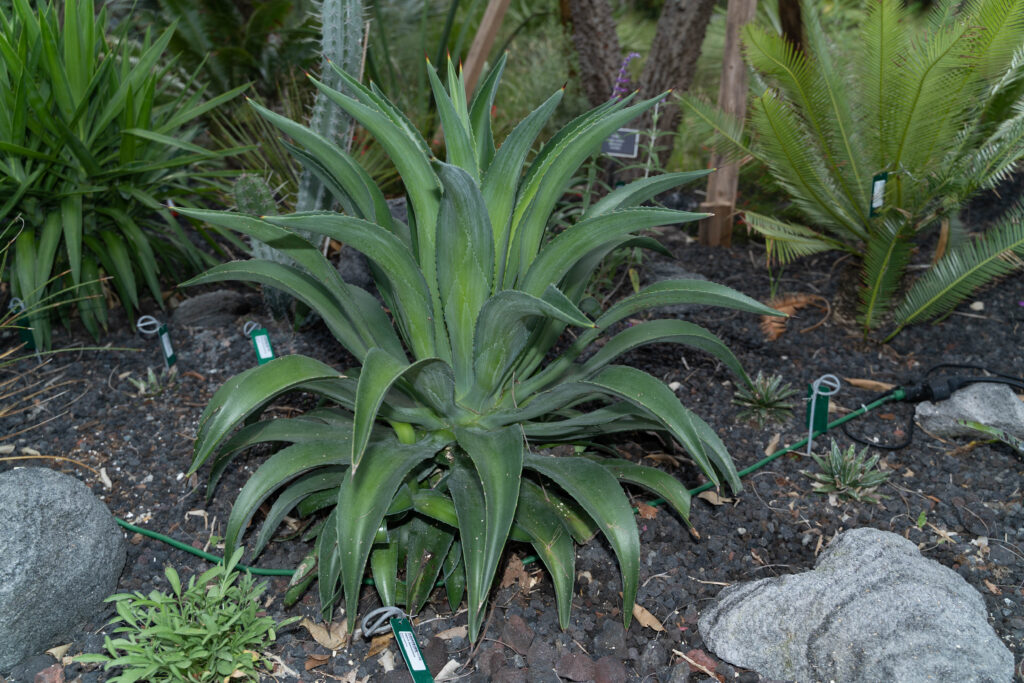
- Agave
- Coontie (Zamia integrifolia)
Groundcover / ornamental grass
- Horizontal cocoplum (Chrysobalanus icaco ‘Horizontalis’)
- Beach creeper (Ernodea litorallis)
- Asiatic jasmine (Trachelospermum asiaticum)
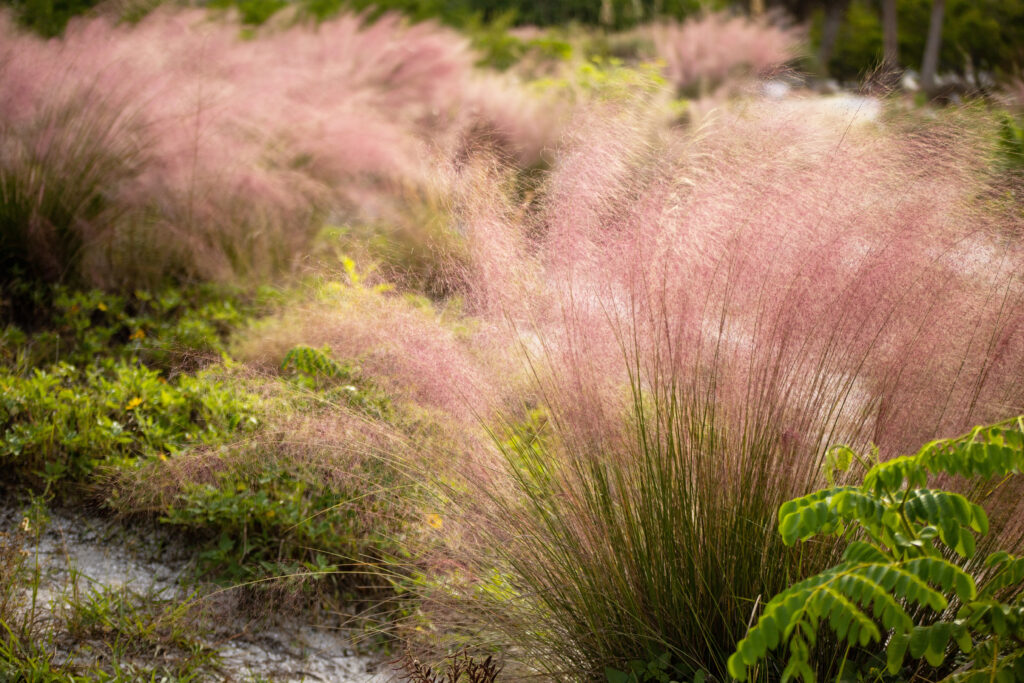
- Muhly grass (Muhlenbergia capillaris)
- Sunshine mimosa (Mimosa strongilosa)
Thank you to our horticulturists for sharing these plant care tips!

