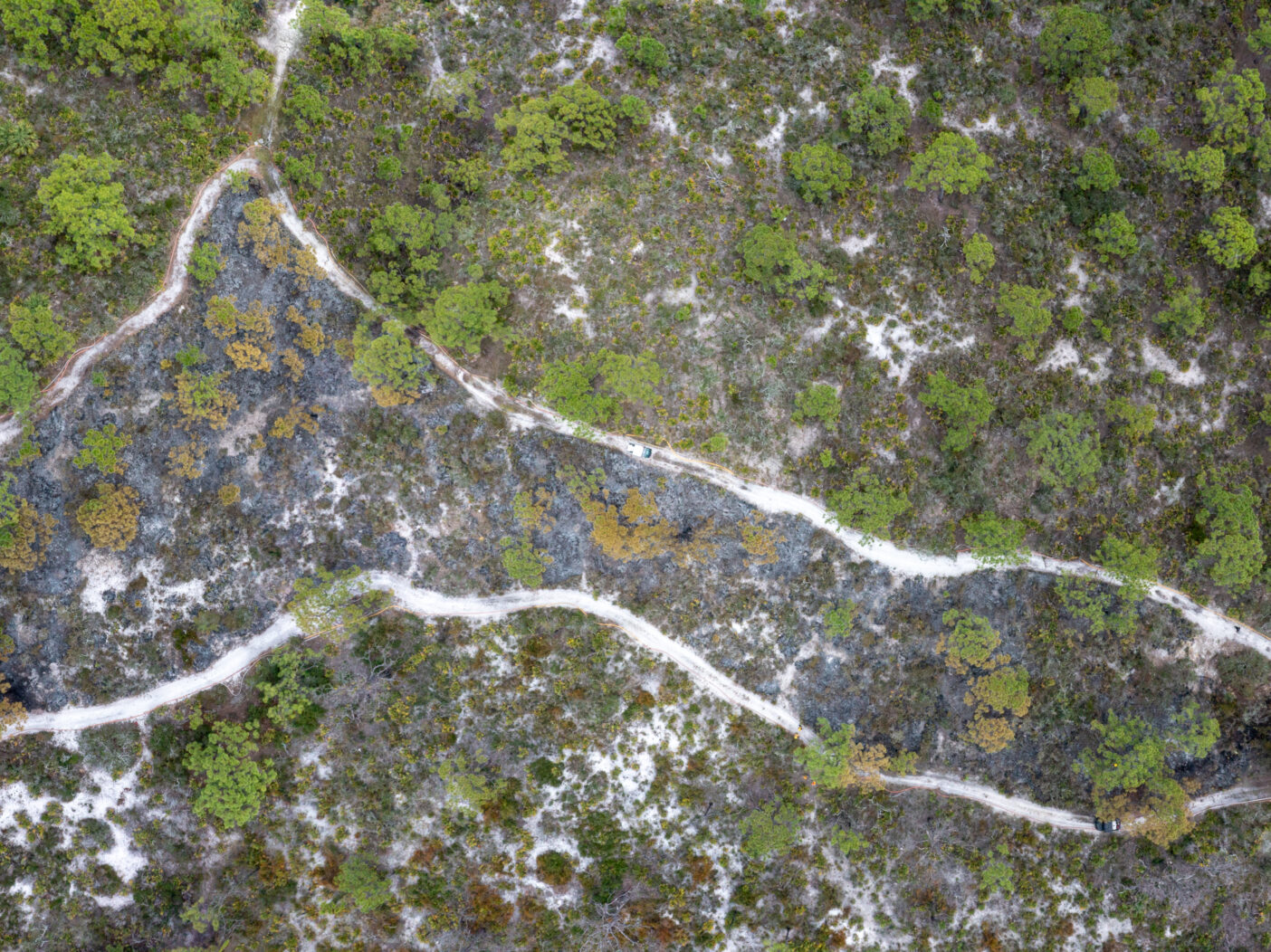
Recently, we burned a portion of our Florida scrub habitat, and what a sight to behold! Scrub is an arid landscape, and when it ignites—even under our carefully controlled conditions—plants like saw palmetto (Serenoa repens) and Florida rosemary (Ceratiola ericoides) combust into great bursts of orange. Flames race up pine trees and engulf oaks. The heat is enough to knock you over.
In that whoosh, the ecosystem resets itself, our objective for setting the blaze. We have one of the few remaining scrub habitats in Southwest Florida, and we’re working to be good stewards of that land, considered to be our state’s most distinct ecosystem.
“Without fire, this habitat will be lost,” said Natural Resources Director Eric Foht.
Scrub is a “pyrogenic ecosystem,” or one maintained by intense, infrequent fires. Without periodic burns, species from similar habitat types take root and eventually transform the scrub into something else. Slash pines (Pinus elliottii var. densa), for example, are notorious for this: They’ll spring up, shade out sun-loving scrub species, change the soil composition, and create conditions rife for pine flatwoods ecosystems.
We have nothing against pine trees or flatwoods; we are simply trying to keep them from dominating the landscape for the sake of maintaining the scrub. Once a prevalent land type, scrub habitat today is listed as “imperiled” by both the state and by NatureServe, a global organization that tracks habitats and species. Because it is elevated and dry, scrub is easy to build upon, and developers have converted most of it to homes and commercial properties. What little is left is truly imperiled because of the absence of fire.
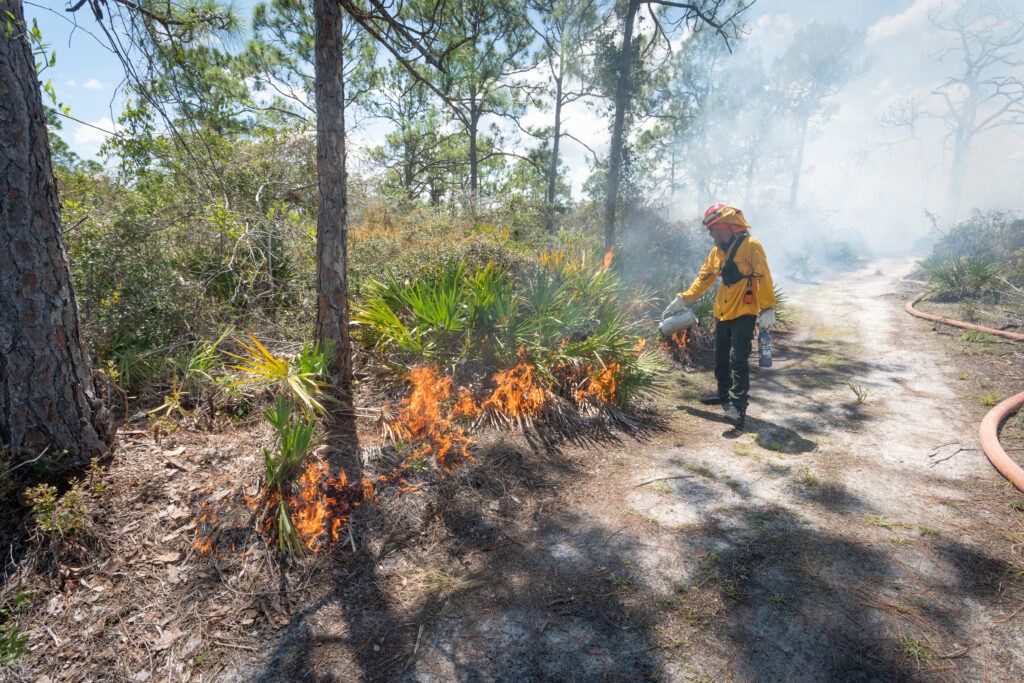
Photo by John Eder
“We’re left with postage stamps of what Florida used to look like,” mused Thaddeus Penfield, owner of Willowcreek Fire Company and the Garden’s contracted burn manager, as he watched the scrub ignite. The blaze cleared much of the overstory, allowing light to penetrate the ground and promote the growth of sun-loving species, such as wiregrass. It purged fallen leaves, which would prompt buried seeds to sprout. That process will revive rosemary shrubs, which are foundational to the scrub and need to regrow from seed.
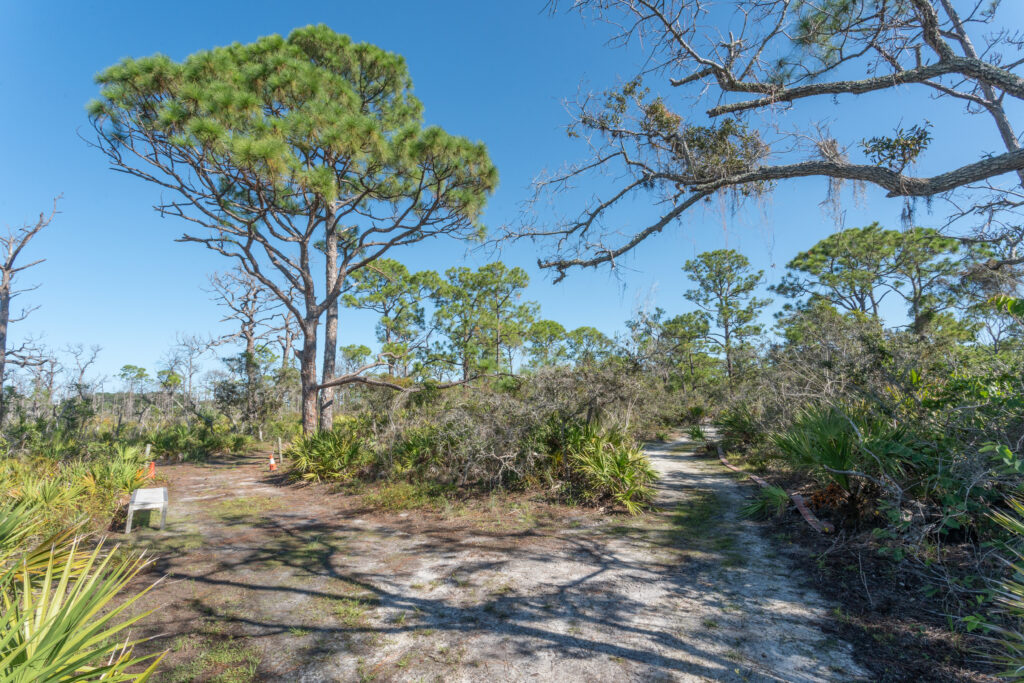
Photo by John Eder
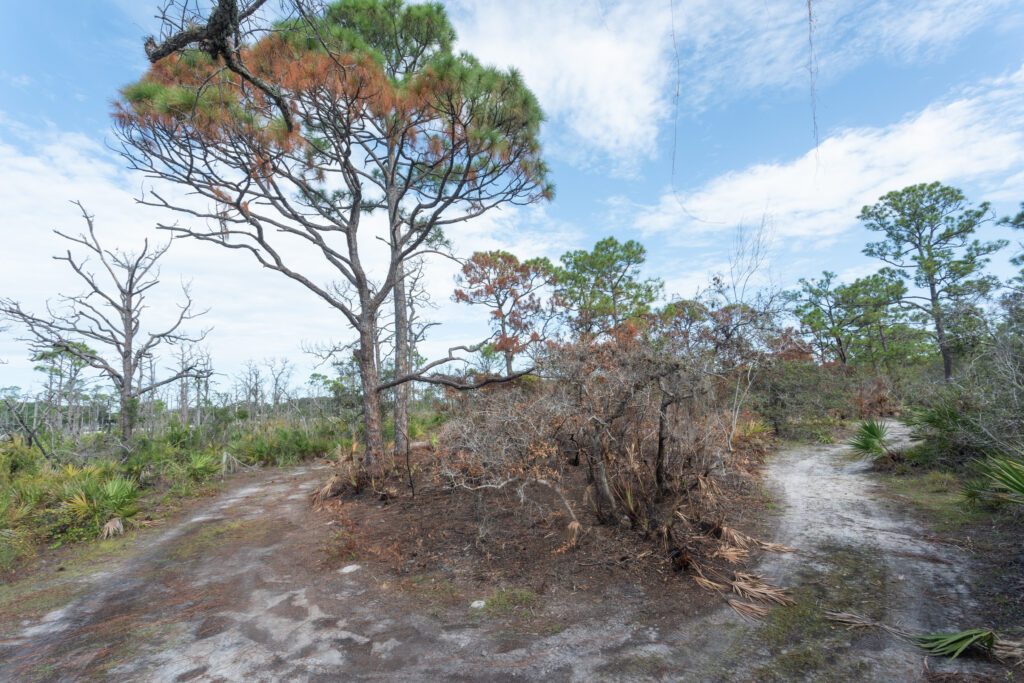
Photo by John Eder
Scrub is regarded as an ancient habitat—remnants of sand dunes born millions of years ago from quartz sand that eroded from the Appalachian Mountains, flowed south through rivers and the Gulf, and accumulated in the Florida peninsula. Most scrub habitat is found in central Florida, though there are pockets of coastal examples, such as the Garden’s.
Low-growing scrub plants are hardy, able to thrive in full sun and nutrient-poor soil. They are believed to have descended from the southern Rocky Mountains and northern Mexico, spread along the Gulf Coast and took root in Florida tens of thousands of years ago.
Many scrub plants are at risk. An estimated 40 – 60% of scrub flora are endemic, meaning they grow nowhere else.
Plants found in scrub habitats include:
- Prickly pear cactus (Opuntia humifusa): Guests are often surprised to learn we have native cactus in Florida, but the prickly pear thrives in scrub habitat. After a burn, we notice that new growth lacks spines, a treat for wildlife!
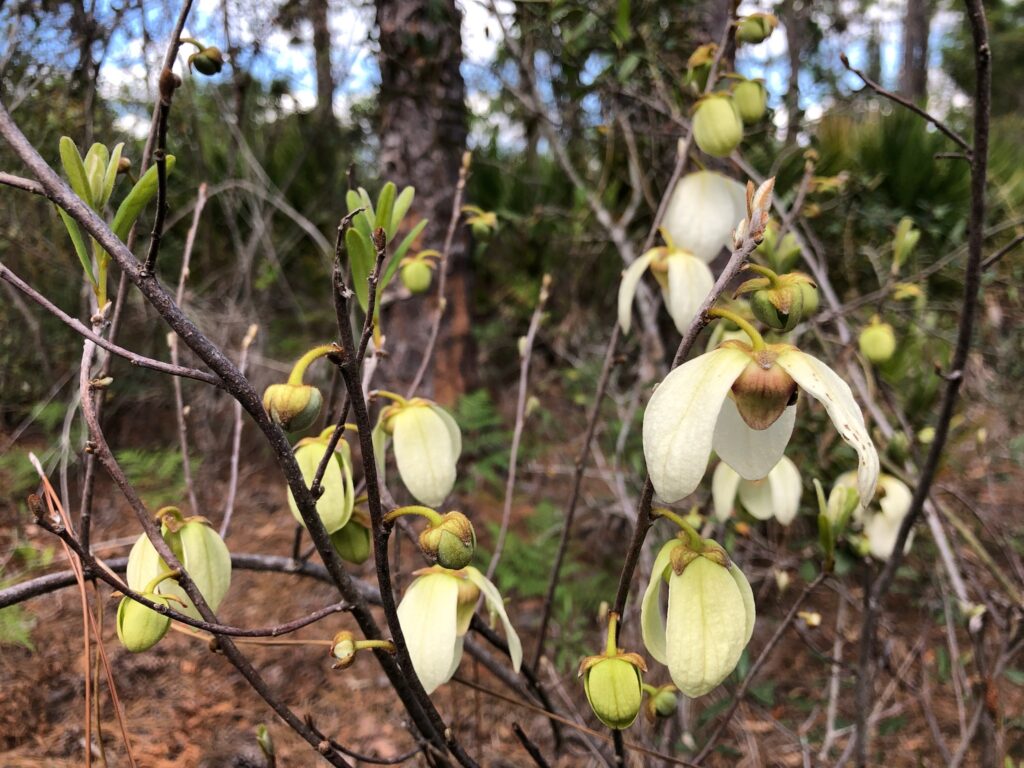
- Netted pawpaw (Asimina reticulata): We’re researching this this tall, slender shrub because it is a relative of the edible pawpaw that grows in temperate regions of the United States. It may harbor genetics useful for cross breeding. Before we began our prescribed fire regimen, Garden conservationists had to hand pollinate the plant. Fire appears to have encouraged the plant to bloom and its pollinator, a beetle, to take up residence. The plants are now producing fruit on their own.
- Feay’s Palafox (Palafoxia feayi): This flowering plant, an important food source for butterflies and bees, is endemic to central and southern Florida. We have populations of it within the Preserve.
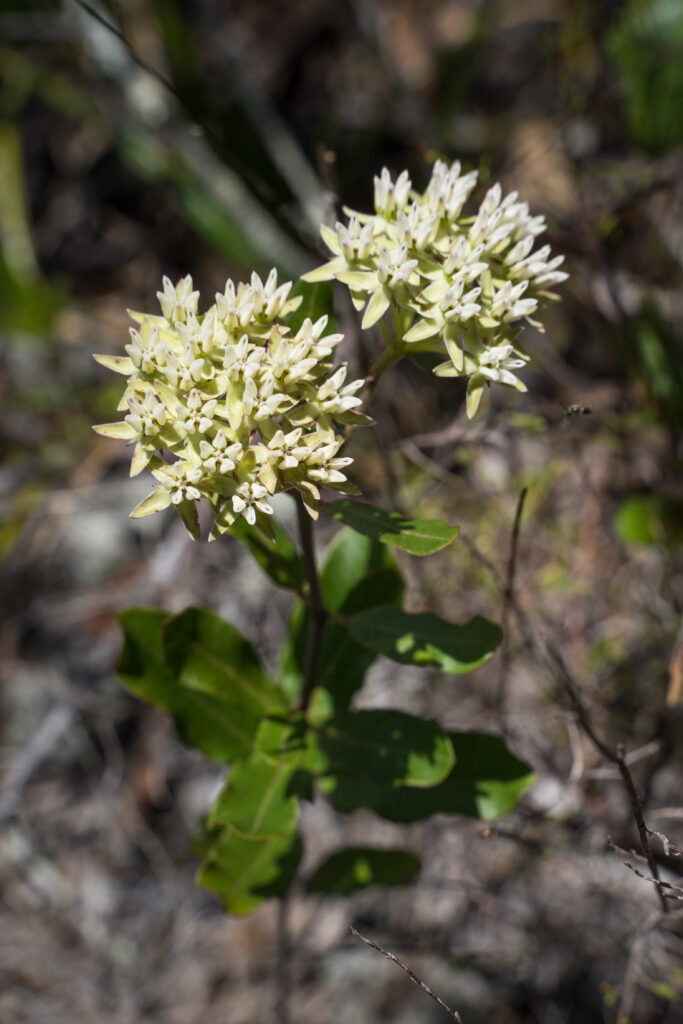
- Curtiss’ Milkweed (Asclepias curtissii): This endemic wildflower is considered “endangered” in Florida. We’ve noticed an increase in their prevalence since beginning our prescribed fire program.
- Oak trees: Oaks of the scrub are low-growing and sometimes bush-like in appearance. They include Chapman’s (Quercus chapmanii), myrtle (Q. myrtifolia), and sand live oak (Q. geminata).
Scrub plants support a range of wildlife, including:
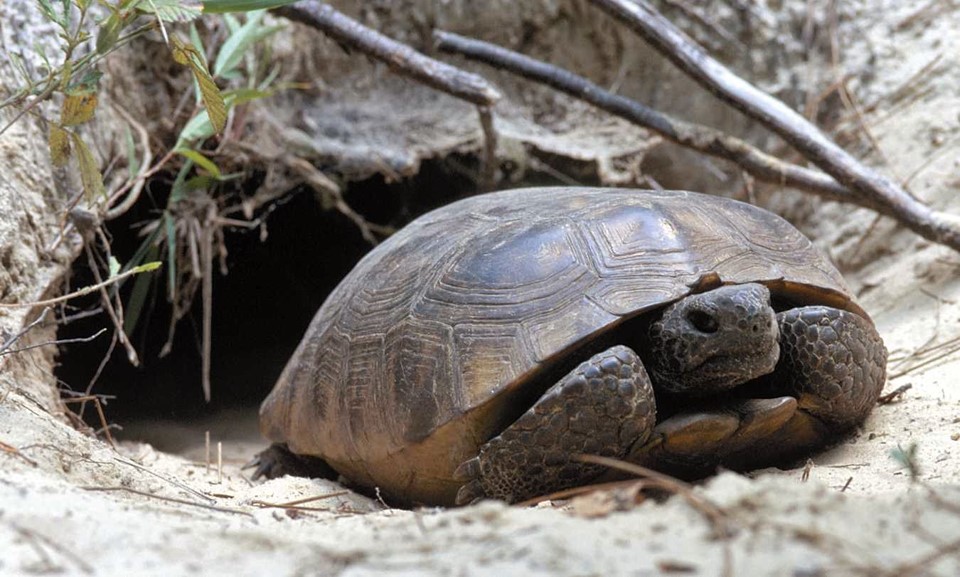
- Gopher tortoises: Protecting the habitat of these state-threatened reptiles is not only important for their own sake, but for the hundred-or-so species that use their burrows. A cleansing fire allows tortoises to move more easily through the habitat and provides new growth for them to eat. Note: tortoises and many other species seek refuge in burrows during fires.
- Florida scrub-jays: These federally endangered birds are nonmigratory and live only in Florida. They live in scrub and scrub-like habitats.
- Sand skink: Found only in central Florida’s scrub habitat, the sand skink looks like a snake, but it is a lizard that moves through the sand on tiny legs. It is listed as “threatened” under the federal Endangered Species Act.
- Roughly 56 arthropods, including spiders, cockroaches, grasshoppers, beetles, fireflies, moths, and ants are found only in scrub habitats.
A few weeks after the burn, the signs of revival were already apparent with various grasses, myrtle oak, liatris (Liatris tenuifolia), and St. John’s wort varieties (Hypericum tetrapetalum and H. tenuifolium) beginning to resprout in this renewed landscape.
“I am encouraged by the plants that I see growing back in the scrub, thriving, setting seeds, and carrying on,” said Foht, who has spent years observing our landscape and its response to fire. “I know the future of these plants and this habitat depends on fire, and despite the many challenges of managing prescribed burns in the Garden, I’m glad to return fire to the landscape. It’s a way I can give back to a place that’s taught me so much over the last 16 years.”
Some places to see Florida scrub habitat:
- Naples Botanical Garden. You can find scrub habitat along the Smith Uplands Preserve Trail, which you can access along the Lake Trail or by following signs to the Preserve from the Kapnick Brazilian Garden.
- Rookery Bay National Estuarine Research Reserve’s Shell Island Road Nature Trails
- Lake Wales Ridge National Wildlife Refuge
- Ocala National Forest
- Highlands Hammock State Park