
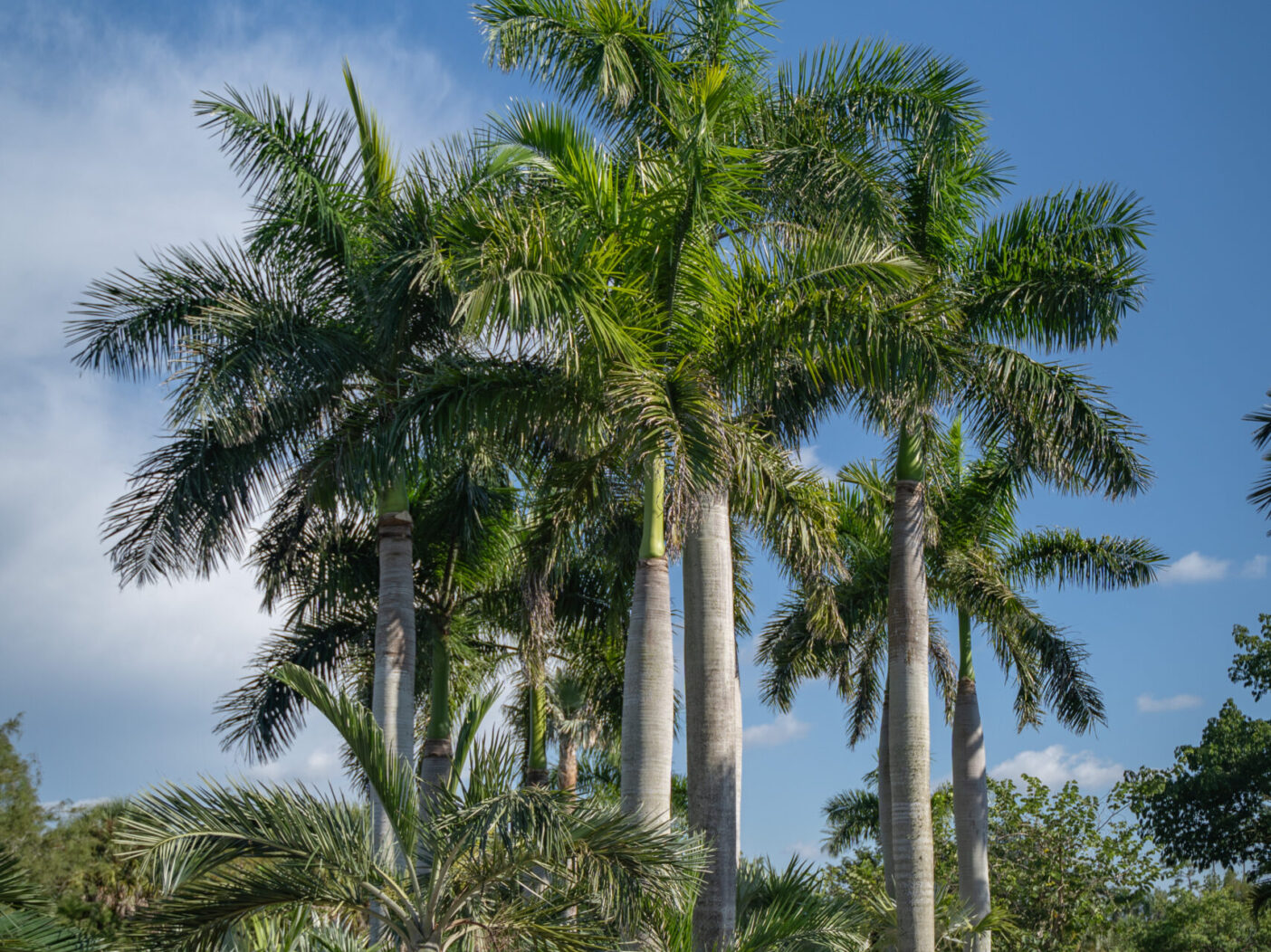
We have hundreds of species of palms in our landscape, and if you study them, you may notice something peculiar about some. Hint: It has to do with their trunks.
Have you observed, for example, an hourglasslike undulation? Or maybe a portion of trunk that appears especially skinny, as if a rope was once accidentally left on? That curvy silhouette is what we refer to as “pencil necking.” It’s a common but unsightly occurrence—and one that’s unique to palms.
Hardwood trees can heal and rebound after an injury like a cut, crack, or accidental rope left on because they have a vascular cambium, or growth tissue, which enables constant healing and growth in all directions.
Palms, which are not trees but grass like bamboo, grow in one direction: up. Nutrients, their lifeblood, flow from roots to tip through vertical vascular bundles, like energy through a multistrand power line. The only location actively growing is the top.
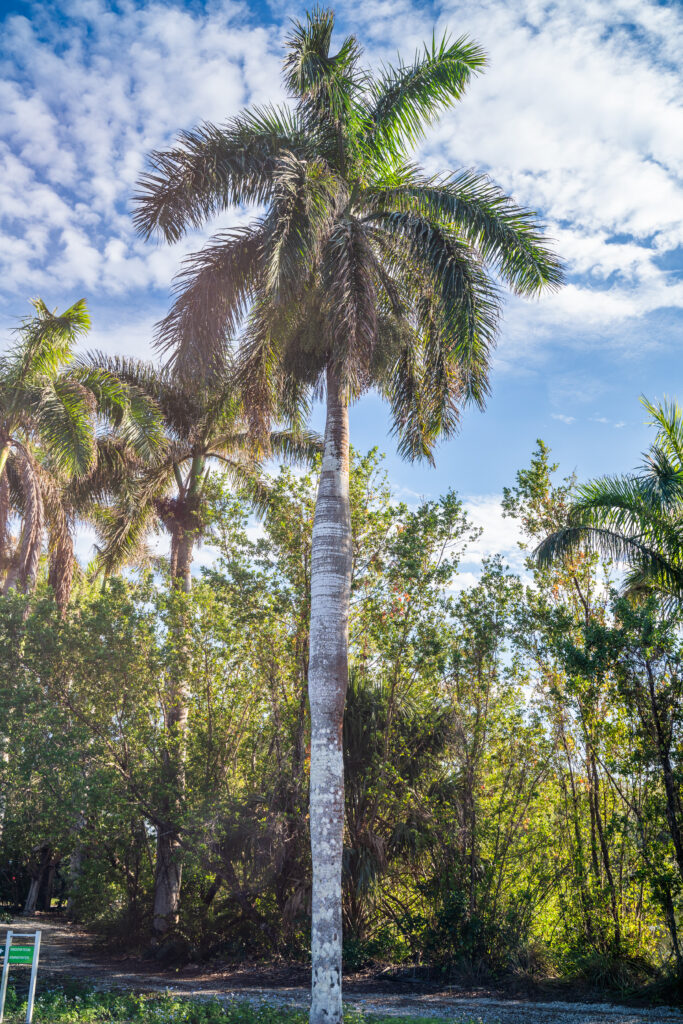
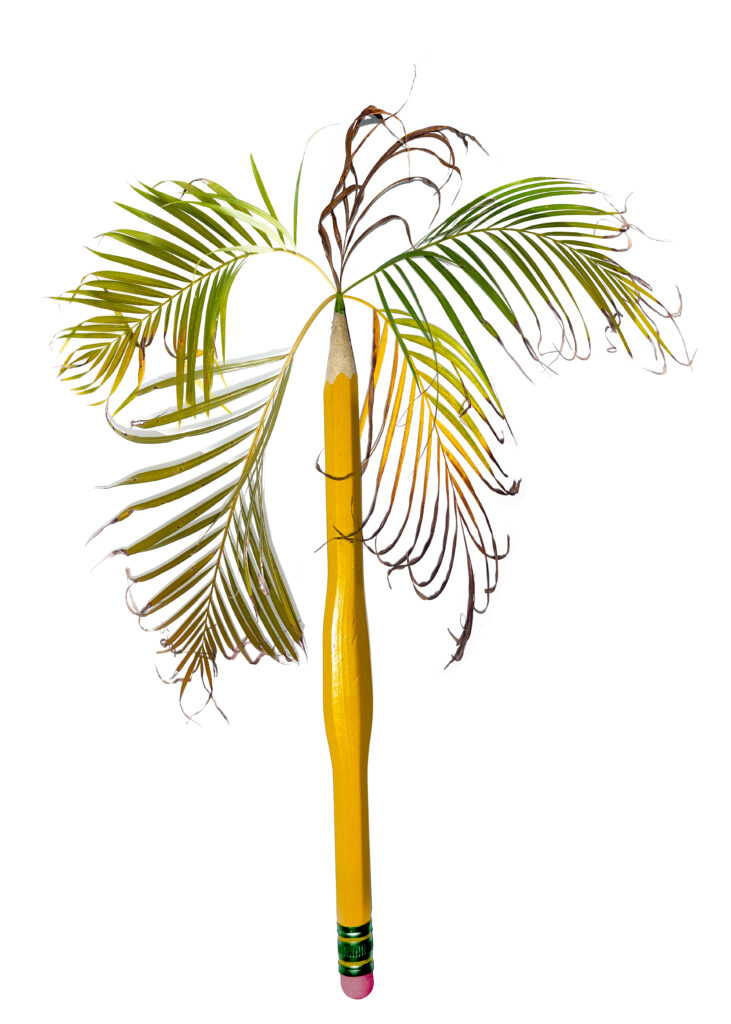
This growth pattern means a palm does not have the ability to repair injuries from ropes, weed eaters, chain saws, woodpeckers, hurricanes … you get the gist. If you remove a frond with a saw and cut too deep, that incision will be visible for the life of the palm. If a mower bumps the trunk and leaves a gouge, it’s there forever.
The palm’s trunk also tells the story of its life’s ups and downs. In good times, when nutrients and water abound, the trunk’s girth widens. But when a palm is subjected to hazards, extremes, or forced to grow in less-than-ideal locations, the trunk narrows. Those fluctuations never even out; they are a permanent record of the life the palm has lived.
Evidence of damage and stress is very common in palms. It can’t be corrected, but it can be avoided.
Palm lovers, take note of these tips to grow specimens that are consistent in girth and free from scars:
- The right palm in the right place is ideal for optimum growth and achieving that impressive specimen. Do your homework on planting location and species selection.
- Implement a good regimen for feeding, irrigation, and maintenance based on species type. This will help the trunk develop at a consistent width.
- Avoid mechanical damage. Mulching and planting additional shrubs and/or groundcovers are a great way to create a buffer between palm and lawn and reduce mechanical contact.
- Do not remove a frond until the majority has turned brown. Palms draw nutrients from aging leaves. Removing flowers and fruit is fine as they require nutrients from the palm. This is especially important when a palm is struggling or not entirely happy.
- When planting, install groupings of species that have similar needs and favor similar growing conditions to add resilience and to create a habitat or community of plants.
This article first appeared in the Spring 2025 issue of Cultivate, the Garden’s magazine.