There are no other Everglades in the world.
“They are, they have always been, one of the unique regions of the earth, remote, never wholly known. Nothing anywhere else is like them: their vast glittering openness, wider than the enormous visible round of the horizon, the racing free saltness and sweetness of their massive winds, under the dazzling blue heights of space. They are unique also in the simplicity, the diversity, the related harmony of the forms of life they enclose. The miracle of the light pours over the green and brown expanse of sawgrass and of water, shining and slow-moving below, the grass and water that is the meaning and the central fact of the Everglades of Florida. It is a river of grass.”
—Marjory Stoneman Douglas,
The Everglades: River of Grass, 1947
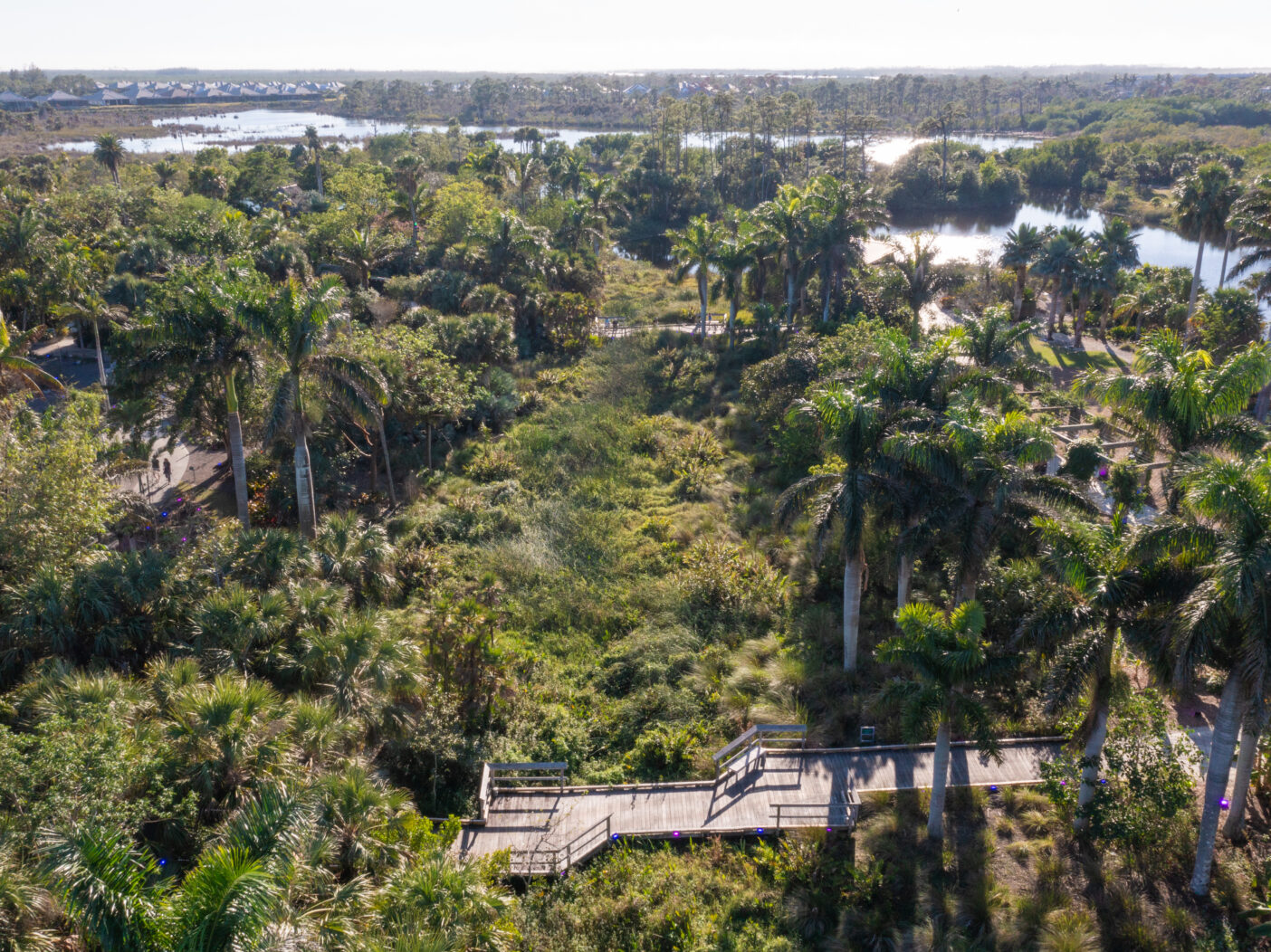
Even though they’ve shrunk to half their original footprint, the Everglades remain a vast wilderness, frighteningly beautiful or just frightening, depending on your perspective. Guests can experience a taste of the Everglades and its many ecosystems—marsh, swamp, forest, estuary—with the Garden’s Mary and Stephen Byron Smith River of Grass. Journey with us as we explore each of these habitats and reflect on how they mirror Marjory Stoneman Douglas’ seminal work.
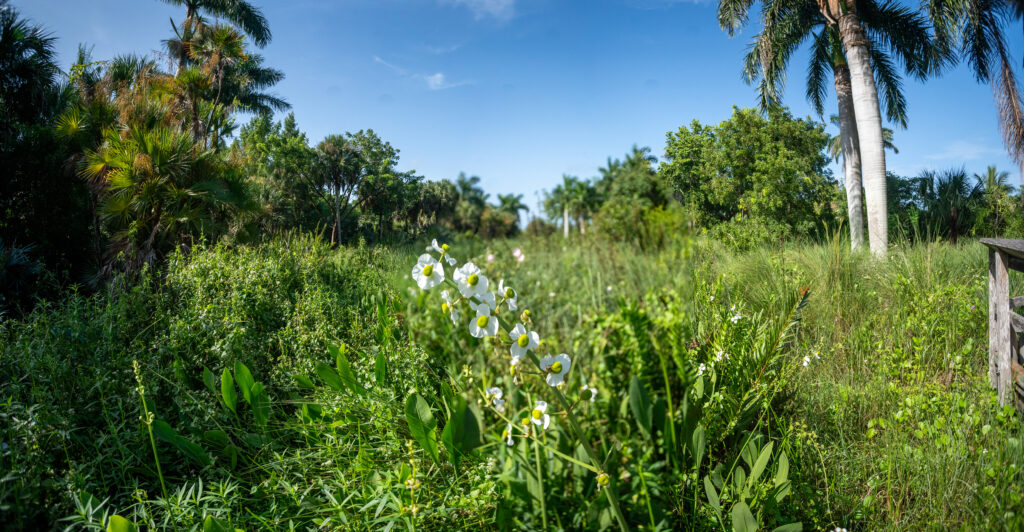
Above: The white blooms of lanceleaf arrowhead (Sagittaria lancifolia) stand out among the foliage of the River of Grass.
Photos by John Eder
Marsh
“… in the botanical sense, (sawgrass) is not grass at all so much as a fierce, ancient, cutting sedge. It is one of the oldest of the green growing forms in this world.”
Don’t touch the sawgrass. The serrated edges of Cladium jamaicense give this plant its common name. If you can’t resist running your fingers lightly along a blade, you won’t cut yourself, but you probably won’t enjoy it, either. Consider yourself warned!
In the Everglades, sawgrass extends for miles through sloughs, or marsh, channels that remain flooded nearly year-round. Sawgrass grows in the channels’ deepest parts. Our River of Grass offers similar depth and dimension to our landscape, as it flows, ribbonlike, from the Water Garden southward toward the Preserve.
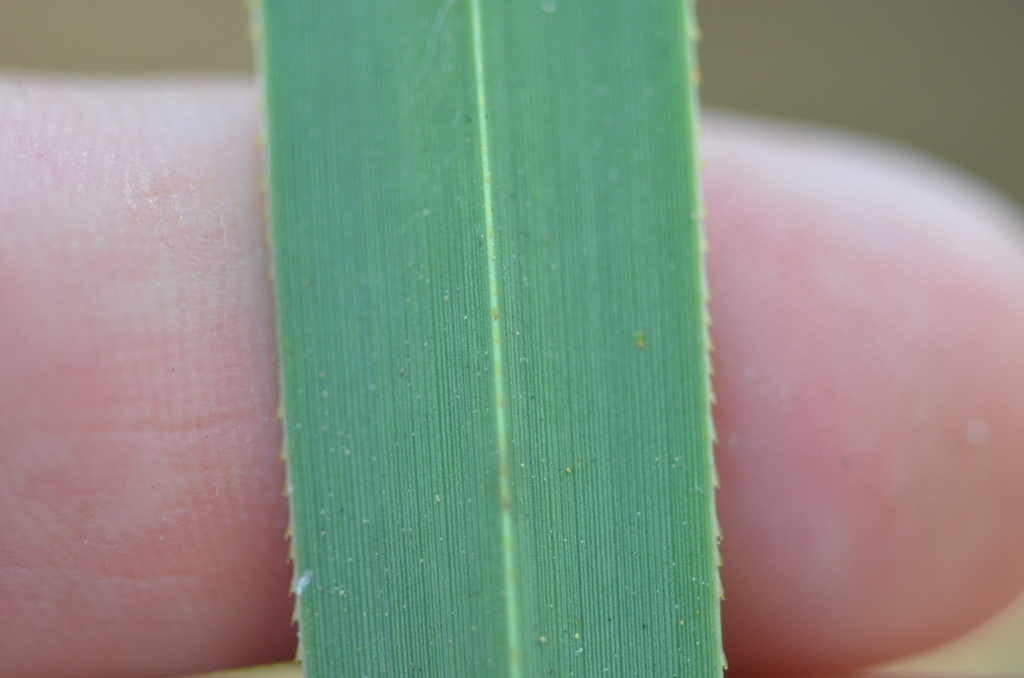
Photo by Bryce Lee via iNaturalist
This feature, moreover, is the heart of our stormwater management system and replicates the way in which the Everglades manage rainfall. Florida slopes gently downward, encouraging water to meander from the state’s center to its southern tip, hydrating ecosystems and infusing Florida Bay with the freshwater needed to balance the estuaries, the places where saltwater and freshwater meet. Plants filter it along the way.
In our case, sawgrass and other plants—including cordgrass (Sporobolus pumilus), lanceleaf arrowhead (Sagittaria lancifolia), and giant leather fern (Acrostichum danaeifolium)—purify rainwater that has flowed over paved areas and embarked on a slow journey through our swales, rain garden, River of Grass, lakes, marsh, and, eventually, Naples Bay. Stormwater management is an important area of study for the Garden’s Center for Nature-Based Solutions, and we use these water catchment areas as demonstration sites.
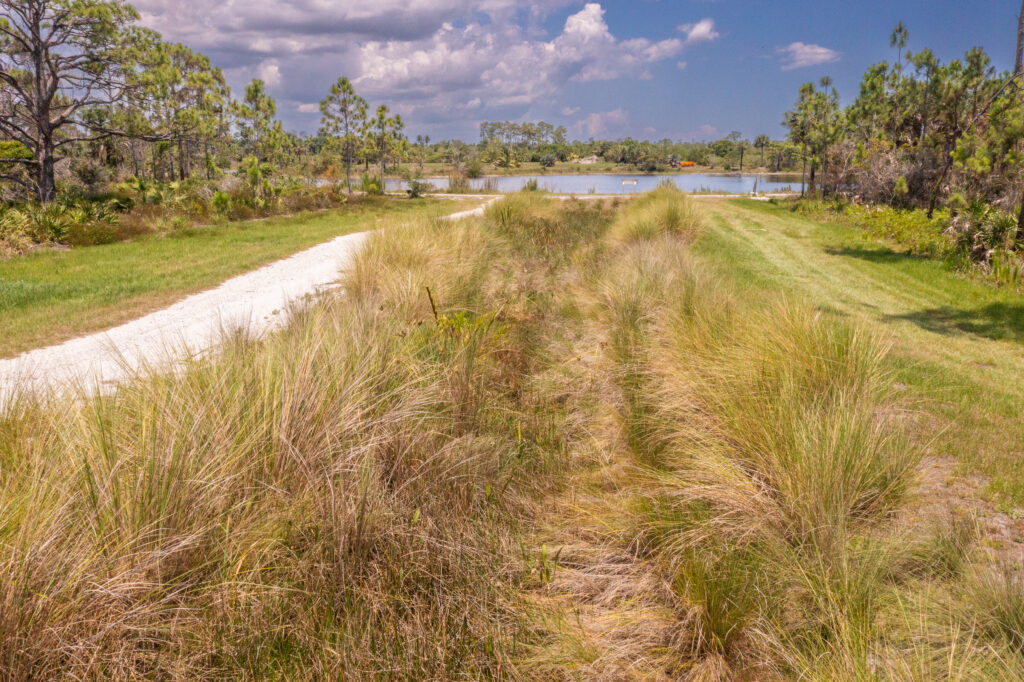
Photo by John Eder
In the late 1800s, developers began dredging and ditching the Glades for agriculture and residential construction. Decades later, the environmental fallout became evident; Stoneman Douglas’ book stirred a new consciousness about the Everglades’ critical importance to wildlife and people and the harm caused by interrupting its flow.
Today, the state and federal government are 25 years into the Comprehensive Everglades Restoration Plan (CERP), the world’s largest ecosystem restoration, costing an estimated $23 billion and projecting to stretch into the 2030s, according to the U.S. Army Corps of Engineers. The Corps and the South Florida Water Management District are shifting more resources to the Western Everglades—our region—and have tapped Garden experts to consult on some aspects of the work.
Natural Resources Director Eric Foht surveys our River’s grassy expanse. It is the same age as the Garden, barely 16, but it looks and feels much older. To Foht, the swift maturation of plant communities signifies the promise and potential of restoration. “To me, that’s really hopeful,” he says.
Tree Islands
“These islands are, like the sawgrass, the particular feature of the Glades. Small or great jungles, they loom out of the brownness of the sawgrasses in humped solid shapes, like green whales and gray-green hangars and domes and green clouds on the horizon.”
“Their spiky fans cover all the ground beneath the pine trees on unseen spiny trunks. If they (saw palmettto) are burned, with a great oily popping and seething, only the blackened trunks are left, writhing like heavy snakes.”
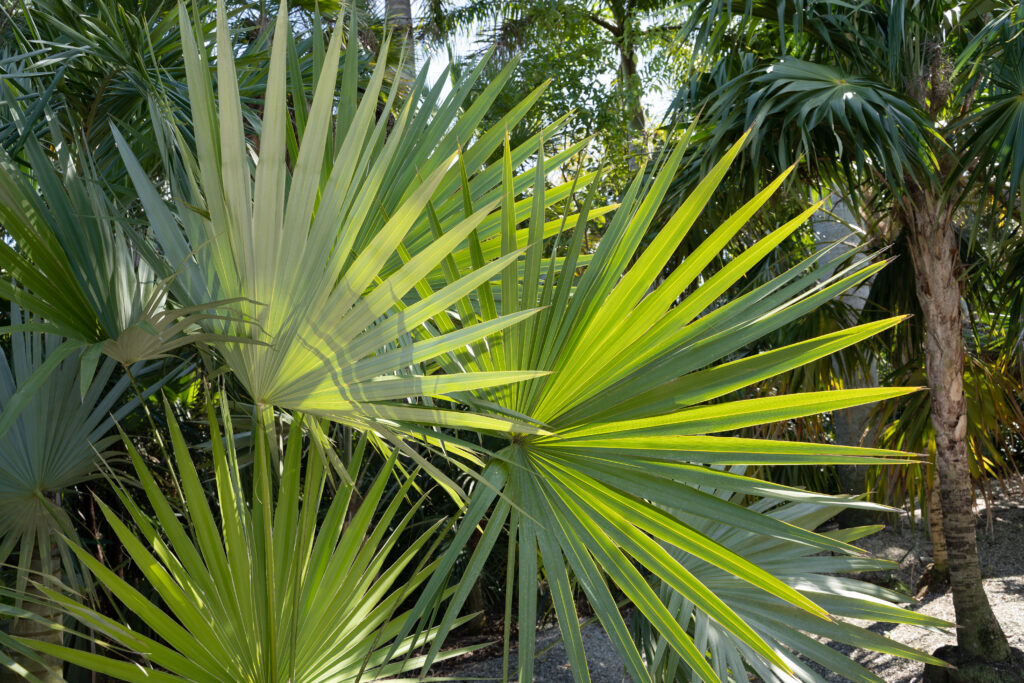
Two bridges span our River of Grass. As you cross them, notice how the embankments slope upward. Notice, too, how the plant communities change, from sawgrass and its marshy kin to palms and hardwoods.
These are our “tree islands,” Foht explains.
Tree islands are unique to the Everglades. They are land masses that arise out of the sloughs and support plants, wildlife, and, once, people. During the Seminole Wars of the 1800s, the Seminole and Miccosukee escaped U.S. troops and took up residence on the islands, shielded by sawgrass and obscured by trees. The tribes use them to this day for recreation, ceremony, and for teaching tribal history.
Our “tree islands” include gumbo limbo (Bursera simaruba), soldierwood (Colubrina elliptica), sweet bay magnolia (Magnolia virginiana), and saw palmetto (Serenoa repens), which grows horizontally along the forest floor and lends a prehistoric feel to our landscape.
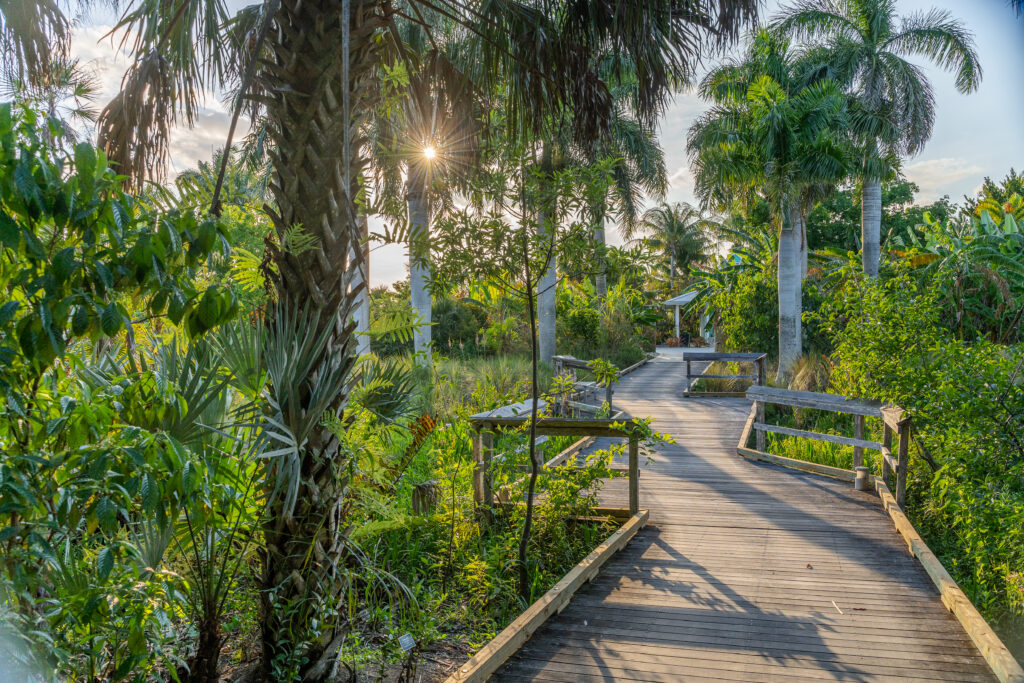
Photo by John Eder
Pine Uplands
“Its trunks are set thick with rust and brown and grayish bark patches, which resist fire. The patterns of its skimpy branches people find strange, or beautiful.”
If you stand along the more southern of our two River of Grass bridges and look toward the Preserve, you’ll see the outlines of slash pine (Pinus elliottii var. densa). They are at once hardy with thick, scaly bark and delicate with long, spindly needles.
Fire is essential to pinelands, and we’ve been burning ours accordingly over the last two years, replicating nature’s purifying power.
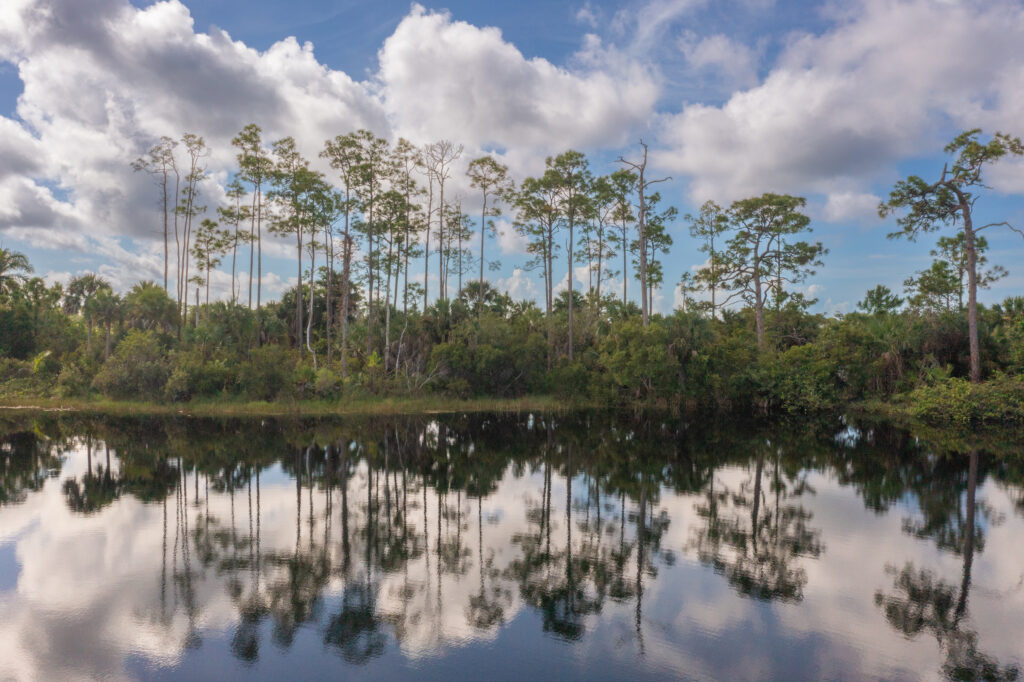
Photo by John Eder
Swamp
“… it is clear that rainfall alone could not have maintained the persistent fine balance between wet and dry that has created and kept the Everglades, the long heart of this long land. If Okeechobee and the lakes and marshes north that contribute to it, if rivers and swamps and ponds had not existed to hoard all that excess water in a great series of reservoirs by which the flow was constantly checked and regulated, there would have been no Everglades.”
When examining plants for form and function, and no portion of the Garden exemplifies that better than the remnant slough along the Sönne Family Ghost Orchid Boardwalk.
That area is largely the domain of Director of Collections Nick Ewy, who for years has been planting trees and layering them with native epiphytic orchids and bromeliads to re-create the Glades’ primordial swamps.
“The boardwalk is the only place on our property where the public can really see this kind of habitat,” he says.
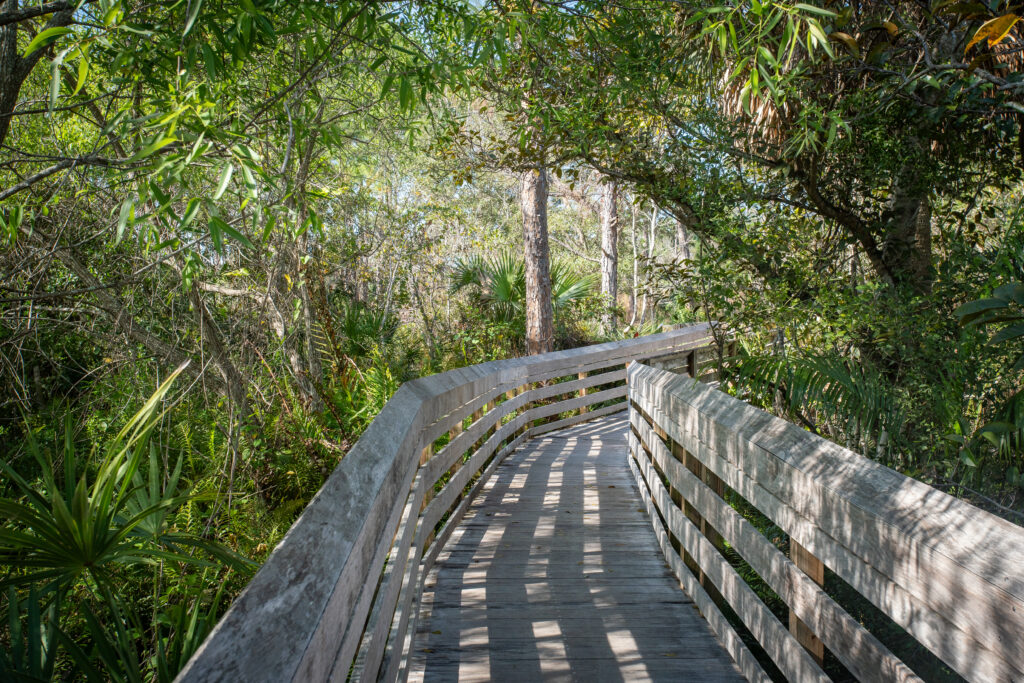
Photo by John Eder
The interdependence of plants is on full display here. When conditions—including water level, light, temperature, and mycorrhizal fungal presence—are right, native orchids and bromeliads establish themselves on trees such as bald cypress (Taxodium distichum), pond apple (Annona glabra), and pop ash (Fraxinus caroliniana).
The water, Ewy explains, helps regulate temperature, keeping swamps slightly warmer in winter and cooler in summer, protecting sensitive plants. This small swampy region tells the story of how drainage impacts ecosystems. An abbreviated hydroperiod—or time in which water is present—can threaten the epiphytic plants Ewy has so painstakingly grown and installed, the same risk posed to plants in a swampland drained for development.
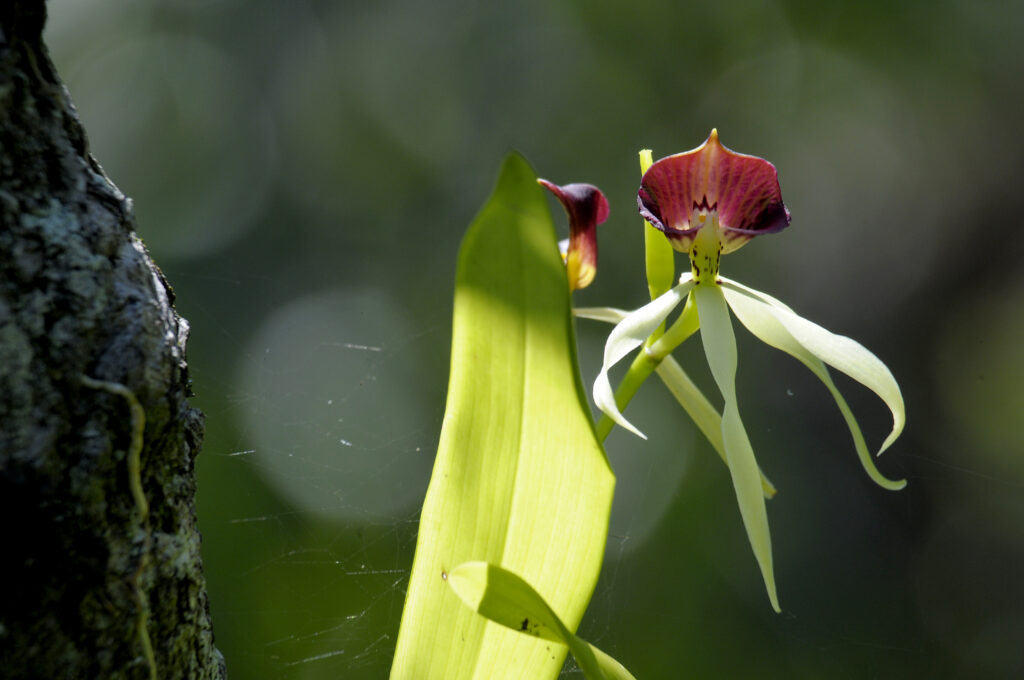
He’s added reams of species, including the beloved butterfly orchid (Encyclia tampensis), which is fairly common in our region, as well as rarities. These include the fuzzywuzzy air plant (Tillandsia pruinosa) and nodding strap air plant (Catopsis nutans), both of which are state-endangered and found only in Collier County, and native orchids such as the state-endangered nightscented orchid (Epidendrum nocturnum) and clamshell orchid (Prosthechea cochleata).
Ewy and other researchers use this part of the Garden to better understand these and other species.
Our swamp has been ravaged in recent hurricanes, most notably 2017’s Hurricane Irma and 2022’s Hurricane Ian. But the trees Ewy has installed since are maturing, creating a habitat for these disappearing epiphytes to thrive.
“I’m certainly looking to enhance it even more,” he says.
Photo by John Eder
In 1947, the federal and state governments collaborated to establish Everglades National Park. Big Cypress National Preserve followed, in 1974. Today, Collier and neighboring Miami-Dade counties protect 1.7 million acres in conservation, most of it the Everglades. Gov. Ron DeSantis is asking lawmakers to allocate more than $800 million for Everglades restoration this fiscal year; the federal government has proposed $565 million for CERP and related projects.
Still, the needs of this delicate ecosystem are vast, and the threats to it—encroaching development, changing climate, polluted runoff—mean we cannot let down our guard. Public understanding of the Everglades is key to its survival. Marjory Stoneman Douglas hoped to elicit that in her groundbreaking book. We carry out her legacy by educating guests about the region’s unique ecosystems. When exploring the Garden, we invite you to pause and notice their intricacies in a new way.
The author ended her book with optimism. For all the devastation she documented, a new movement had begun to nurse them back to life:
“Perhaps even in this last hour, in a new relation of usefulness and beauty, the vast, magnificent, subtle and unique region of the Everglades may not be utterly lost.”
You can purchase your copy of Marjory Stoneman Douglas’ seminal work, The Everglades: River of Grass, at The Berger Shop in the Garden. This article first appeared in the Spring 2025 issue of Cultivate, the Garden’s magazine.