• Skip to primary navigation
  • Skip to main content
  • Skip to footer
Naples Botanical Garden

Naples Botanical Garden

    • OPEN DAILY
      9am – 5pm*
      8 – 9am Members Only

  • VISIT
    • Plan Your Visit
      • About the Garden
      • Ways to enjoy the Garden
      • Fogg Café
      • Berger Shop in the Garden
      • Tour Options
      • Private Events
      • Photography Policy
      • Policies
    • Gardens
      • Collections
    • Events & Exhibitions
    • Students & Teachers
    • Contact Us
  • Learn
    • Adult Programming
    • Children & Families
    • Meet Me in the Garden
    • Nature Journaling
    • Notes From the Garden
  • Conservation
    • The Center for Nature-Based Solutions
    • Protecting Wild Plants
    • Conservation Collections
    • Prescribed Burns
    • Seed Collecting & Conservation Horticulture
    • Global Contributions
  • SUPPORT
    • Donate
    • Membership
    • Royal Palm Society
    • Sponsor
    • Volunteers
  • Calendar
  • Reserve Tickets
Show Search
Hide Search
  • VISIT
    • Plan Your Visit
      • About the Garden
      • Ways to enjoy the Garden
      • Fogg Café
      • Berger Shop in the Garden
      • Tour Options
      • Private Events
      • Photography Policy
      • Policies
    • Gardens
      • Collections
    • Events & Exhibitions
    • Students & Teachers
    • Contact Us
  • Learn
    • Adult Programming
    • Children & Families
    • Meet Me in the Garden
    • Nature Journaling
    • Notes From the Garden
  • Conservation
    • The Center for Nature-Based Solutions
    • Protecting Wild Plants
    • Conservation Collections
    • Prescribed Burns
    • Seed Collecting & Conservation Horticulture
    • Global Contributions
  • SUPPORT
    • Donate
    • Membership
    • Royal Palm Society
    • Sponsor
    • Volunteers
  • Calendar
  • Reserve Tickets

Where Tours Take Root

August 3, 2026 by Renee W

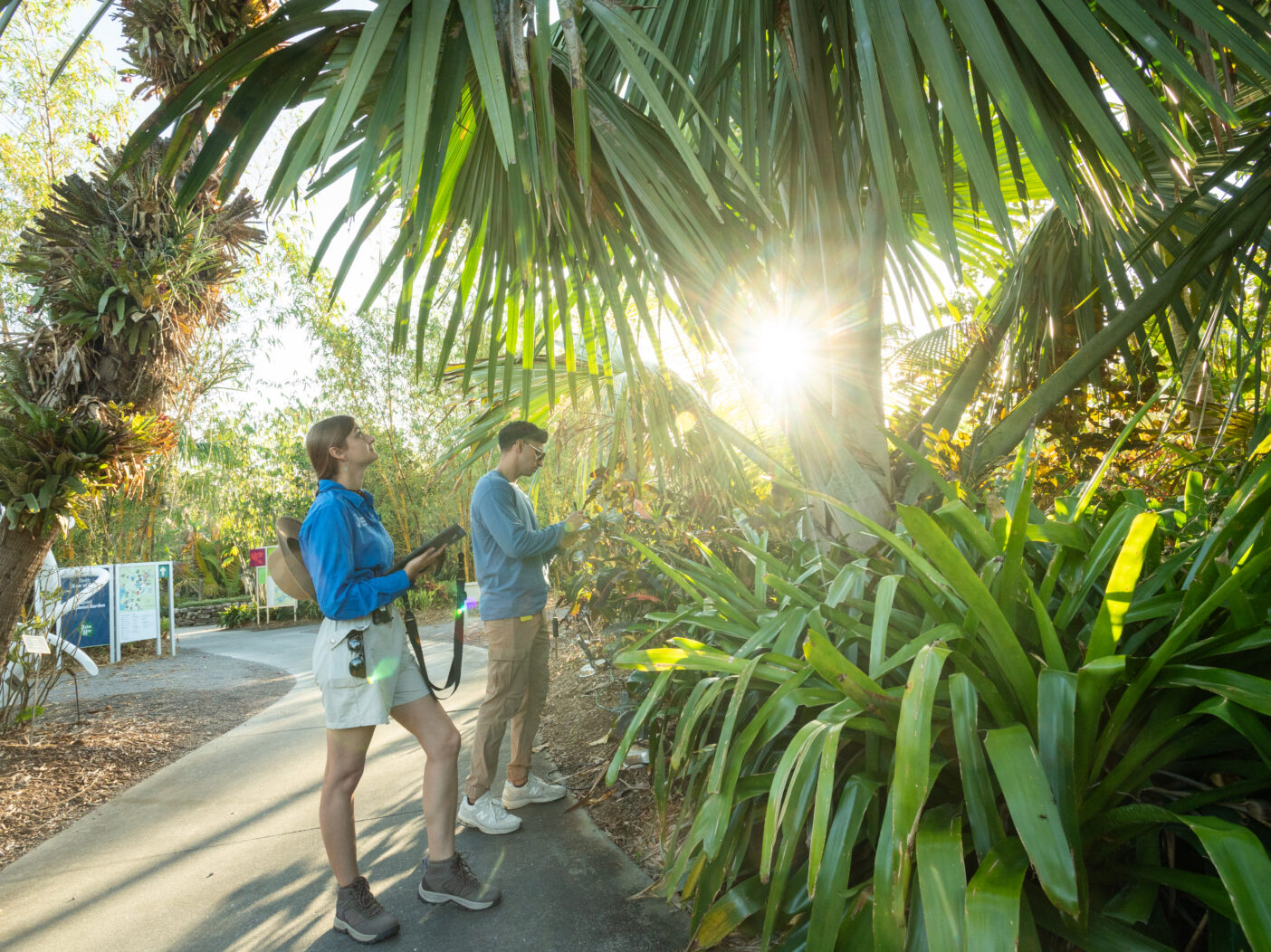
Two people stand on a lush garden pathway holding tablets and looking at a large palm tree.

There are no “plug and play” programs at your Garden. Instead, every tour, drop-in session, field trip, and special offering is created by staff to interpret our collections and illuminate the unique, natural wonders of Southwest Florida and beyond. Many hours—and many minds—go into the making of a Garden program. Here’s one example of how we do it.


We start with curiosity.

What kind of palm is this? Are palm trees really trees? Is this plant with the fronds a palm? How many kinds of palm trees are there in Florida?
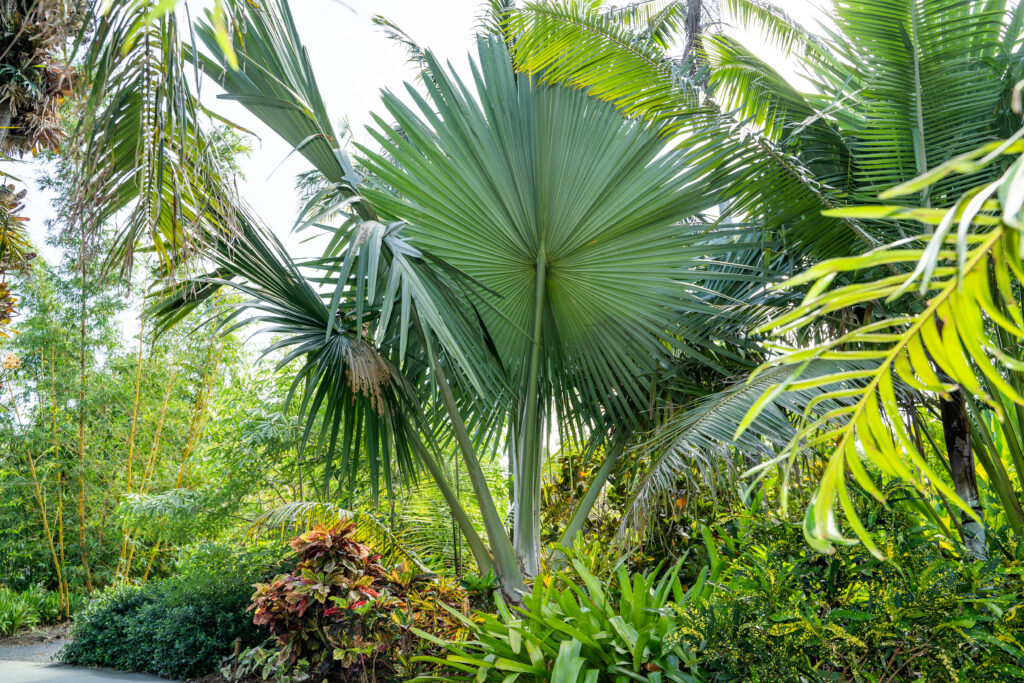
Plants among smaller tropical foliage, a large palm with multiple fronds grows tall. The fronds are over 12 feet in diameter and circular.
Tahina palm (Tahina spectabilis)
Photos by John Eder

Although we could talk plants all day long, we show some restraint. We limit our tours to 30 – 45 minutes and a half mile. For the Palms & Cycads tour, we distilled our plant selections to eight specific specimens out of more than a thousand palms and cycads on display. We look for plants that are easy to spot from Garden paths and for botanical stars with interesting stories to tell—like the Tahina palm (Tahina spectabilis) and Hope’s cycad (Lepidozamia hopei). We consider a theme, or throughline, for the tour. In this case, we focus on the intrinsic value of palms and cycads to their native ecosystems and how their presence in the Garden demonstrates conservation in action.
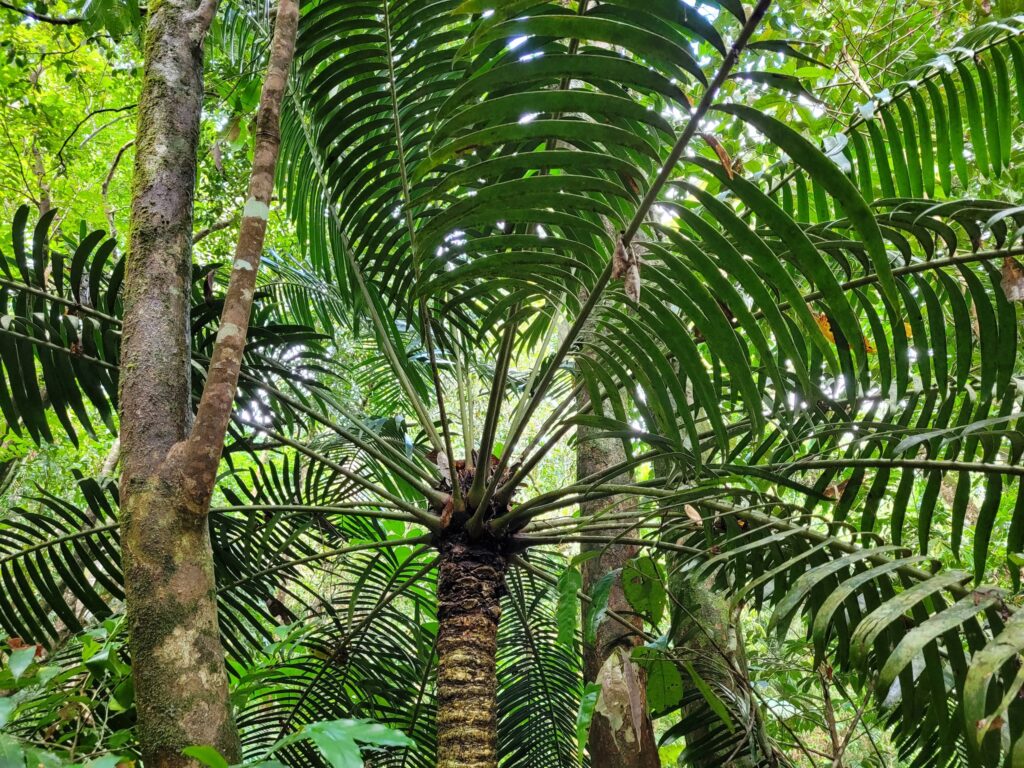
Resembling a smaller palm tree, this cycad has a skinny trunk and fonds that grow from the top of the trunk. The fronds each have many individual leaves on them.
Hope’s cycad (Lepidozamia hopei)
Photo by Donald Davesne

Mapping what’s next

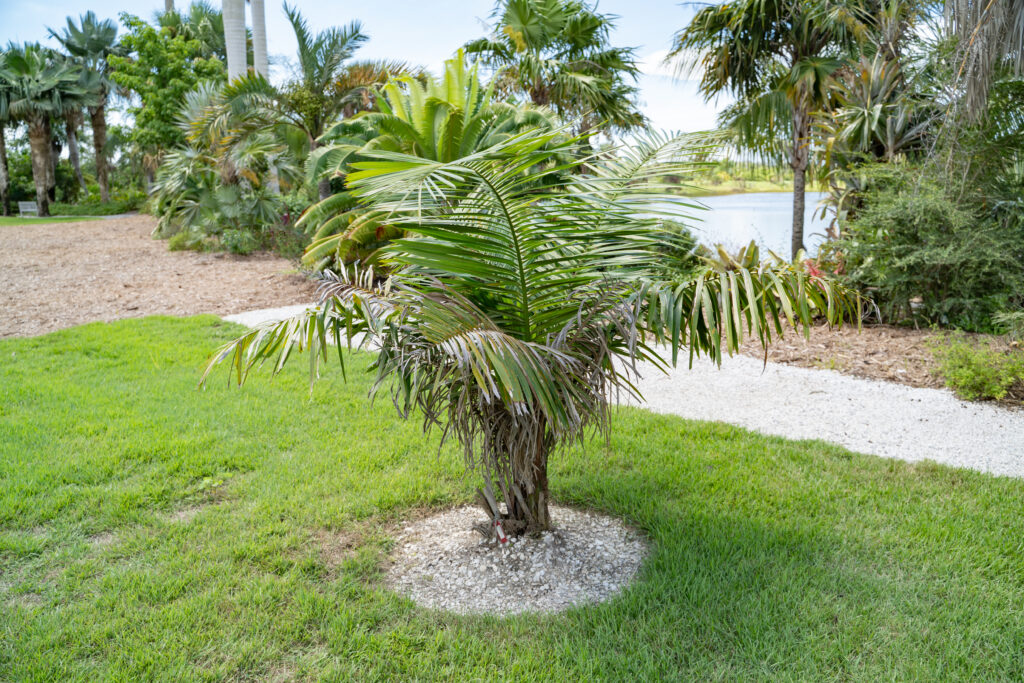
We now map a route that starts at the Smith Entry Prow. For the Palms & Cycads tour, the route ends in the Kapnick Caribbean Garden, home of the Ware Palm Collection. There, we share the story of the Carossier palm (Attalea crassispatha), planted as part of a partnership with Jardin Botanique des Cayes in Haiti. The Garden ensures the survival of this critically endangered species’s genetics in our living collections.
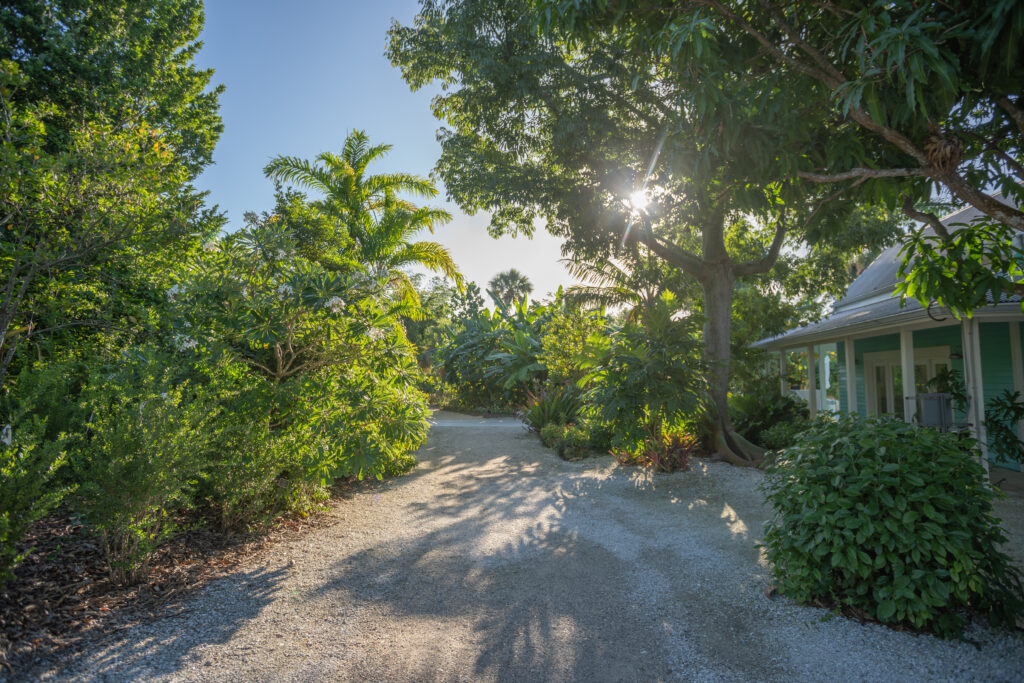
A gravel pathway disappears into a lush garden with large plants and trees on either side.
Kapnick Caribbean Garden
A small palm tree, no more than 6 feet tall, is planted in a grassy lawn. The background shows a lake and other palm trees planted in a garden bed.
Carossier palm (Attalea crassispatha)

Data-driven drafting

Next, we reach out to Curator of Records Sandra Rigotti-Santos. She manages millions of data points about our collections and can offer all sorts of numeric talking points.

Did you know we have 630 individual cycads—from seedlings to mature plants? Or that our palm collection now tops 3,500 palms in our nurseries, sourced from across the tropical world? See approximately 1,500 of these palms throughout the Garden.
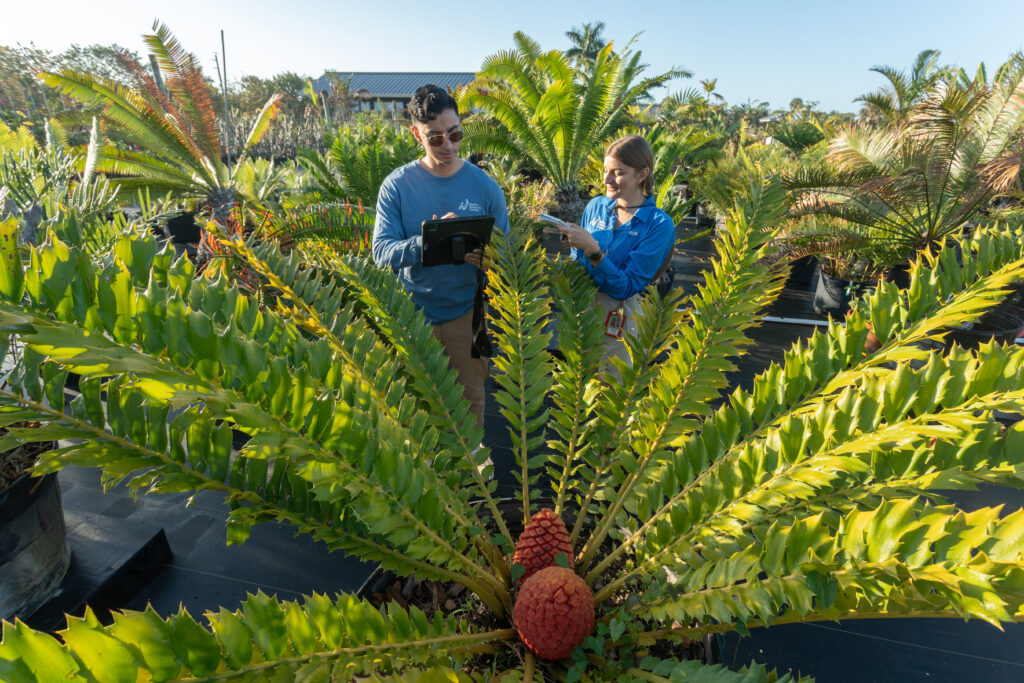
Two people stand in a nursey row observing and taking notes about a cycad with large, fishtail-like leaves and two red cones in the center.
Gabe Leal, Educator I and Jenny Sherer, Visitor Experience Lead, study a large cycad in our nursery.

With our plant list in hand, we research each species, looking for nuggets of information that might instigate an “a-ha” moment. We document everything because we want to make sure our information is verified. Our bibliography contains more than 1,600 sources. Draft. Review. Revise. Second draft, third draft … Each tour and program goes before many eyes and many red pens. For tours, we’re looking for the most logical path, ensuring selected plants are the best fit for storytelling, and double checking all the information. Facts need to have a reason for inclusion—they must move the story forward.
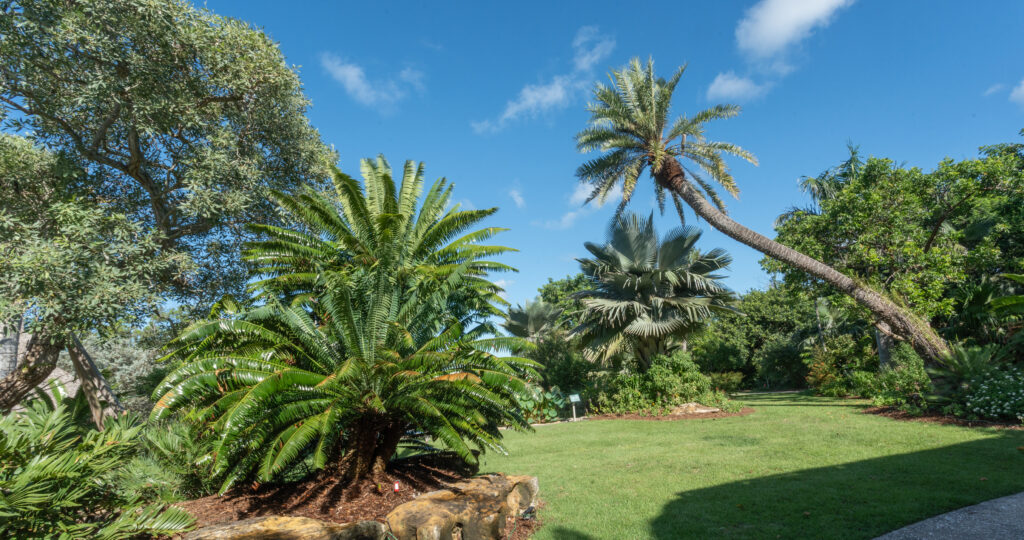
A landscape shot of a garden space shows a grassy lawn in the center with large palms, cycads, and tropical hardwood trees surrounding it.
Palms and cycads show off their foliage in the Karen and Robert Scott Florida Garden.

Rehearsal time

We write tours to be flexible because the Garden changes throughout the year. We include a wealth of details so that educators can follow their interests—and those of tour goers—while still adhering to the tour’s theme and goals. Walking the path and running the script help us note all options.

All our educators are certified interpretive guides through the National Association for Interpretation. Think of them as professional storytellers.
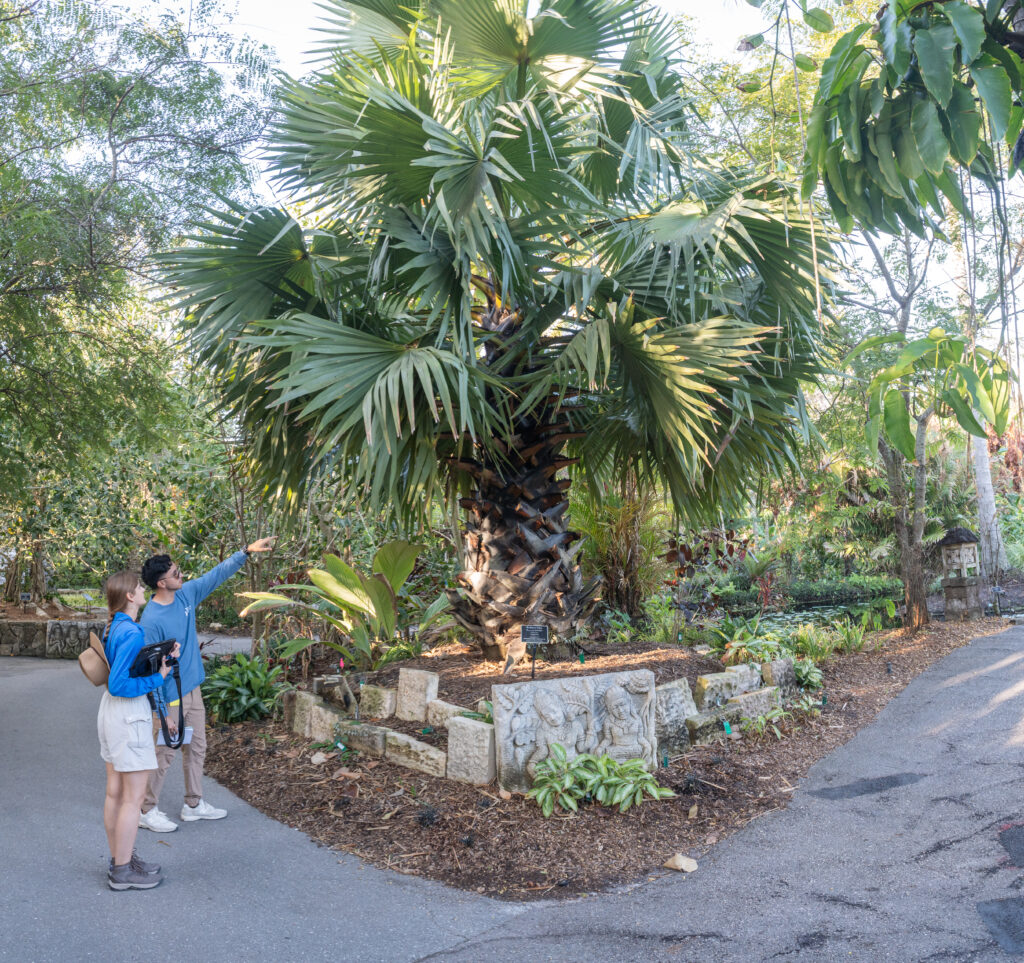
Two people observe a palm tree in a plant bed. One person is pointing at the short, thick trunk of the tree. There are decorative replicas of ancient ruins flanking the garden bed.
Leal and Sherer rehearse a tour stop in the Lea Asian Garden.

Your turn

From guided daily tours to air-conditioned tram tours to specialty tours—such as the Palms & Cycads tour—there’s a Garden tour for all interests and ages. Visit our Tour Options page to plan your next trip to the Garden and then meet us at Smith Entry Prow to begin your botanical adventure.
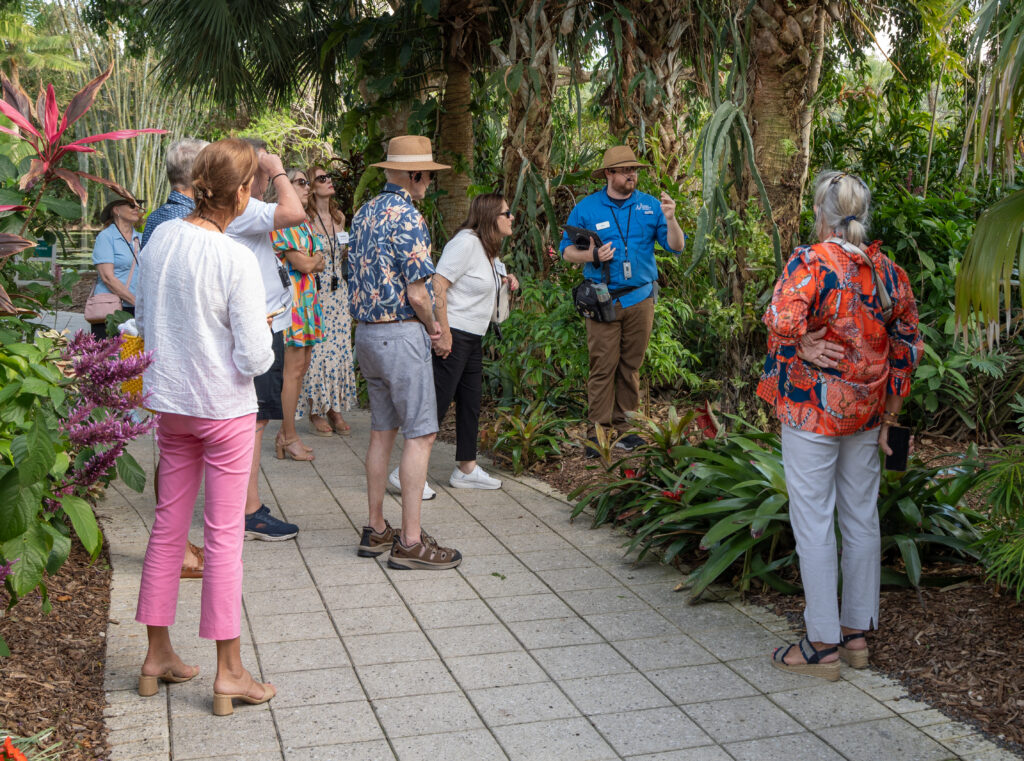
A tour guide wearing a microphone and carrying an ipad directs the attention of tour guests to a cactus hanging from a palm tree. There are nine guests, all standing on a garden pathway.
Kyle Possai, Youth & Family Program Supervisor, directs guests’ collective gaze to eye-level and above during this Orchids & Epiphytes Tour.

This article first appeared in the Summer 2026 issue of Cultivate, the Garden’s magazine.

Special thanks to our Garden Education & Visitor Experience Staff for this article.

Filed Under: Garden Magazine

Footer

Contact Us

Join Our Email List


Charity Navigator Four-Star Rating
Location

4820 Bayshore Drive
Naples, FL 34112

239.643.7275

Hours of operation

9am – 5pm daily

(8am for Members)

Tickets

Adults: $27
Children (4 – 17): $12
Children 3 & Under: FREE
Members: FREE

Buy Tickets

Quick Links
  • Fogg Café
  • Berger Shop in the Garden
  • Hats in the Garden
  • Blog
  • Volunteers
  • Members
  • Employment
  • Executive Staff
  • Media
  • Sponsor
  • Private Events
  • Privacy Policy
  • Website Accessibility

Copyright © 2026 Naples Botanical Garden All Rights Reserved.