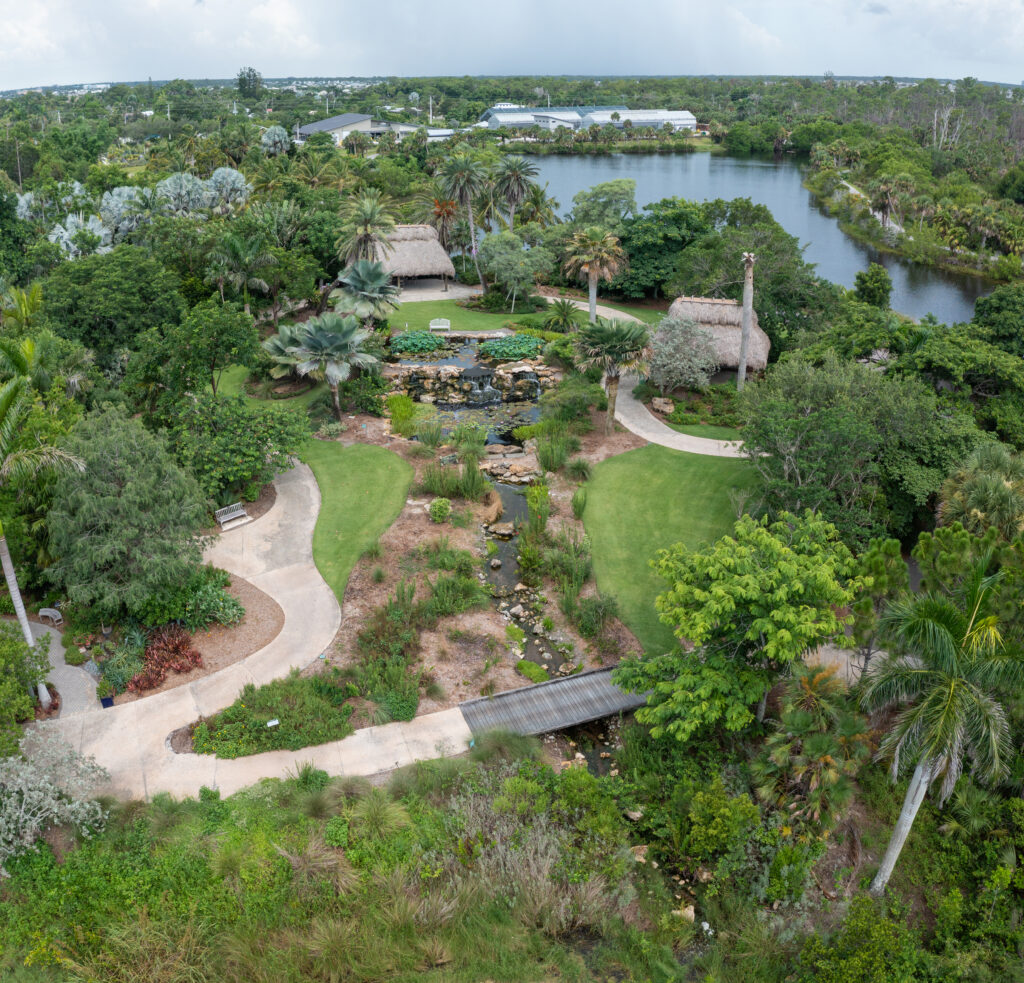
Summer in the Garden is “Project Season,” when our horticulturists refresh some of guests’ favorite spots. This year’s undertaking: the Scott Florida Garden.
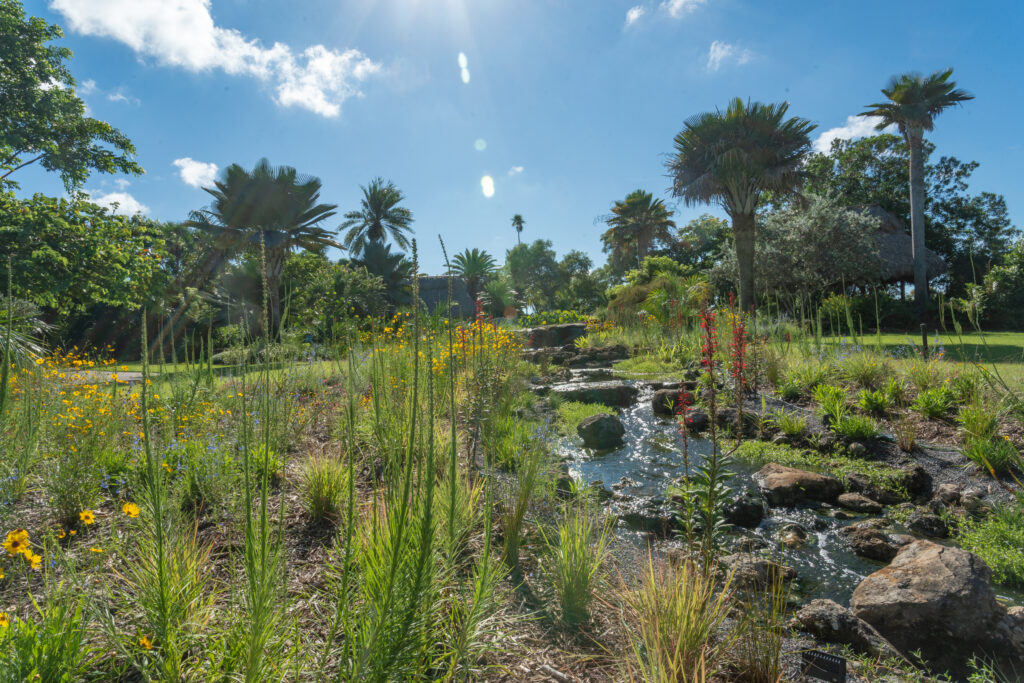
Their efforts focused on the stream, a water feature that trickles from the top of the garden to the lake. Over time, the beds flanking it had become somewhat overgrown, obscuring water views. An invasive grass had also infiltrated them, requiring a laborious two-month removal effort.
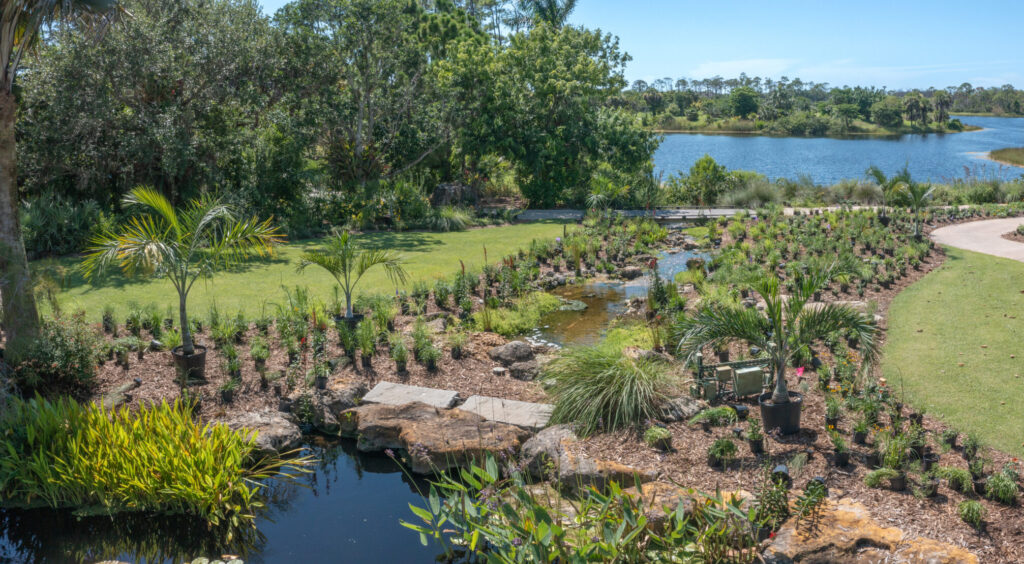
With a newly blank slate, the team created a wildflower meadow, highlighting native plants and some favorite tropical annuals. Together, they add waves of color that draw the eye along the stream.
Photos by John Eder
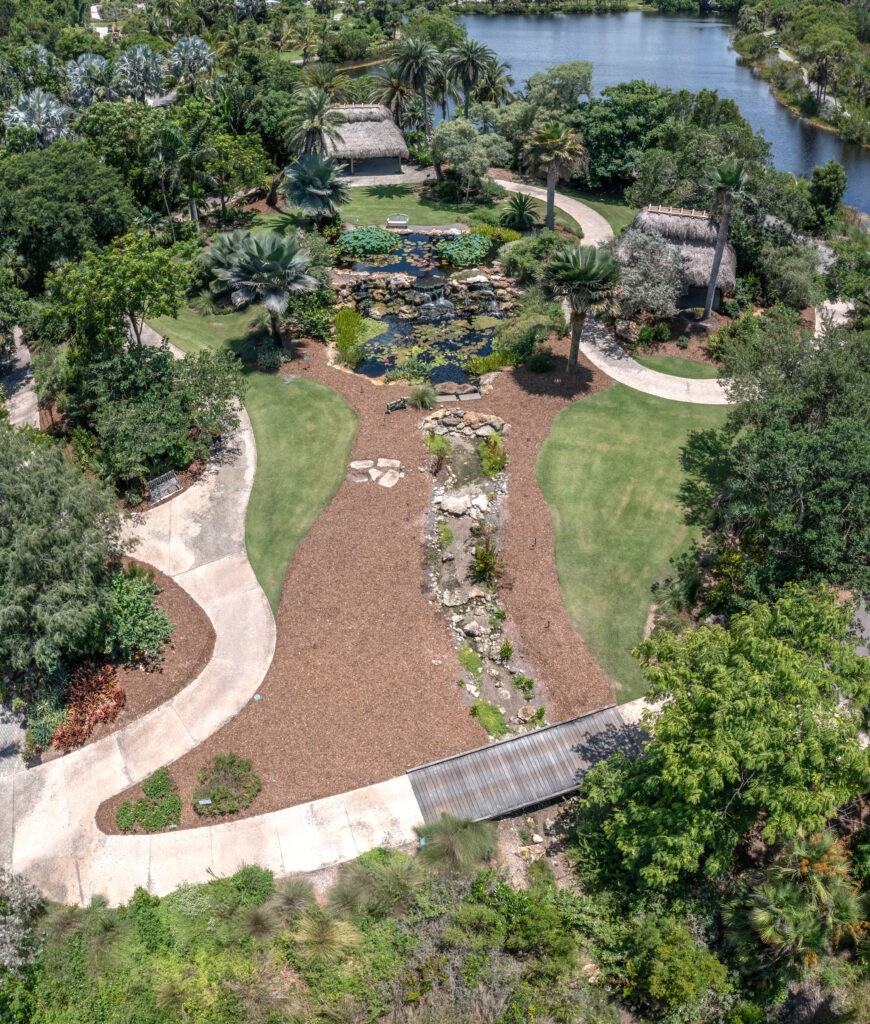
“We wanted to bring it back to its original design,” explained Andrea Grace, the Assistant Director of Horticulture, who headed the project. (We’ll hear from its original designer later.) “We really want to see the stream in its natural beauty.”
In addition to flowering plants, the team installed buccaneer palms (Pseudophoenix sargentii) along the water’s edge. Native to the Caribbean and the Florida Keys, these slow-growing palms (also known as Florida cherry palms) are drought- and salt-tolerant, an important attribute given the Garden’s proximity to the Gulf and exposure to salt spray during hurricanes. The palm is listed as “endangered” in Florida; growing them in cultivation is one way to ensure the species lives on as its wild habitat shrinks.
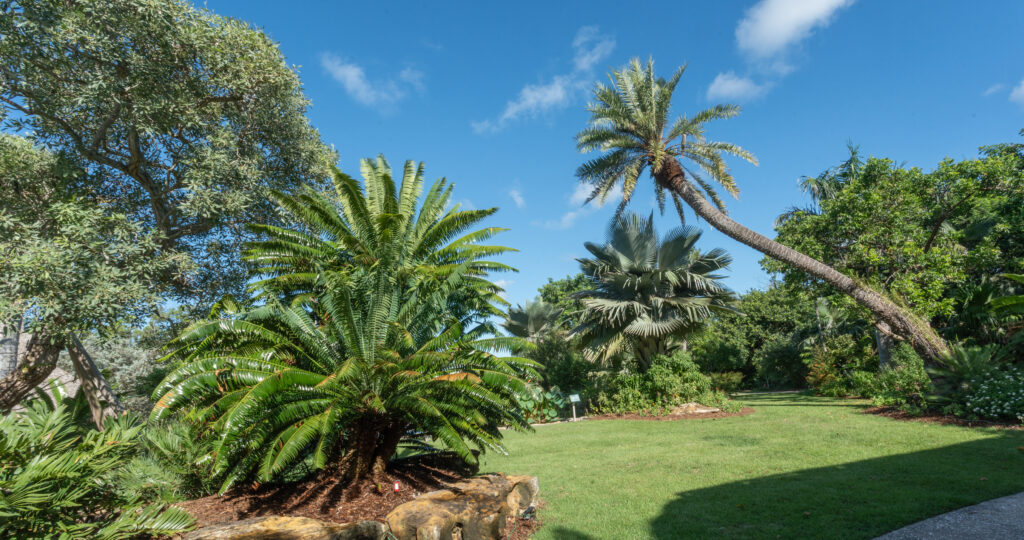
Speaking of rare plants, the team also installed a truly one-of-a-kind specimen at the garden’s crest: a Dioon spinulosum, a Mexican cycad. Cycads are among the most ancient of plants, dating back to the dinosaurs.
This one is more than 50 years old, rescued in Fort Lauderdale in 1975 after being hit by a car, according to our records. It was donated to the Garden in 2021 by Tim Nance, a horticulturist, cycad collector, and former Collier County Commissioner, and has been in holding, waiting for just the right spot to display it.
“It’s such a spectacular specimen. We didn’t want to tuck it away,” Director of Collections Nick Ewy says. The cycad replaces a pair of palms that had to be removed due to a fungal infection. Cycads are extremely slow growing, so one this large—its root ball measures 6 feet and its canopy 12—is particularly impressive. “It’ll just get bigger now that it’s in the ground,” says Vice President of Horticulture Brian Galligan, explaining that the staff had been tending it in a 500-gallon box until it could be transplanted.
The Florida Garden is an interesting mix of Sunshine State natives and other tropical species—like cycads—that thrive in our environmental conditions and complement our local palette, explains Raymond Jungles, the acclaimed, Coconut Grove-based landscape architect who designed this iteration of the Florida Garden.
“My mission was to design a beautiful garden using Florida natives alongside other plant species,” he says. The directive not only expanded his creative license, it also helped promote biodiversity, an important philosophy for both Jungles and for Garden leaders.
Jungles added eye-catching focal points, such as a silver trumpet tree (Tabebuia aurea), native to South America, and Cuban hat palms (Copernicia baileyana) from Cuba. For native plants, he included slash pine (Pinus elliottii var. densa), saw palmetto (Serenoa repens), and sabal palm (Sabal palmetto). These, he says, help create a transition between the cultivated Florida Garden and the Preserve beyond it.
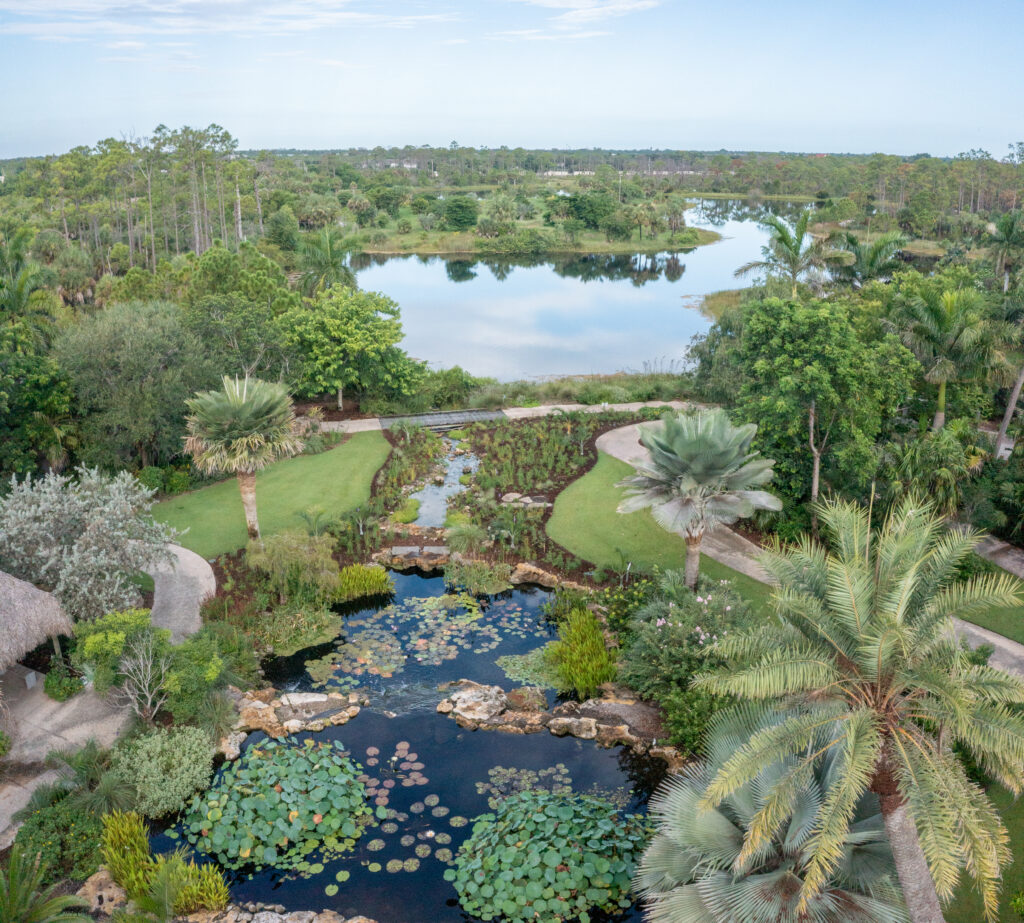
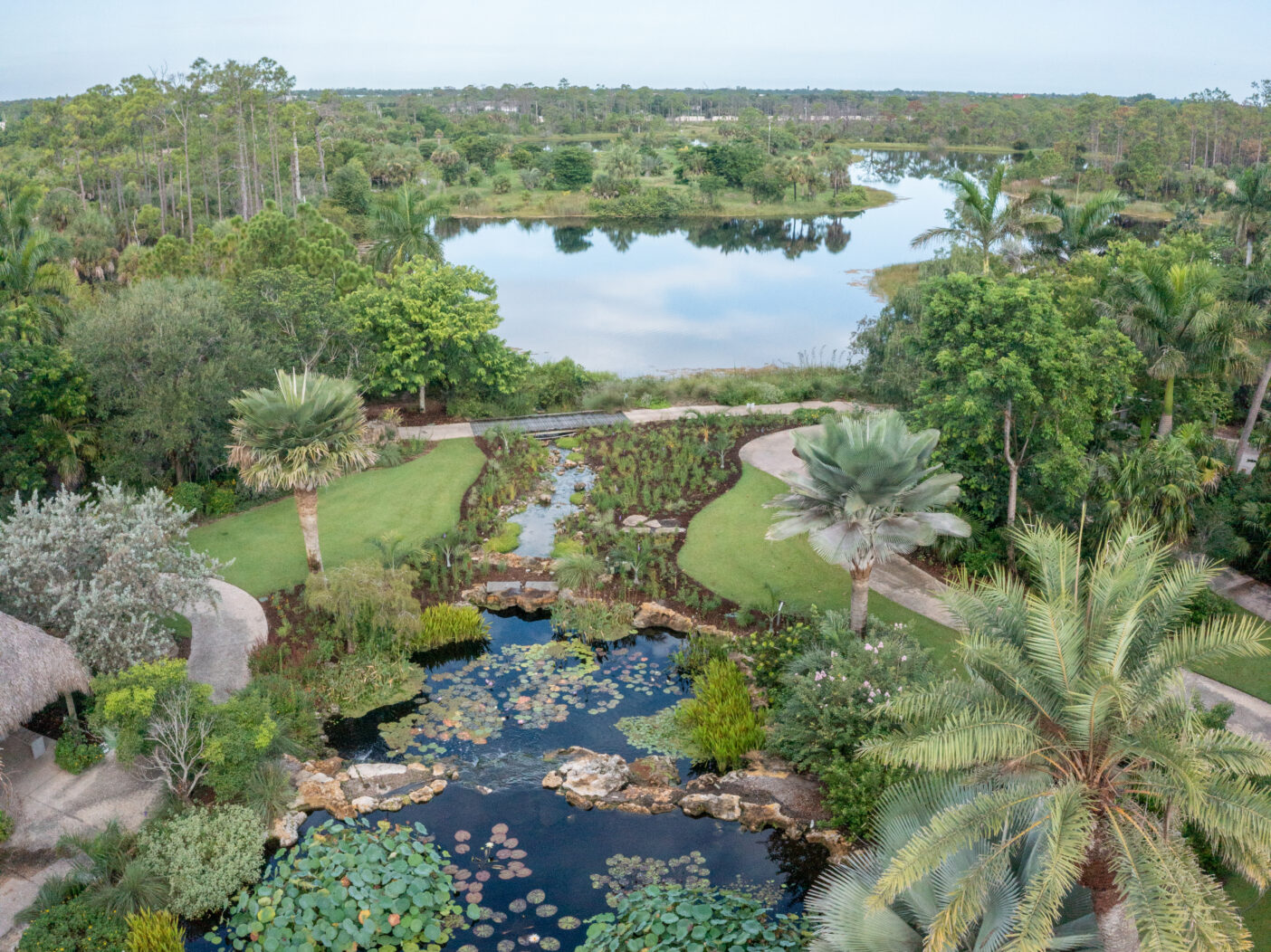
Jungles found the Preserve to be one of the most intriguing elements of the Florida Garden—even though, technically, they are two separate spaces. But with the Florida Garden’s elevation, visitors can appreciate the vast lands beyond, even if they don’t venture into them.
“I knew we had these great vistas into the restored native Florida wetlands,” Jungles says. “I designed the garden to open up to those long views and to tie into the surrounding landscape, the wild landscape beyond it.” To get to the garden’s crest, guests traverse a meandering pathway that is both ADA accessible and builds a sense of anticipation. “You get to the chickee hut, and that’s where you have the best view across the water features and the lake,” Jungles says. It, indeed, has become a favorite spot for sunset viewing during Sunset Wednesdays and Friday After 5, after-hours experiences that will return in February 2026.
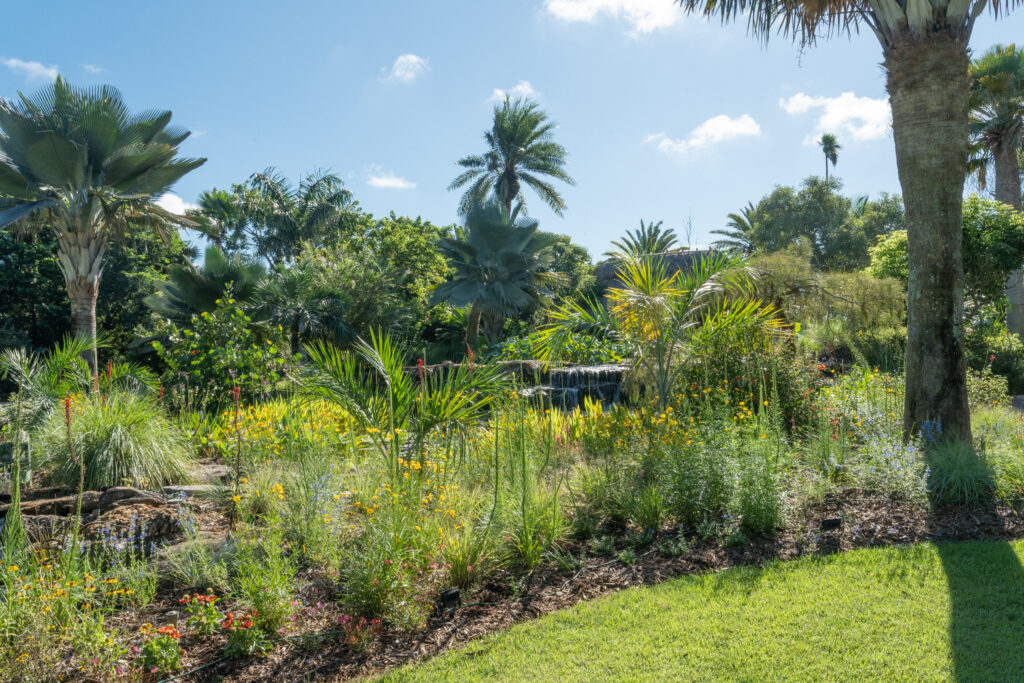
Jungles, who toured the Florida Garden during its refresh, was glad to see the emphasis on native wildflowers—something he had envisioned when he designed it. “I just like the whole ecology, with all the birds, all the flora, all the fauna, and how it works together,” he says.
“The stewardship of the Garden,” he adds, “is just remarkable. The staff just gets better every year.”
Search for these native wildflowers on your next visit: