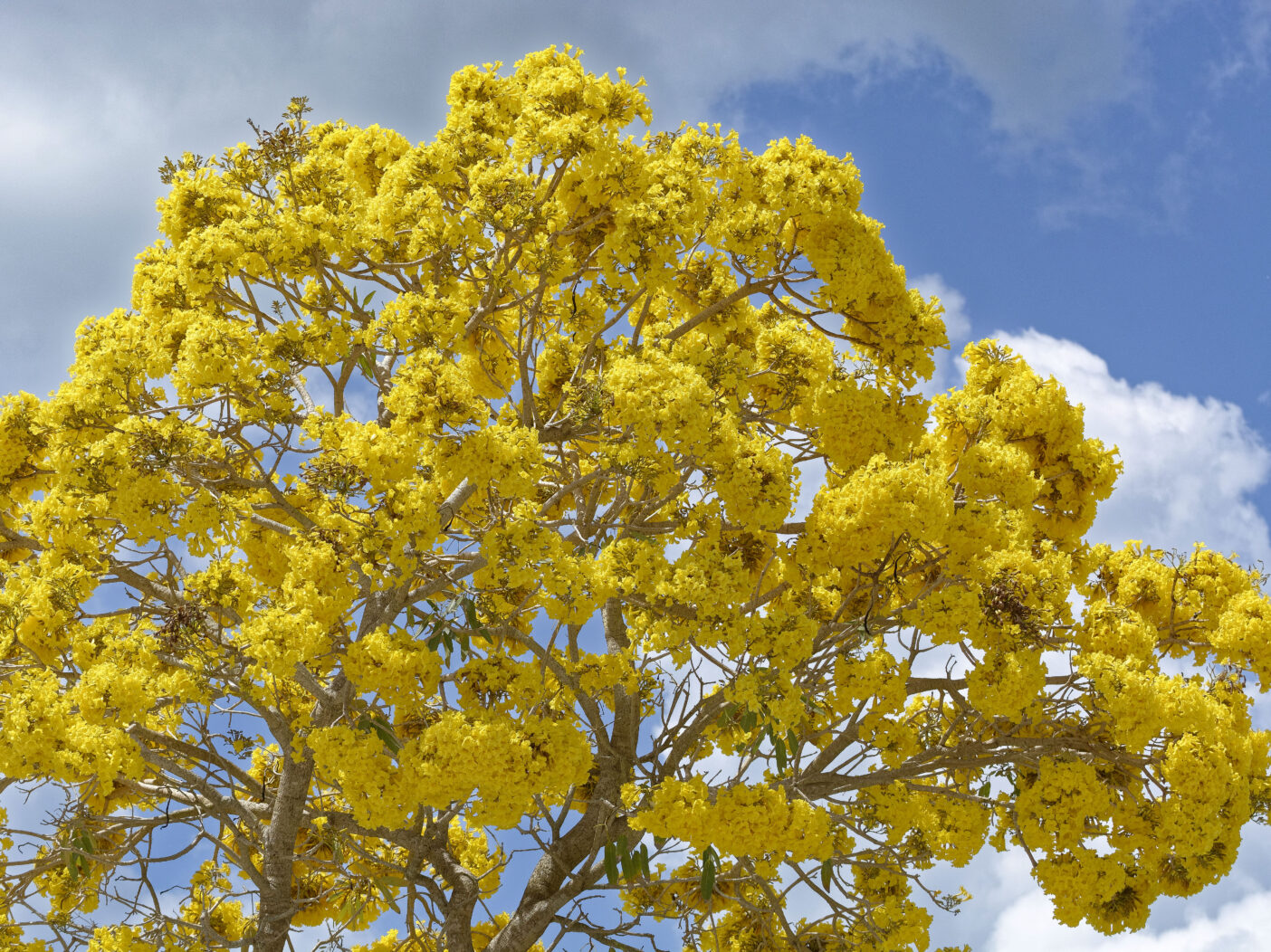
In the lower portion of the Kapnick Brazilian Garden, stand six golden chain trees (Lophanthera lactescens), native to that South American country. They are mere saplings now, but in time they’ll grow to tower over the water and sprout oblong-shaped strands of yellow flowers, as their common name implies.
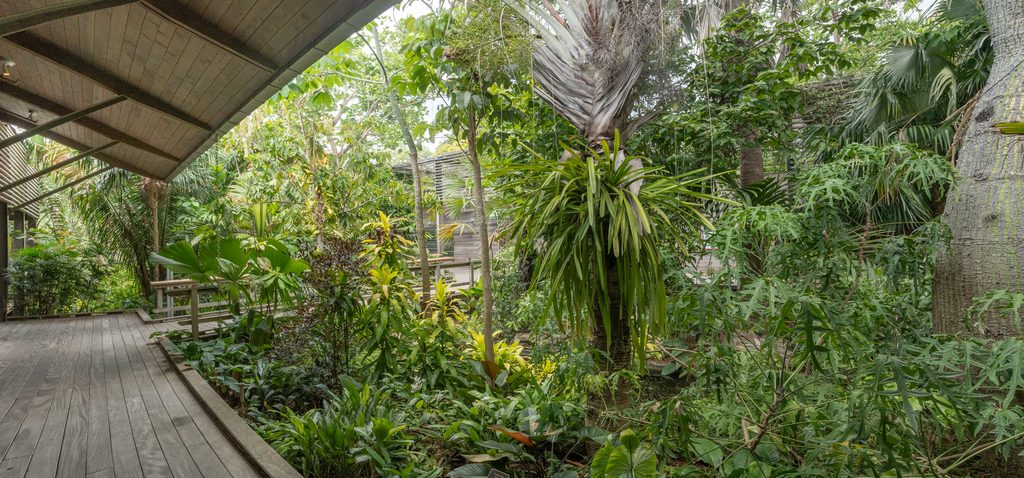
Nick Ewy, the Brian Holley Curator of Living Collections, remembers admiring these trees at the Singapore Botanical Garden where they similarly grow beside a water feature. He was struck by the image of the cascading blooms reflecting off the surface. He planted five of these rainforest trees in the Brazilian Garden last year and one more this year, while also adding three to the jungle-like Irma and Kathryn’s Gardens in the Chabraja Visitor Center.
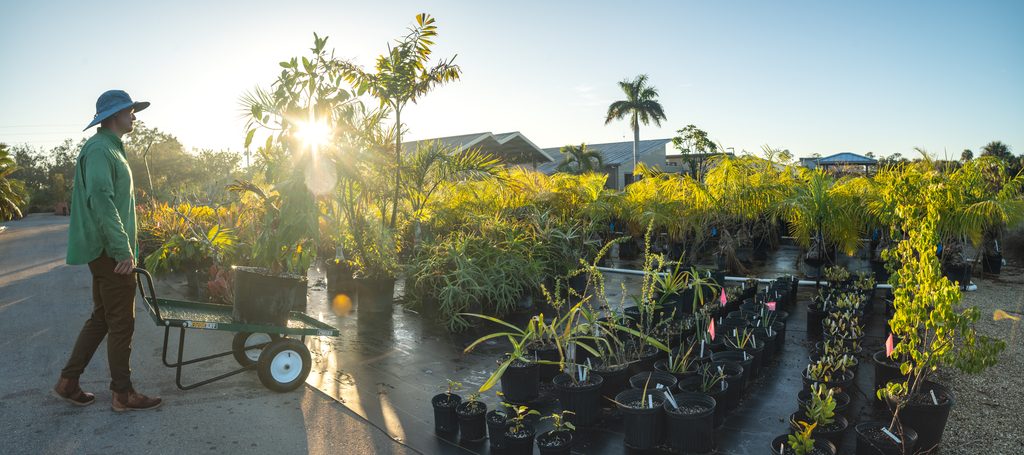
The trees are among the more than 800 plants from the Garden’s collection added to display gardens over the summer and into the fall, our annual rainy season planting blitz. Another 13 mature specimens were moved into more prominent locations or to anchor new botanic displays.
This season’s plantings are unique for the number of high-value plants put on display, as the Garden reaps the benefits of the 2-year-old Evenstad Horticulture Campus. “We’ve been able to confidently grow a lot of unique plants in here,” Ewy says of the facility and its advanced capabilities. “That inspires me to look for even more rare seeds and plants.”
New additions include species that have nearly disappeared from the wild; unfamiliar forms of familiar favorites; understory plants like Dracaena that add interest and depth to garden beds. If you are a Member or returning guest, look carefully to see what changes you notice. If you’re a first-timer, maybe this will entice you to come back again and again (read: become a Member!). In each visit, you can watch plants mature over time—and track the thousands of new ones planted each year.
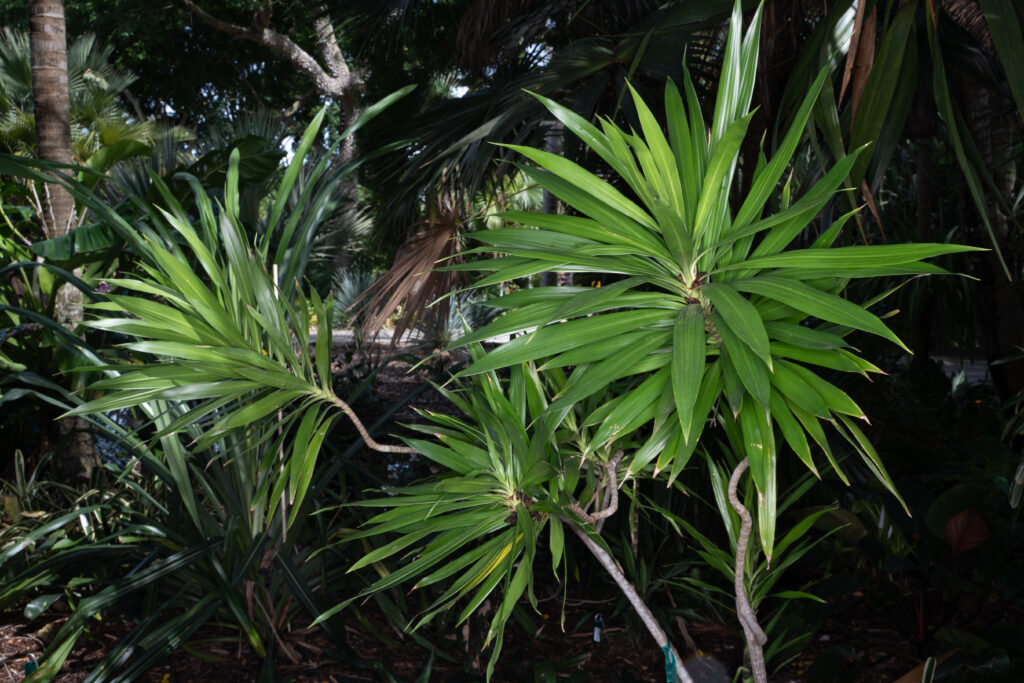
This season’s additions and horticultural enhancements include:
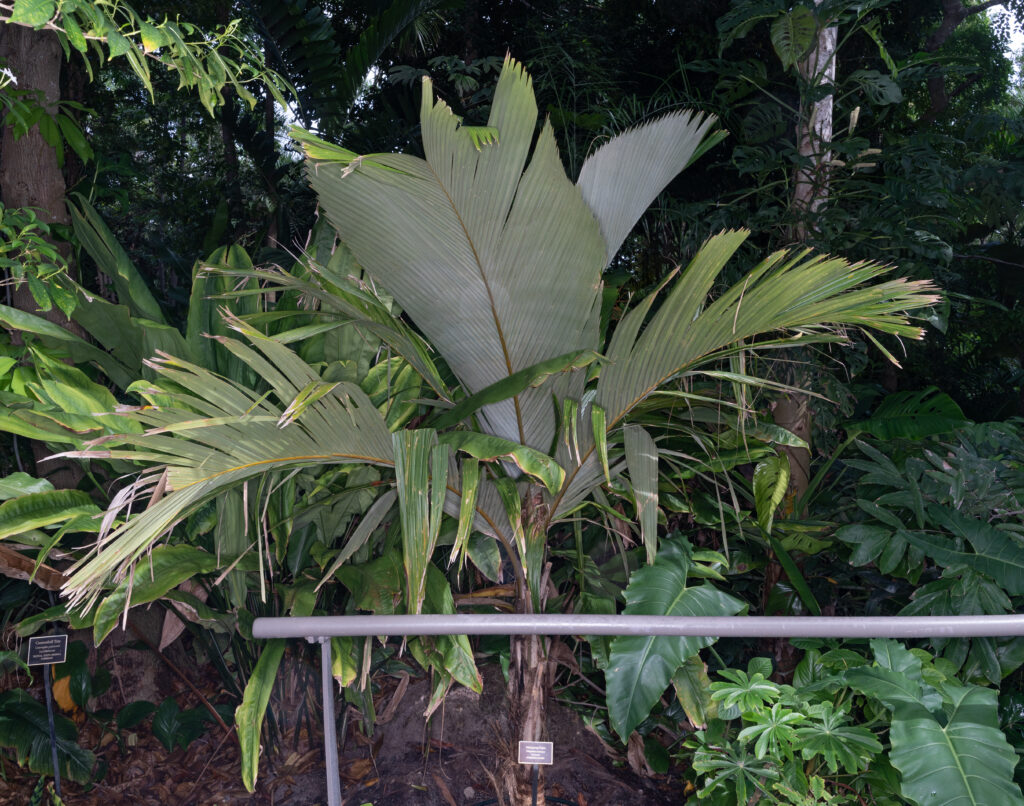
Marquesas palm (Pelagodoxa henryana): These tricky-to-grow palms originate in the Marquesas Islands about 900 miles north of Tahiti, although they are believed to be extinct there. The enormous, undivided fronds—spanning up to 7 feet—are the palms’ most striking feature. Our horticulturalists planted one in Kathryn’s Garden, near Ticketing. They added two more large ones behind that garden’s pool, where the palms, which can reach about 35 feet, will flush out the canopy.
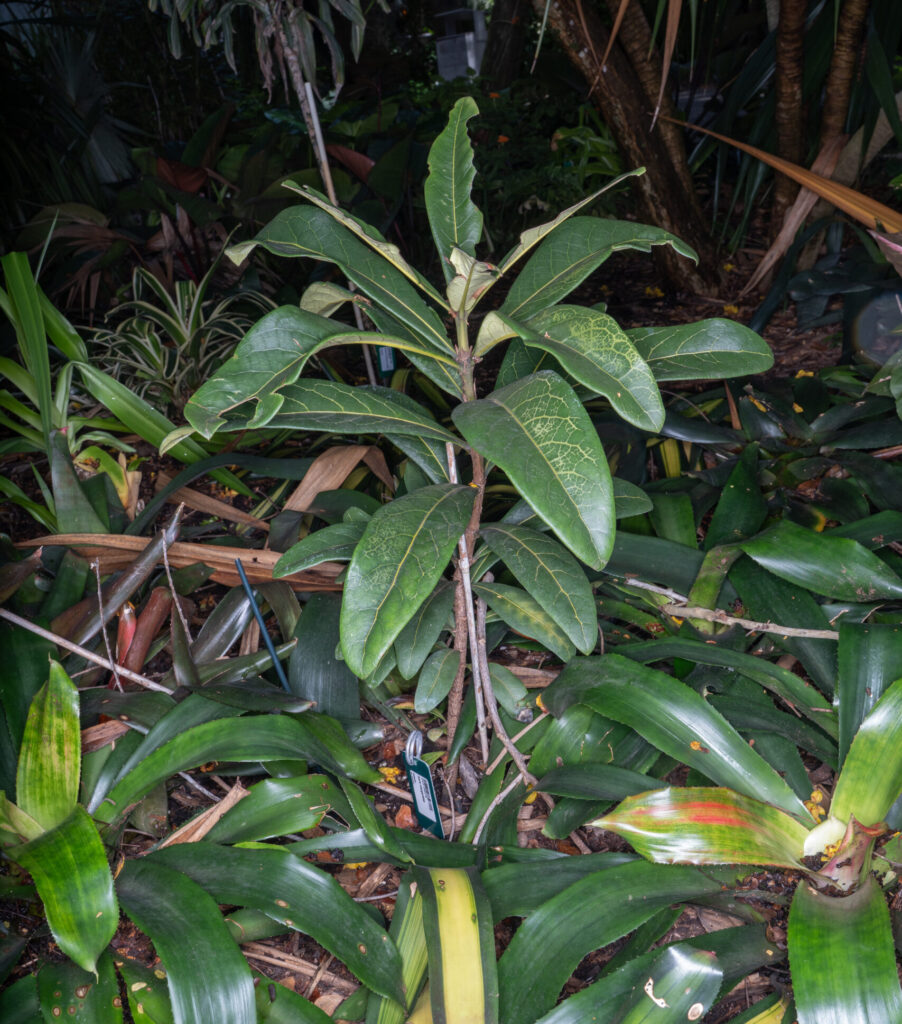
Ixora margaretae: Opposite the LaGrippe Orchid Garden, the team planted what is sure to become a breathtaking flowering tree. Found only in the Pacific island of New Caledonia, it is best known by its previous name, Captaincookia margaretae, for the 18th-century British explorer Captain James Cook. The tree is cauliflorous—its bell-shaped flowers grow directly from its trunk and branches, like a cloak of red or fuchsia. They’re challenging to grow, Ewy says. Botanic Gardens Conservation International lists only eight gardens globally with I. margaretae in their collections.
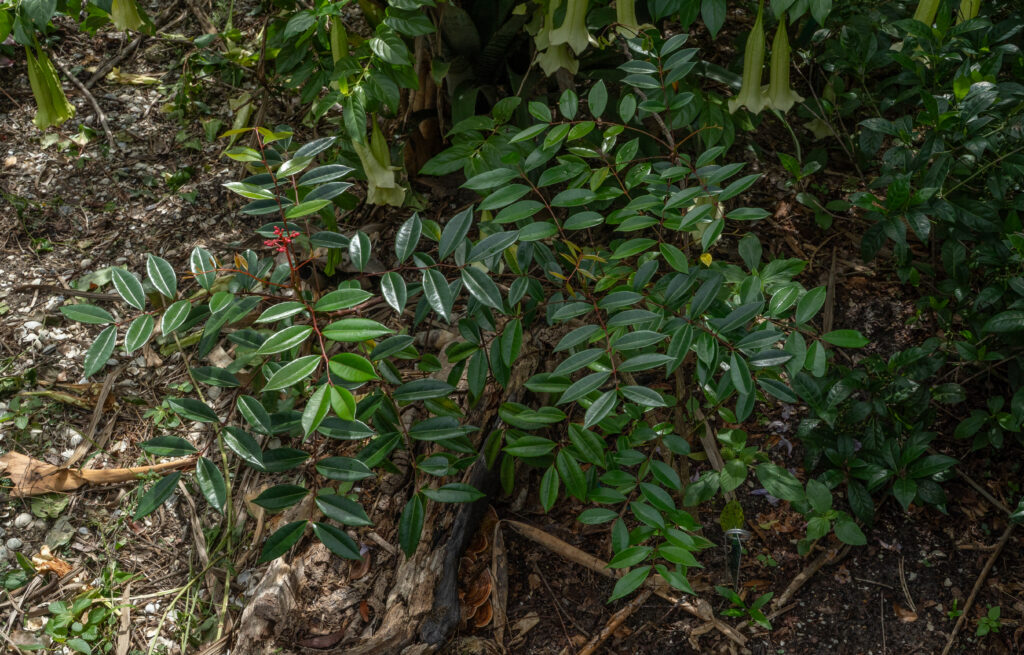
Golden trumpet tree (Handroanthus chrysanthus): This tree, whose range spans Central and South America, will add a burst of yellow to the LaGrippe Orchid Garden. Our team grew this specimen from seed at the behest of Osa Conservation, an organization working to reforest land, increase native tree populations, and create a wildlife corridor across portions of Costa Rica. Rodrigo De Sousa, the group’s program manager, brought 350 seeds to Naples about two years ago, asking us to back up their collection and experiment with growing them into trees. The IUCN ranks golden trumpet trees as “vulnerable” and decreasing across their native range. Another conservation partner, Thrity Vakil of Eye on the Rainforest, provided 40 seeds of a flowering Puerto Rican tree, Simarouba tulae. Ewy is trialing several of these red-flowered, eye-catching specimens, now on display in the Kapnick Caribbean Garden and Scott Florida Garden, to see how they fare in our soil and climate conditions.
Aquatic Philodendron: Philodendron are generally dry-footed plants, but along the banks of the Water Garden, the team added two water-loving species, Philodendron paludicola and Philodendron tweedieanum, unusual for its blue hue. Philodendron are an important part of our aroid collection; in all, the team added a dozen new species across the Garden.
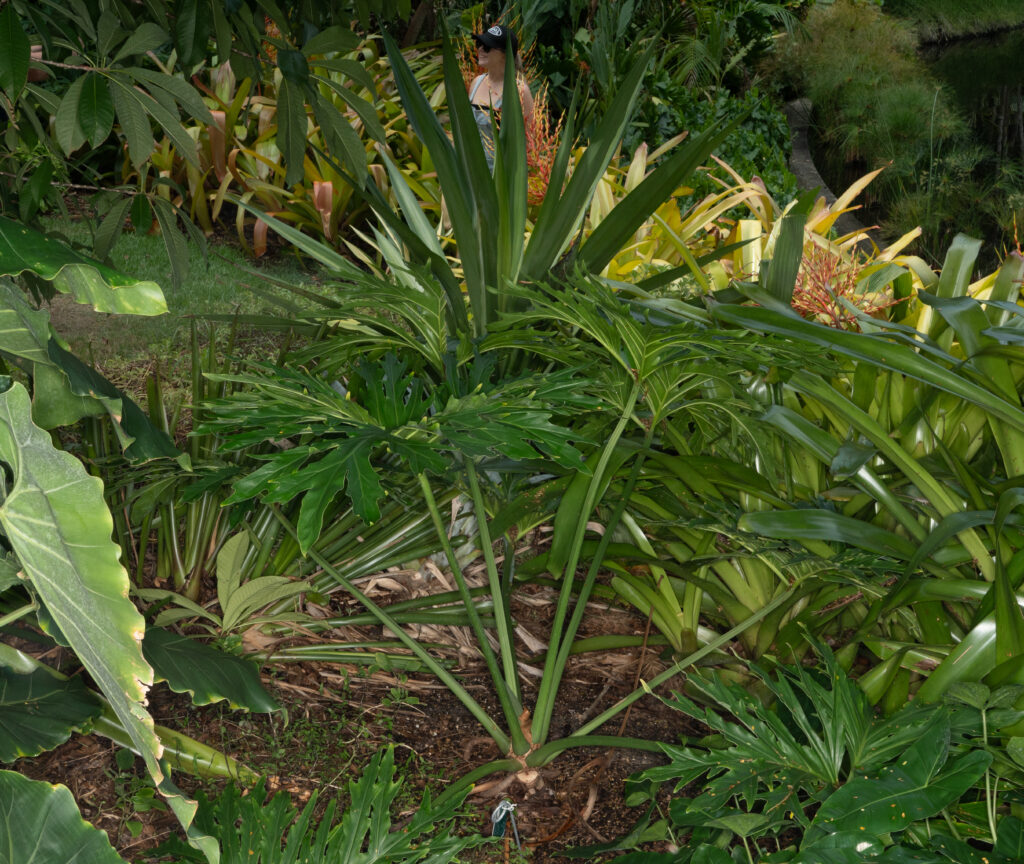
Botanical discoveries: Nine years ago, an international research team studied the morphology and anatomy of a type of palm found only on the Caribbean islands of Bonaire and Curaçao. The researchers determined they were unique, previously unnamed species, and dubbed them Sabal antillensis. Two years later, another new palm species was found on Bonaire, Sabal lougheediana. It was deemed to be “critically endangered” with less than two dozen left in the wild. Dr. Patrick Griffith, executive director of Montgomery Botanical Center in Coral Gables, was central to both finds. His organization donated specimens of the two palms, and our team recently planted them throughout the Kapnick Caribbean Garden.
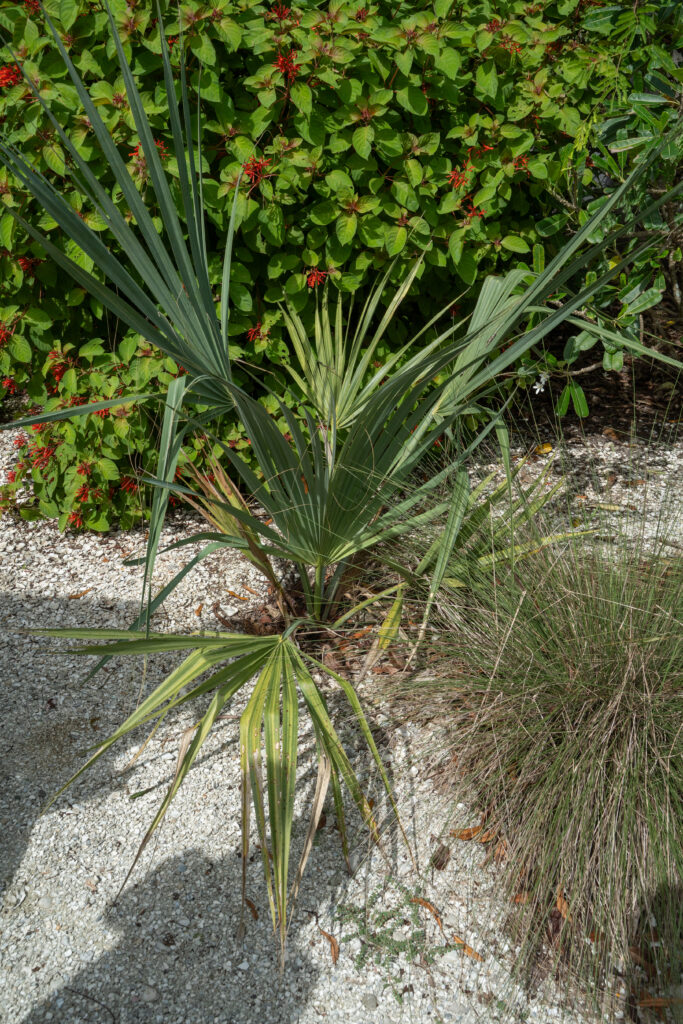
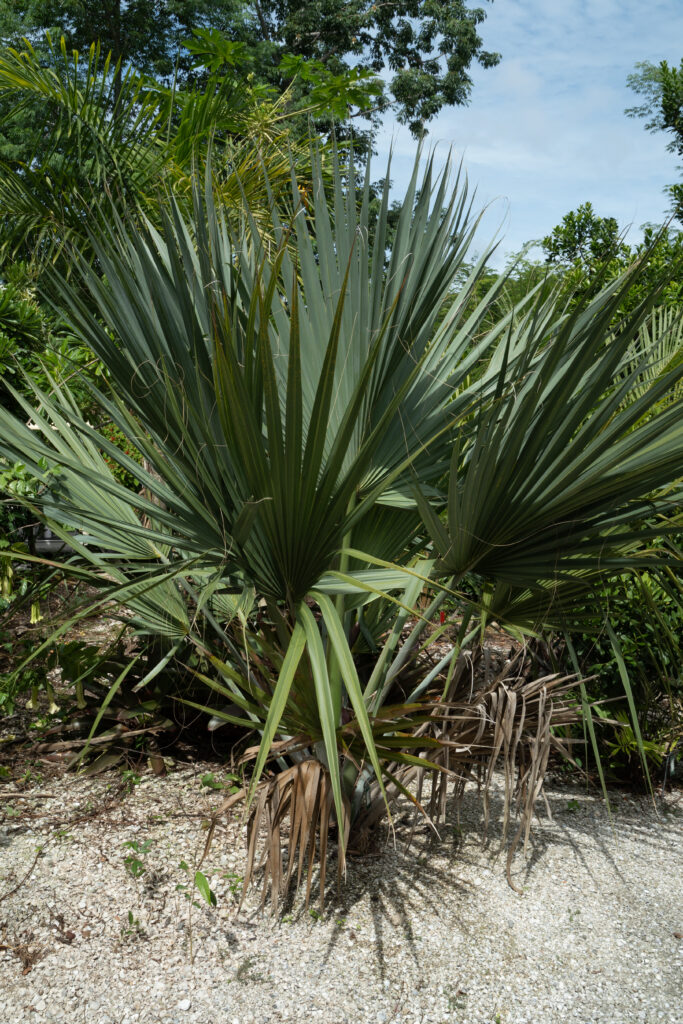
An unusual sabal palm: Most Floridians know their state tree, the sabal palms (Sabal palmetto), for its long, separated fronds. But every once in a while, a genetic mutation causes the fronds to fuse. These rarities, known as Sabal palmetto ‘Lisa’ are a collector’s item, Ewy explains. Bob Alonzo, a Naples collector who frequently contributes to our collection, gave us hundreds of seeds to trial to see if we had a ‘Lisa’ in the mix. For the past few years, Ewy and the nursery team have been growing sabal palm seedlings, looking for the elusive mutation. “Those trees were years in the making,” Ewy says. “No one knows what it took to get those three palms.” They’re planted in the Scott Florida Garden. See if you can spot them!
Relocated plants: Near the Hoffmann Lawn, our crews carefully relocated two impressive specimens. The first is Dioon spinulosum, an endangered cycad native to Mexico. This one’s fronds stretch at least 10 feet tall—a talking point, for sure. Near that cycad, guests will find a Coccothrinax crinita, moved from a holding area to its new, front-and-center location. This palm is dubbed the “old man palm” for its beard-like mat of shaggy fibers. Playful name aside, its conservation needs are serious: The IUCN lists this Cuban palm as endangered and warns that its numbers are decreasing.
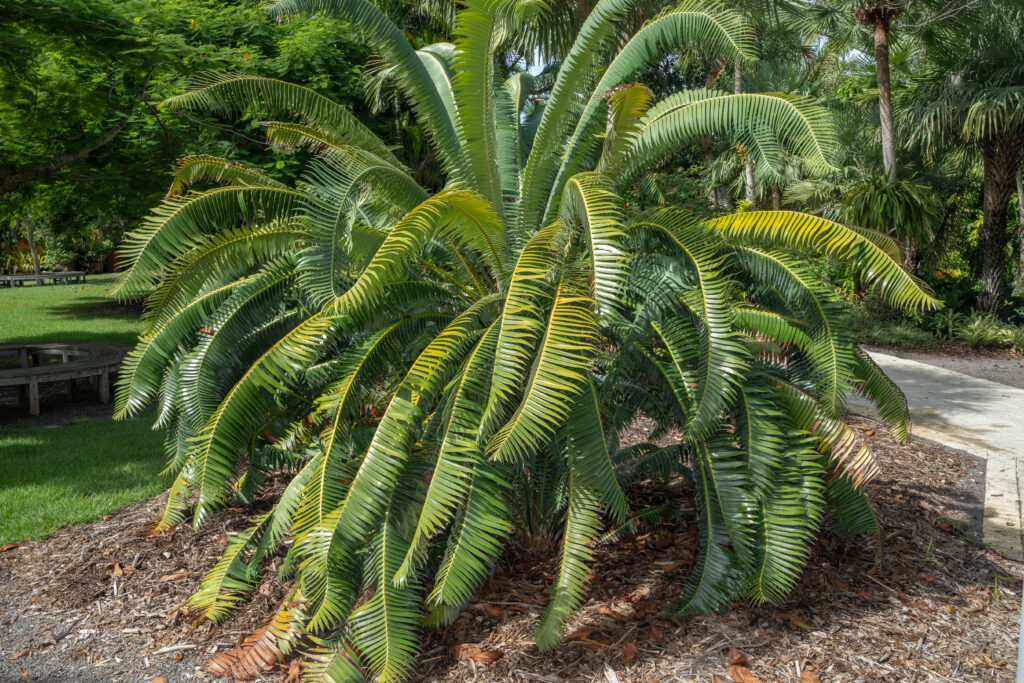
The team also relocated three poor-man’s cycads (Encephalartos villosus), native to South Africa, to the Foster Succulent Garden. Their witty common name was bestowed because the plant is widely cultivated—and, therefore, affordable! Former Collier County Commissioner Tim Nance, a horticulturalist and cycad collector, donated them to us a few years ago and the team has been tending them in the nursery until they were ready to go into the ground. Look for them underneath the large ficus tree between the Foster Succulent Garden and the Jeannie Meg and Christopher B. Smith Labyrinth.
“What I love about my job is being able to source these rare plants, start them from seed, and create a vision for them in the Garden,” Ewy says. “It’s a really good feeling to get them into the ground and see them start to thrive.”