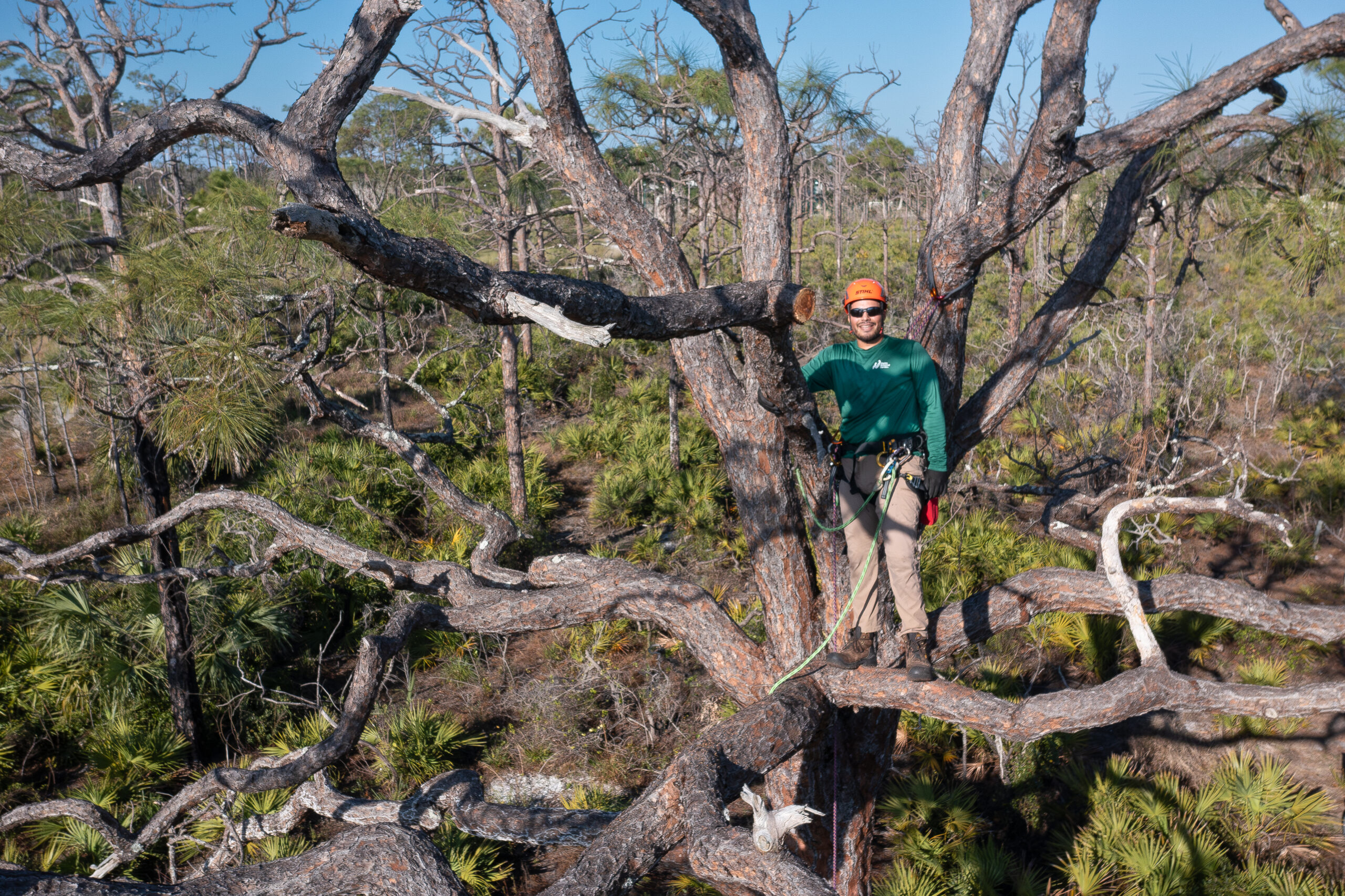
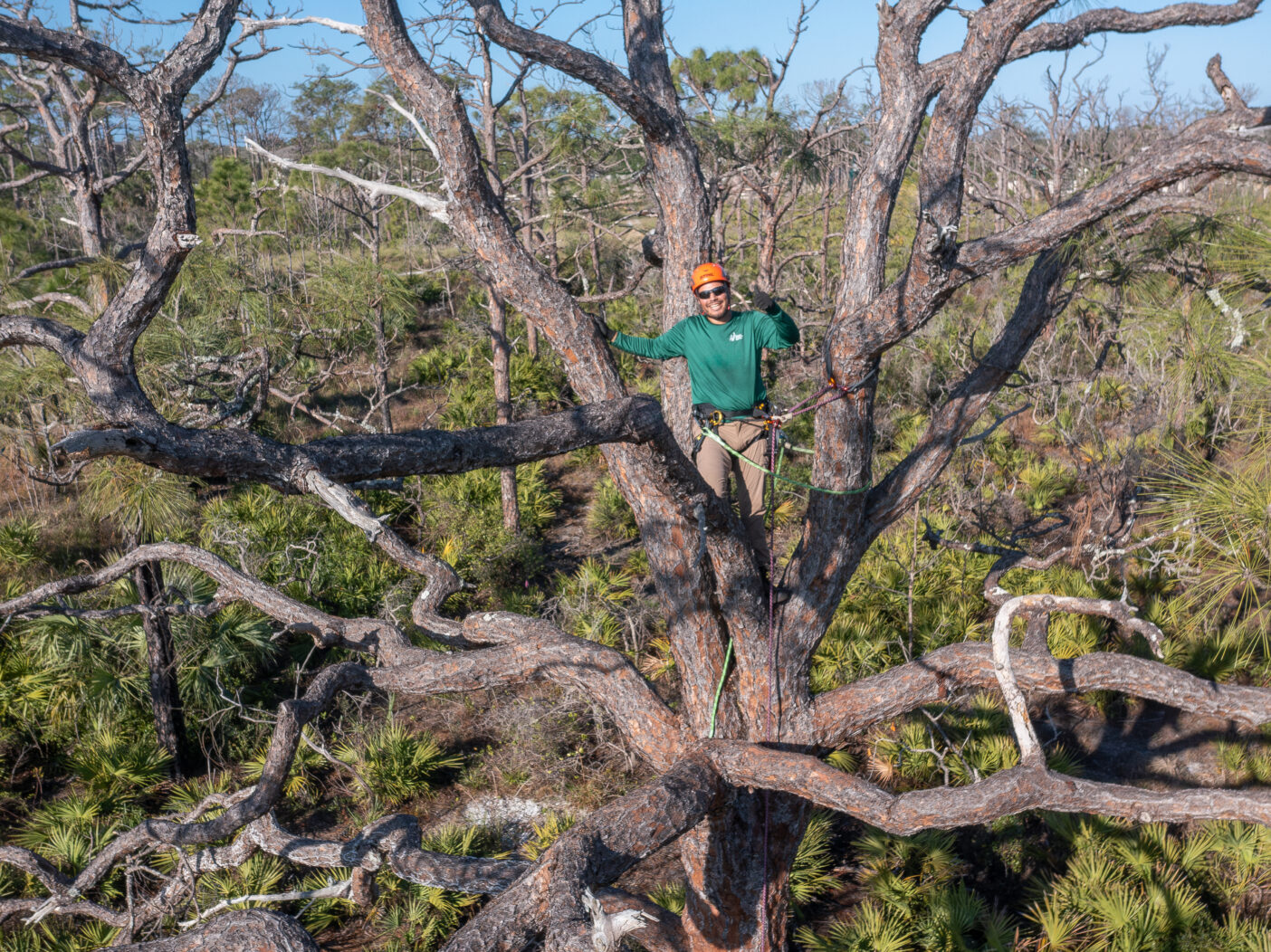
Whether prepping trees for a move, assessing if a hard prune is needed after a hurricane, or hoisting himself into the canopy, Lead Arborist Fernando Pereira spends his days consumed with the health of the Garden’s trees. He’s cared for many of the 4,000 trees in and around the Garden, he’s lost count. After starting as a landscaper for the Garden in summer 2020, he’s soaked up every bit of knowledge he can glean from his tight-knit group of co-workers, accelerating his career this past year with intensive training from the International Society of Arboriculture.
Now, here’s more from the Garden’s first-ever certified arborist about what his work means for the trees in our collections—including the ones he’s come to love best.
I am the first arborist the Garden has ever had. It’s a huge honor, and I feel a huge responsibility to set a standard. I got my certification in July of 2024. It covered two months of classes that gave me a launch pad for a solid arborist career: structural pruning, safety, overall care.
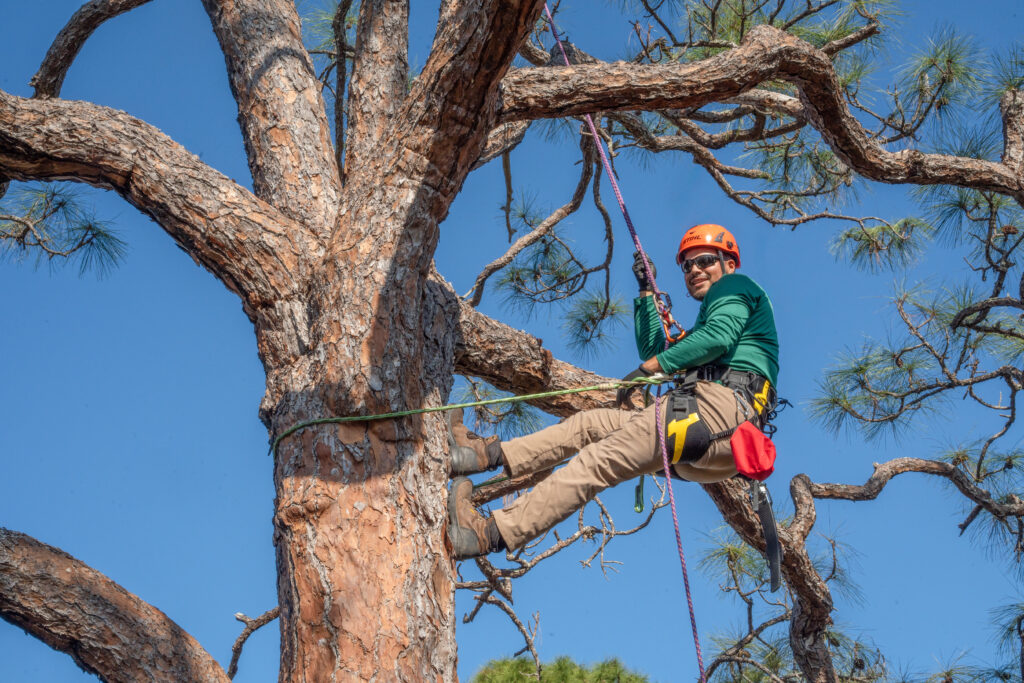
It’s my goal for us to have healthier, more beautiful trees, since there’s an even higher level of care, to have someone solely dedicated to the trees. Everything is a huge step up, both for the health of the trees and safety of guests.
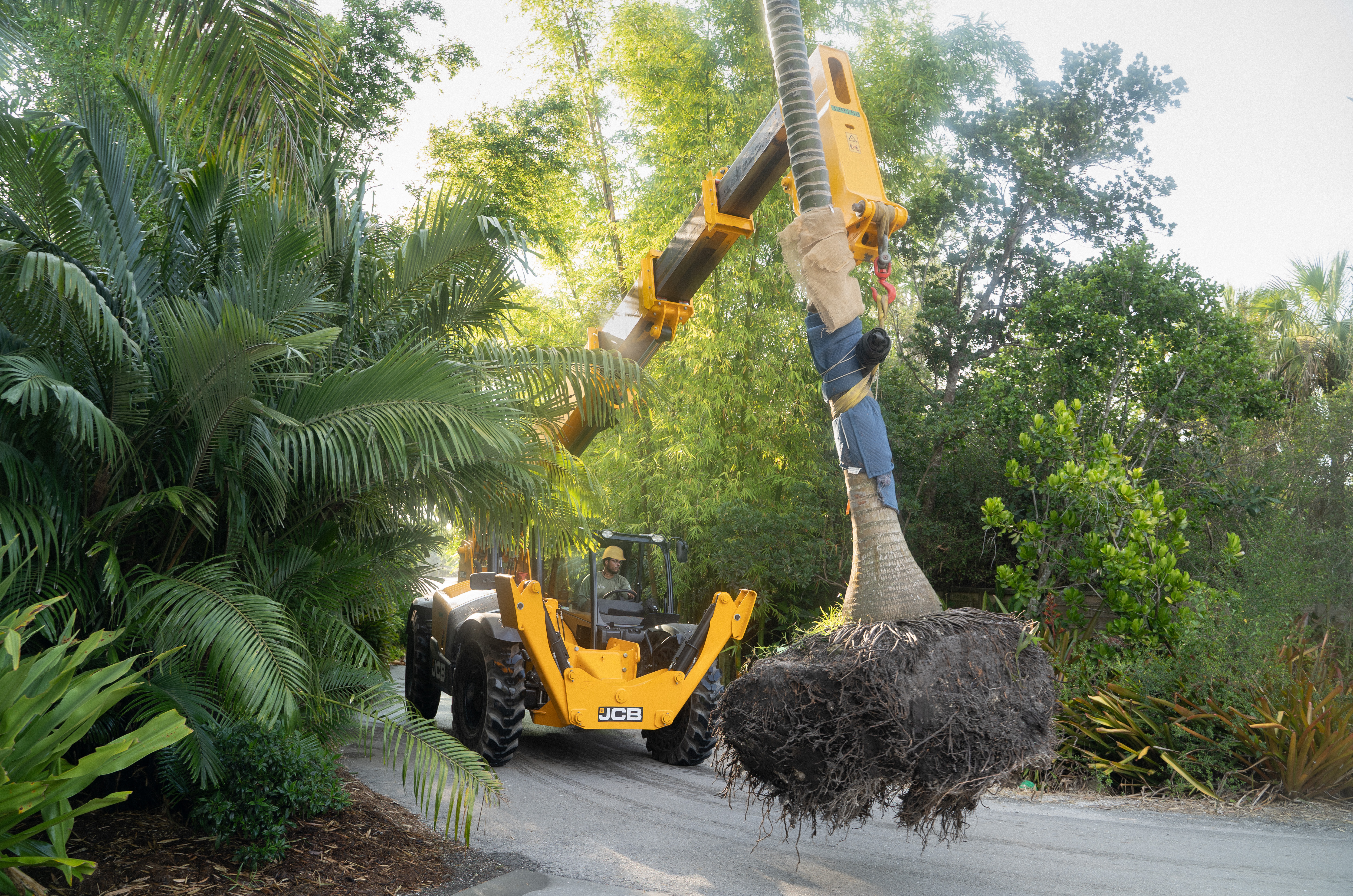
If all the trees have been trimmed up properly and thinned out ahead of time, before a storm, or for a branch that looks like it’s going to fail, we can avoid a lot of the damage to the tree. When we move a tree, we’ll root prune (strategically cut the root system) a month or two ahead of time.
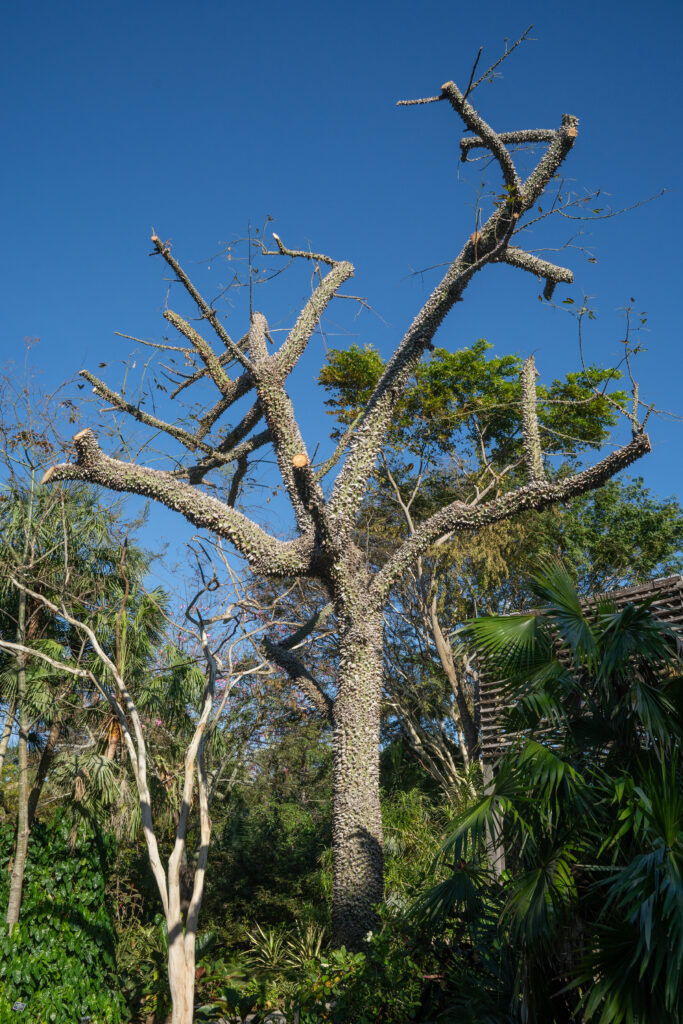
“We had to do a risk assessment on this tree. Based on its location, the amount of people, the traffic around there, and that the tree has huge spikes on it, this tree had potential to do some damage if not properly taken care of. This was a very, very hard pruning. Now we plan on keeping an eye on it, doing little cuts here and there, and we can feel comfortable with a tree of that size being around so many people.
— Fernando Pereira, discussing the Ceiba erianthos x speciosa (left, post pruning) after it was damaged during Hurricane Milton
We sharpen the shovels; you would think they were knives. We want a clean cut. We don’t go in with an excavator initially; that would just destroy the root system on a tree. A lot of this is done by hand (with) lots of care.
One tree I love—a palm—I’m emotionally attached to it. It’s a Copernicia baileyana, a bailey palm. This was the first big, big tree that I was given to move. It’s around the main entrance loop toward the exit side. I was extremely anxious, watching it so close. I was so excited. And then we got hit with Hurricane Ian. We came back, and it was definitely at a crazy tilt. We had to use the telehandler to straighten it out. Since it was a newly planted palm, it was already being watered frequently and monitored closely, so we continued babying it for the next few months.
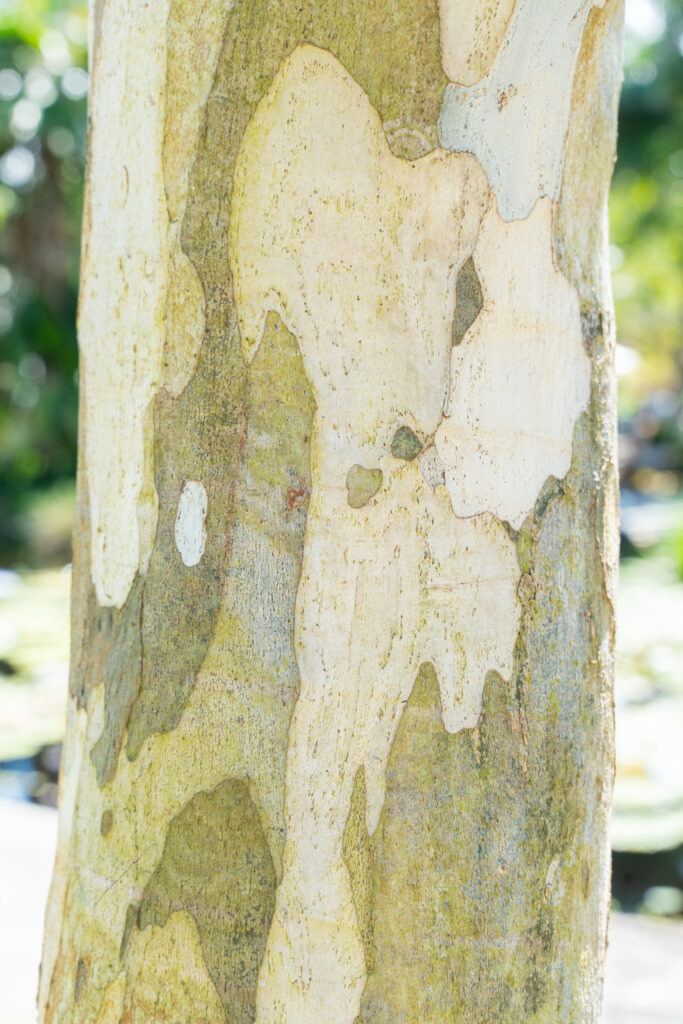
A tree that I think is beautiful, and is not just impressive because of its size, is the Libidibia ferrea. (Find it on the Performance Lawn during your next visit.) It is constantly shedding its bark. You get almost three colors that create a unique pattern. You get the new bark that is just coming in, you get the bark that has been there for a little while, and you get the old bark. It is stunning, honestly.
With this job, I’m always learning. It’s always staying on your toes. It’s always a new tree, a new place you might be taking the tree to. It’s always something different. I love what I do. I love being outside, I love working with trees, and I love working with plants. The people I have been put around, any interest I’ve had, they’ve helped me out and supported me to get where I am now. Our team is so special; we love what we do.
This article first appeared in the Spring 2025 issue of Cultivate, the Garden’s magazine.