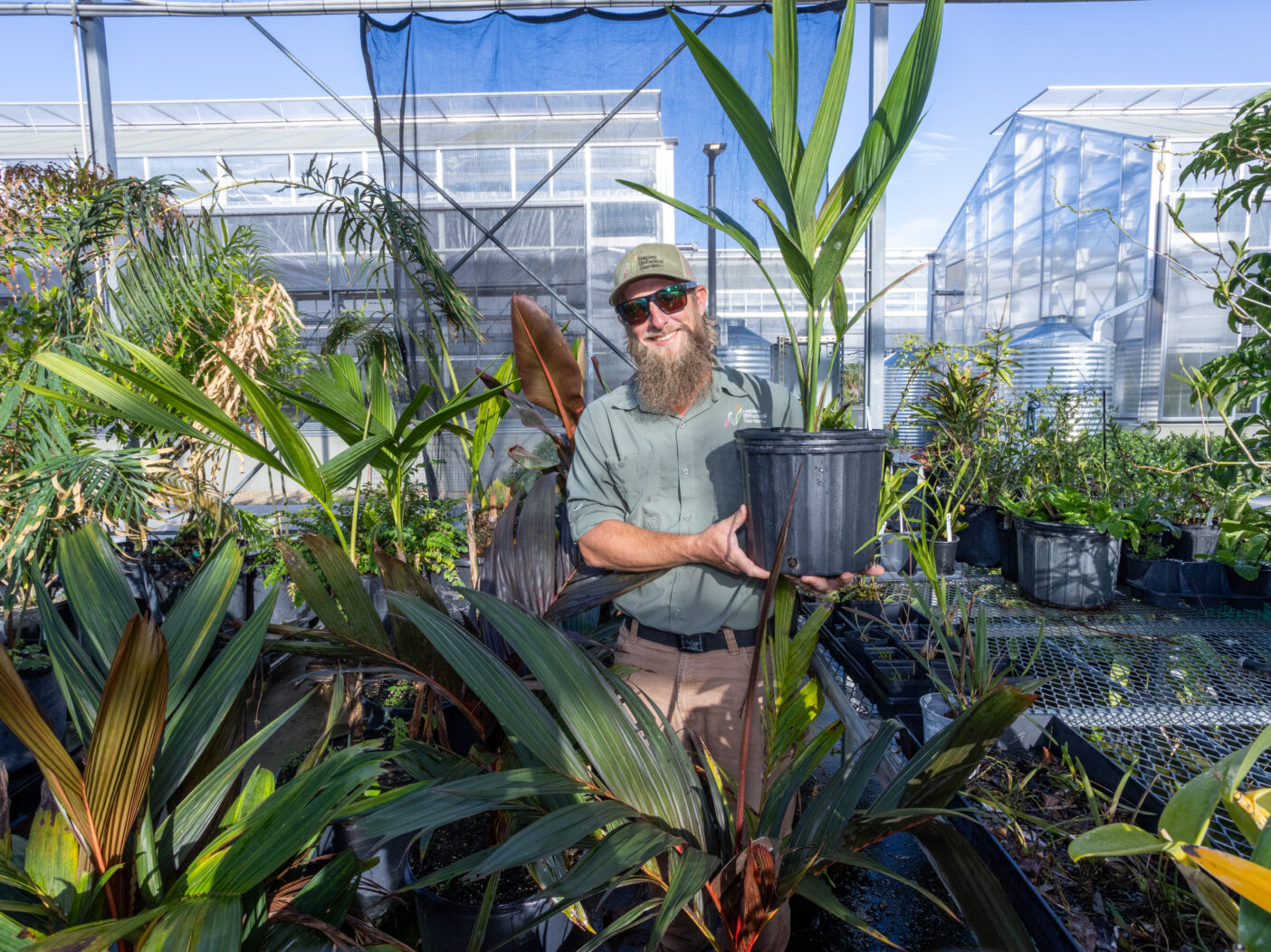
The garden has 1,400 palms in the ground and roughly 3,200 palms in the nursery. While those numbers may seem high, we only have 434 out of the roughly 2,500 species of palms in the world. We would love to be able to showcase every single species. Recently, I’ve made it my mission to acquire the missing ones.
We use all sorts of tactics to track down these 2,000-plus palms. We trade with our fellow botanical gardens. We hobnob with plant collectors. And, most recently, we decided to join the South Florida Palm Society (SFPS), which holds a spring and fall show and offers a tremendous variety of species. Palm sales are a great way to acquire these rare palms and meet the growers that produce them.
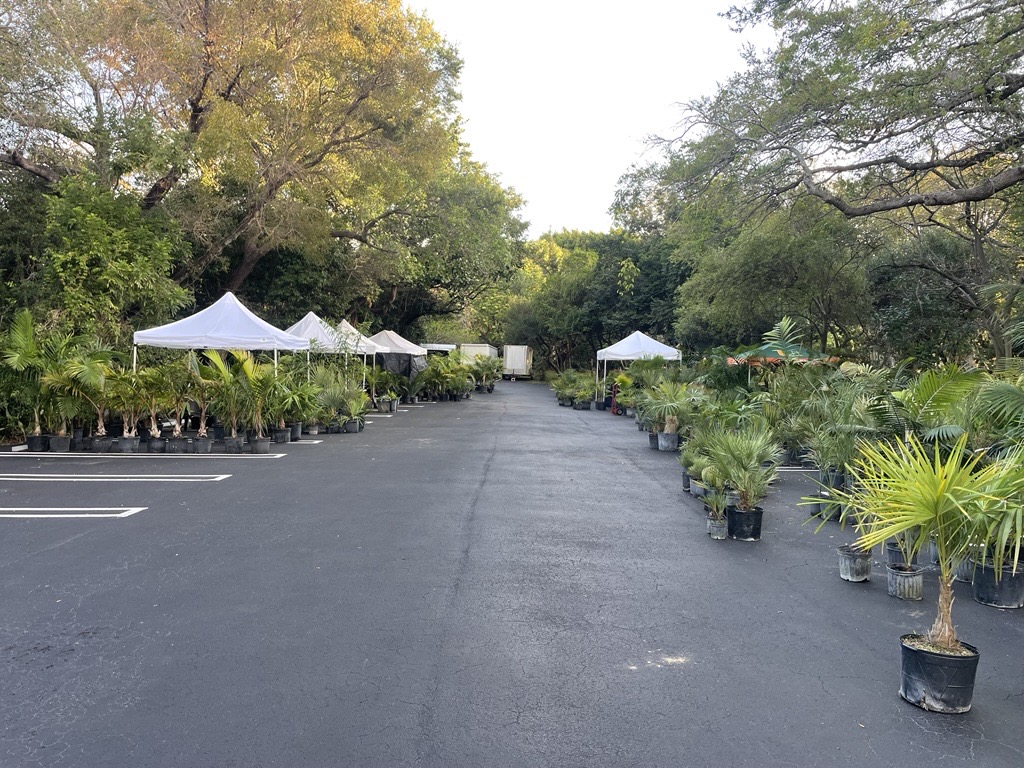
A typical show will have 300 – 400 palms up for grabs. The offerings range from full-sun palms such as the giant yarey palm (Copernicia fallaensis), to shade-loving ones like the white elephant palm (Kerriodoxa elegans). You can find common specimens like spindle palm (Hyophorbe verschaffeltii), or the rarest of the rare—species like the joey palm (Johannesteijsmannia magnifica) and the lollipop palm (Hemithrinax ekmaniana). If you are looking for palms, the SFPS sale is the place to shop.
The palm sales attract hundreds of shoppers, both serious collectors and casual gardeners, making the events a little bit like tropical treasure hunts. So, if you want to snag the best-grown, hardest-to-find, most distinct specimens, you must know how to play the game. I learned this the first time I attended a sale a year ago—wide-eyed and green as grass.
These sales have been going on since 1979, with a few of the growers working them for 30-plus years. To my novice eyes, it seemed like everyone else knew exactly what they were doing, but the growers were all extremely welcoming and taught me the ropes. During down times, growers wander around and talk to each other. I discovered that if you’re not too shy to ask questions, they are all willing to share advice. They schooled me in the art of a palm sale: Get a list of specimens for sale, study it, make a game plan, and, most of all, show up early. As soon as the doors open, it’s on!
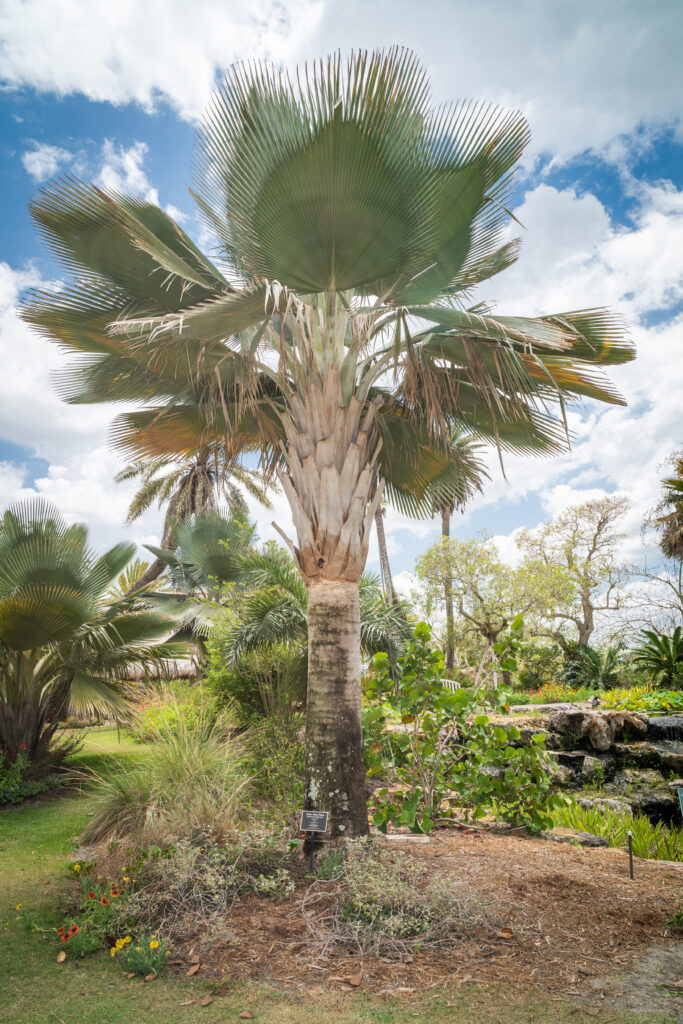
This year, a much wiser me arrived at the sale a full day ahead of time. The palm worth showing up early for was the Sabinaria magnifica.
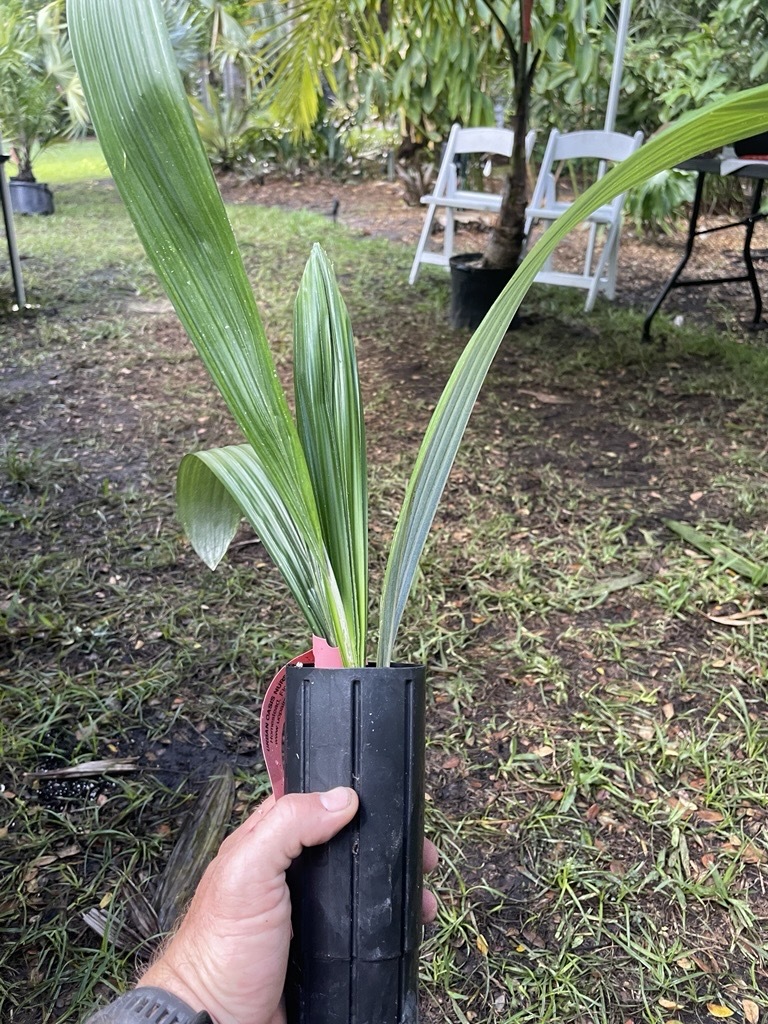
As its name suggests, S. magnifica is a rare and exceptionally beautiful palm, discovered in 2013. It is highly prized for its enormous, circular leaves, which are glossy green on top and bright silver underneath, making it a dramatic, ornamental species. It is the only species in its genus and found exclusively in a remote area of the Darién Gap between Colombia and Panama.
When Nick Ewy, Brian Holley Curator of Living Collections, saw the S. magnifica on the sale availability list, he made it my top priority to add it to our collection. I saw the palm for sale at the beginning of the show, and I kept my eye on it throughout the first day. Someone had put it to the side and said they would be back the following day to pay and pick it up. Luckily for us, they never showed, and I was able to purchase not only that one but also a second. They are thriving inside the greenhouse at the Evenstad Horticulture Campus.
I’m a careful shopper, very aware that I’m shopping with money earned through the generosity of our Members, Donors, and the thousands of guests who visit us each year. Everything I bought was either a new accession to our collection or a replacement to a specimen that we lost.
Some of the other notable palms I acquired at the show include:
- Areca montana. This palm originates in Southeast Asia and is new to our collection. It will likely be planted in the Lea Asian Garden.
- Coccothrinax spissa. We lost a beautiful specimen along the lake in the Kapnick Caribbean Garden. This palm will be planted in its place once it has to time to mature in the nursery. The species is known for its unusual trunks, swollen in the middle.
- Johannesteijsmannia altifrons. We currently do not have any planted and we only have a few species of Johannesteijsmannia in the greenhouses. They are amazing palms—trunkless with leaves that can span 6 feet. Who wouldn’t want to showcase their beauty?!
Some of these palms are tough to grow without having proper conditions. The greenhouses at the Evenstad Horticulture Campus have allowed us to bring in more rare and unique plants that require a little extra care when they are young.
I had a double mission during the sale. I was also charged with selling our own palms. Every palm we sell directly benefits our mission. These plants are grown from seed by our horticultural staff or are duplicates from our nursery. Our palm collection serves as a living seed bank, allowing us to harvest and propagate seeds during peak viability times.
We sold about 60 palms during the two palm sales I’ve attended to date. Already, I can see that we’re growing a following, with many repeat customers between my first and second appearances. Palm sales are a great way to connect with the surrounding communities. I heard countless stories of families from the East Coast traveling to Naples to visit us. Everyone who purchased from us was excited to add our palms to their collections.
I would like to give a huge shout out to The South Florida Palm Society. As a relatively new “palm nerd,” joining such a long-standing society can be intimidating, but every member has a passion for palms and a willingness to share knowledge. I hope I can repay their kindness and help the next crop of newcomers discover the wonder and diversity of palms—and bring home their own tropical treasures.
Want to see palms from a different perspective?
Check out our newest exhibition, Historias del aire y del suelo | Stories of Air and Soil, from artist Pseudomero.