
One Friday night, as the sun set over Lake Tupke, we decided to invent a little game in the spirit of our ChromaFlora exhibition. It involved a black light, our plant collection—and our curiosity.
We wanted to see how the world looked through an ultraviolent lens, a wavelength usually invisible to us. Our eyes detect wavelengths in the range of 750 and 350 nanometers, the “visible spectrum,” ranging from red to purple. The ultraviolet spectrum consists of short wavelengths our eyes can’t detect. (Check out our primer on how we see color.)
A black light is a UV ray that reacts to phosphorus atoms. It reveals objects that fluoresce—or glow—and shows how some birds, insects, and other wildlife with UV-sensitive photoreceptors experience the world.
Armed with the specialty flashlights, we set out.
Under black light, the world takes on an ethereal glow. Check out this Dendrobium in the LaGrippe Orchid Garden, for example:
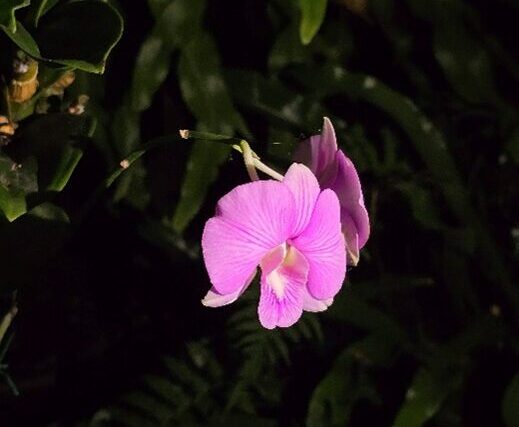
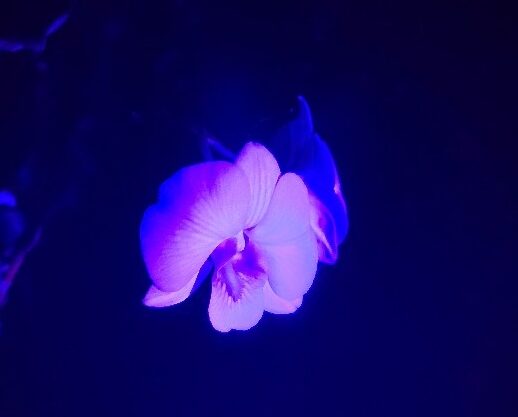
This image surprised us. We’d expected the flower’s whites to look extra bright (if you’ve ever worn a white T-shirt or flashed a wide smile under a black light, you know what we mean).
In the case of the Dendrobium, however, the white areas near the center appeared a darker hue of purple—almost like a photo negative. How very curious!
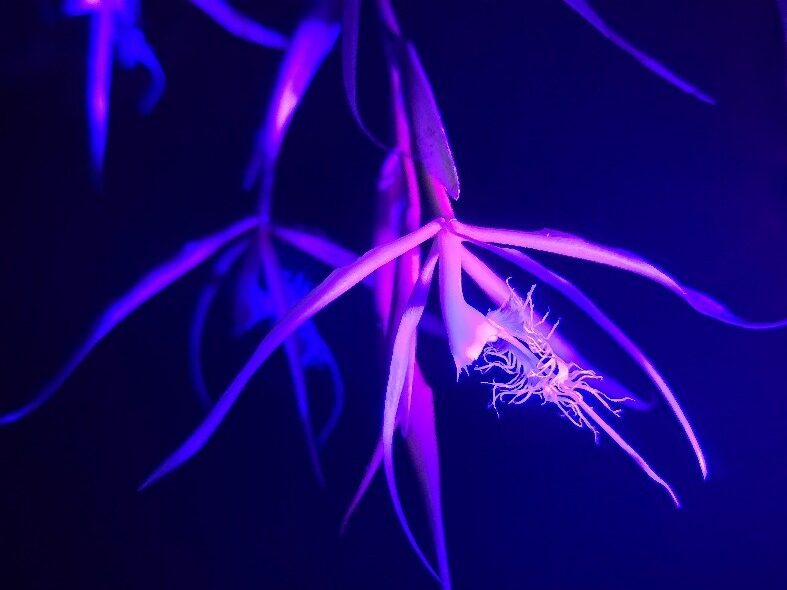
This fringed-star orchid (Epidendrum ciliare), pictured at the top, appeared truer to expectations, with brightly illuminated areas.
What we really found interesting is how black light revealed details we can’t otherwise see. Look carefully at this Bulbophyllum orchid. Notice those black dots revealed under black light (we think they look like conch eyes). We theorize they are bundles of pollen grains.
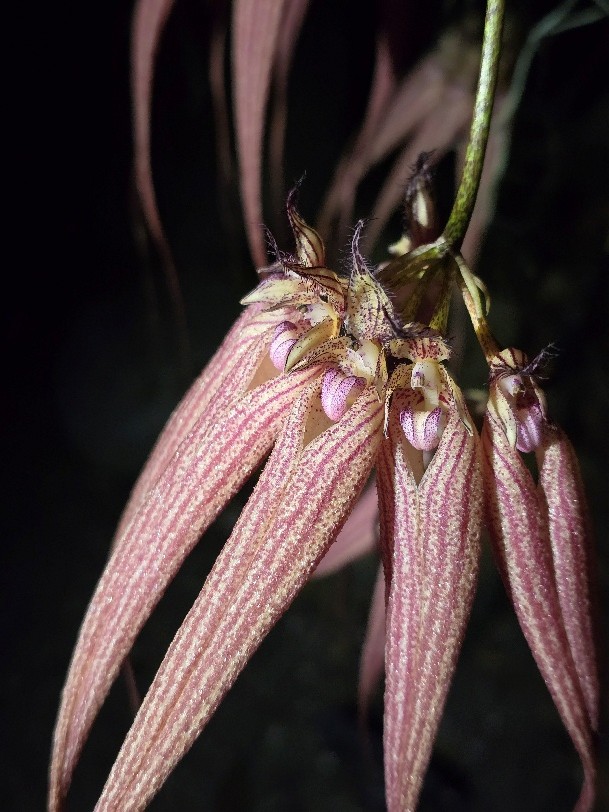
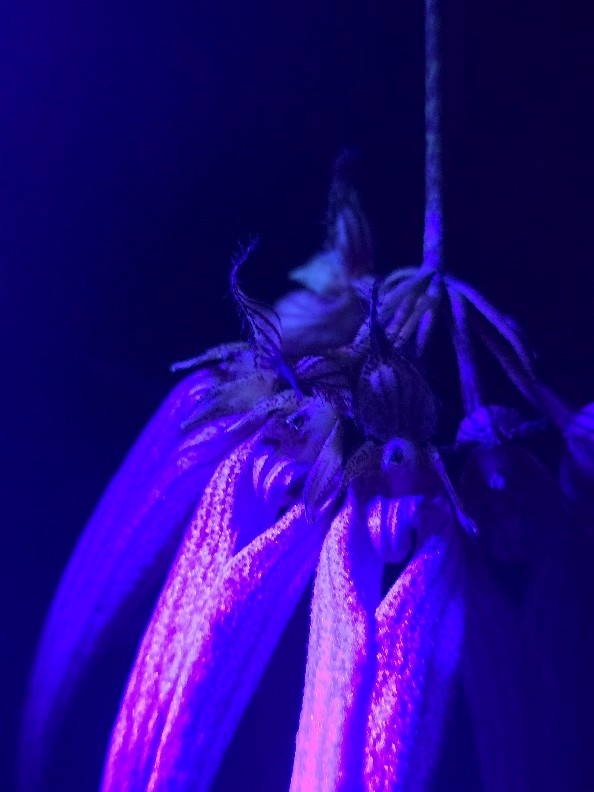
In the natural world, such “invisible” markings have distinct purposes. Some birds see UV-illuminated feathers and use the patterns in selecting mates. UV patches on flowers guide bees to nectar. UV markings help some predators find prey—and some prey avoid predators.
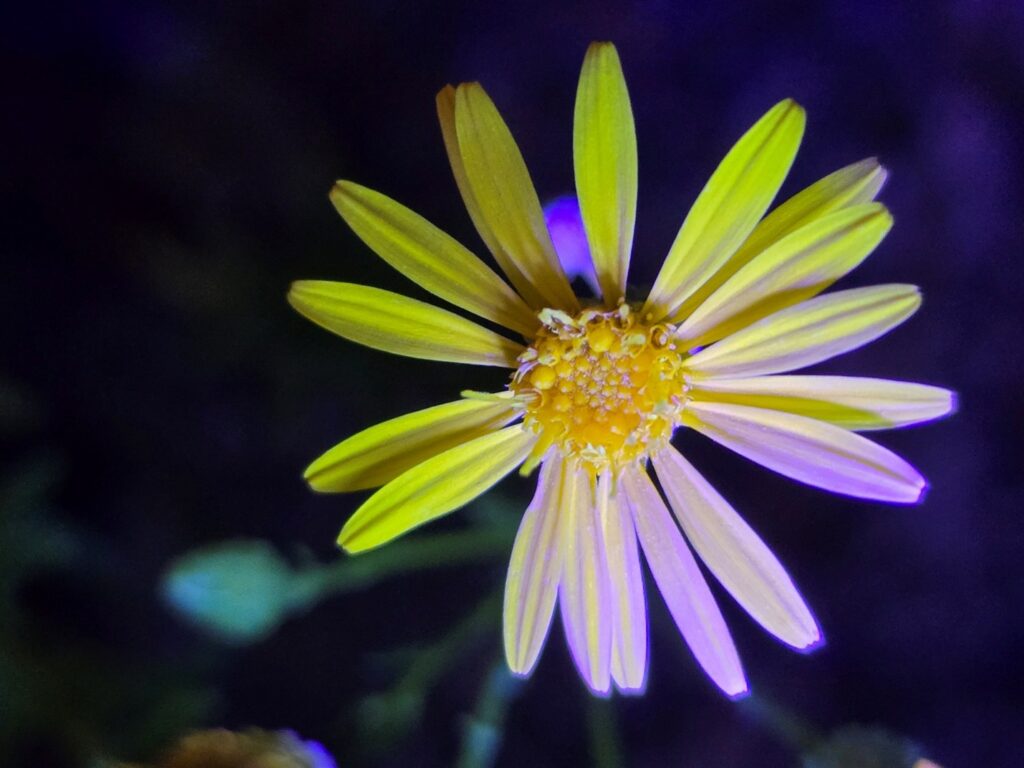
In the Preserve, this wildflower appeared bright yellow under fading sunlight and morphed to lavender as we illuminated its lower half with our special flashlights.
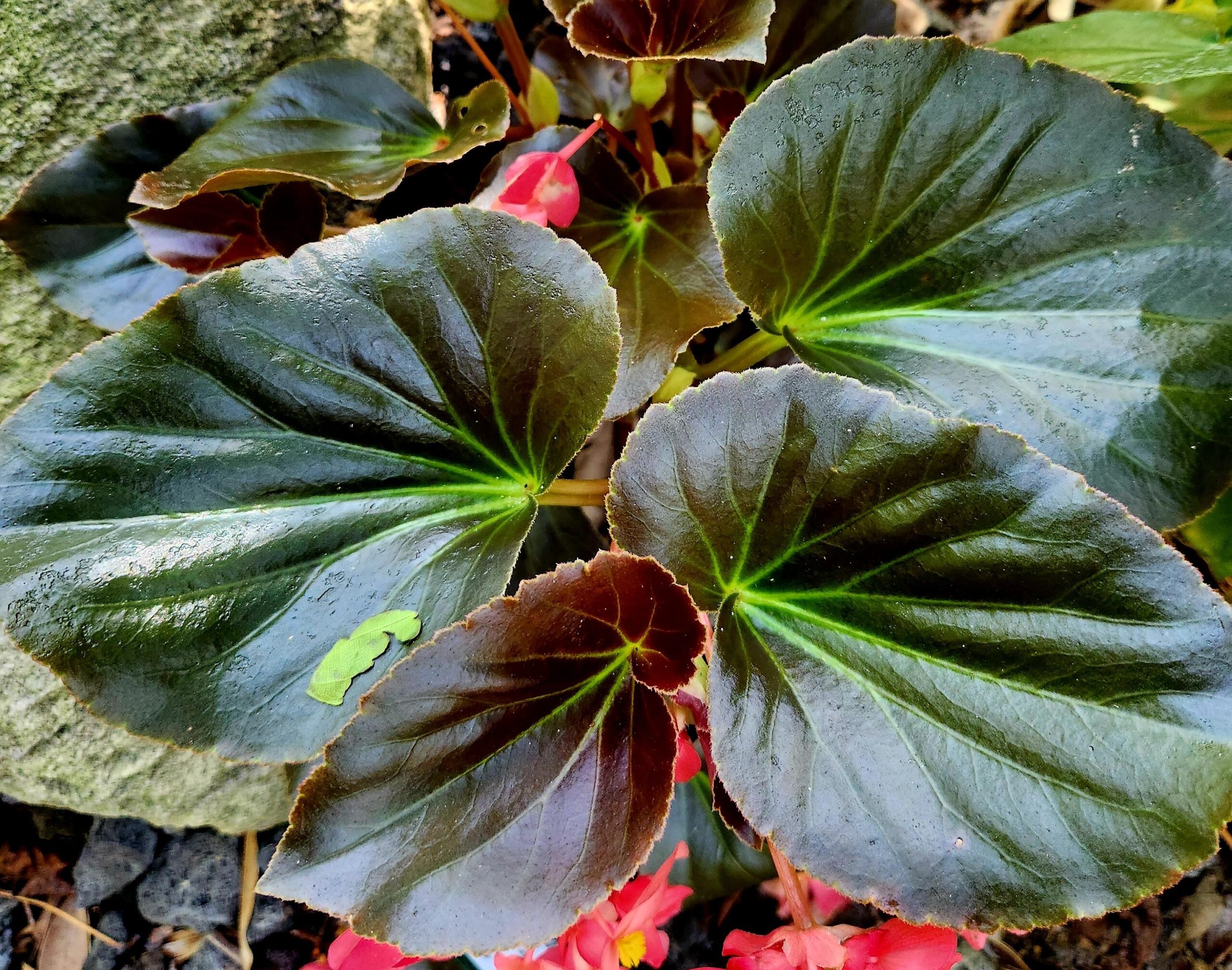
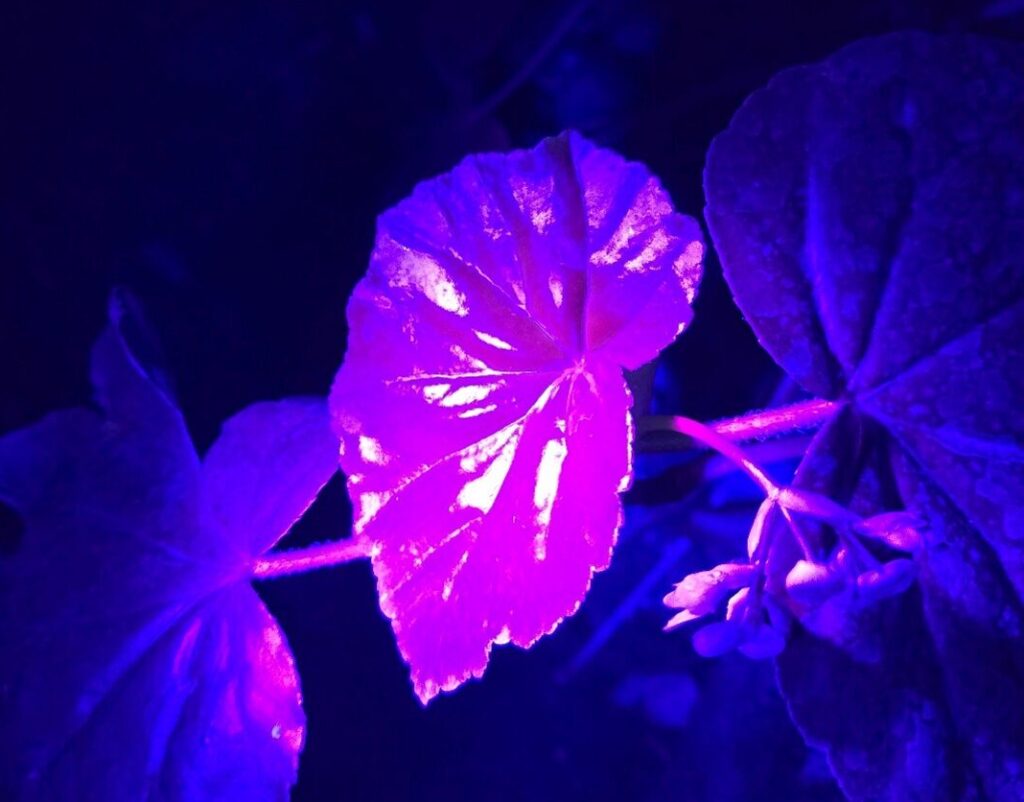
This begonia leaf was a delightful surprise. Typically a burgundy hue, it glowed metallic-like under black light. Is this how UV-receptive nocturnal creatures, like bats, perceive it?
We felt like kids again on this night, taking turns gasping, “Look at this!” and snapping photos on our phones. And, perhaps, this was the real “ah-ha!” moment of our evening. Running our organization is intense, and sometimes we slip and regard the Garden as workplace rather than wonderland. The black light reminded us otherwise. What other hidden delights did our campus hold? What could we see with a magnifying glass, a set of binoculars, a camera macro lens, or simply our naked eyes—if we stopped the bustle and observed the magic all around us?
So that’s our challenge to you as you enjoy the Garden and our ChromaFlora exhibition, awash in color and hidden delights waiting to be revealed.
Explore the botanical origin of pigments and purpose of floral hues, the use of color in landscape design, and much more at ChromaFlora, on display now – May 25.


About the Author