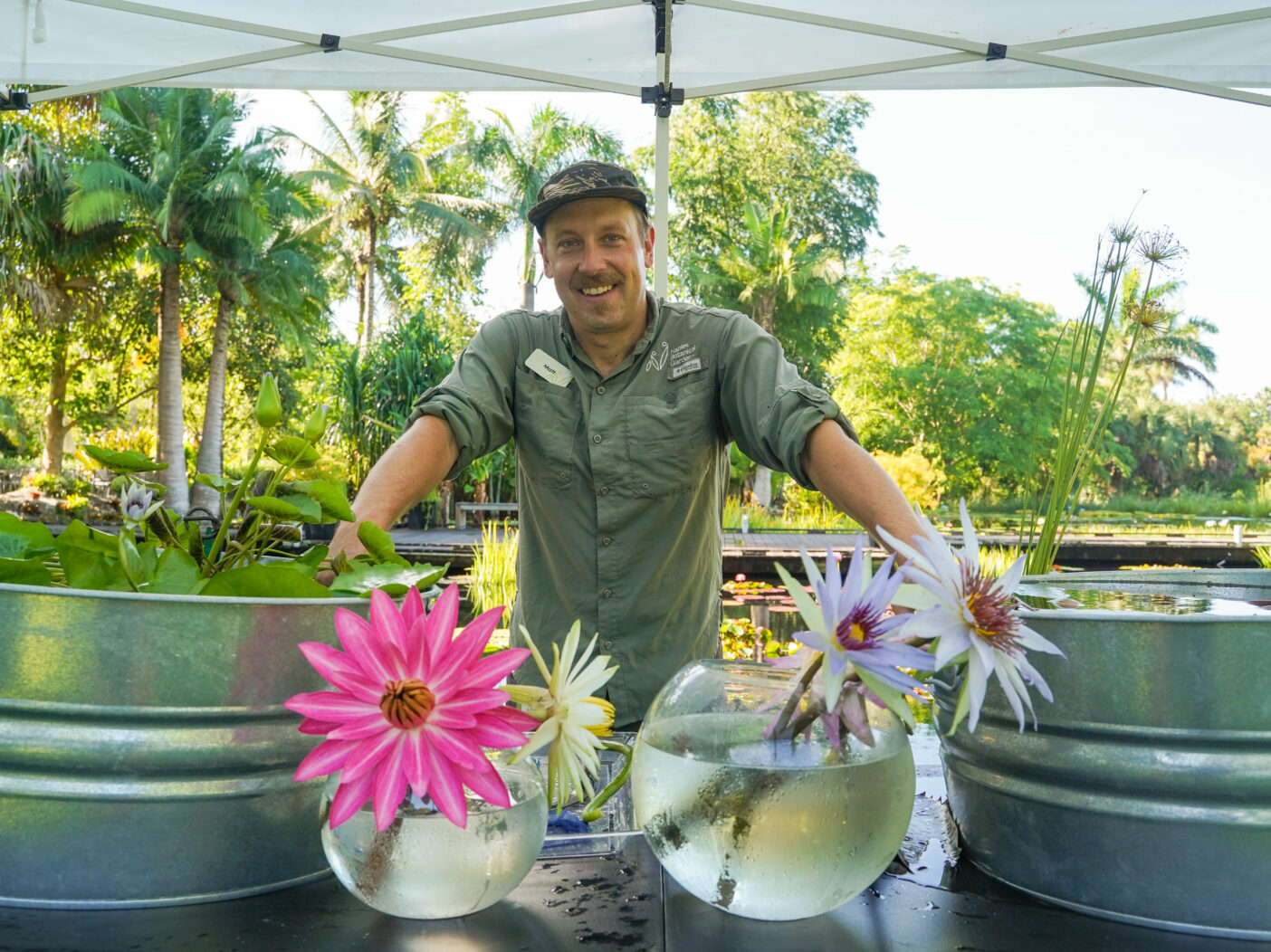
Waterlilies (Nymphaea sp.) have always enchanted humans. Across many cultures, Nymphaea—named for Greek mythological water nymphs—are deeply symbolic, representing traits such as beauty and enlightenment. Historically, the plants themselves were somewhat simplistic and austere. The waterlilies depicted by the ancient Egyptians were elegant, but predictable in their appearance, a flower with a dozen or so pale blue petals and plain green pads.
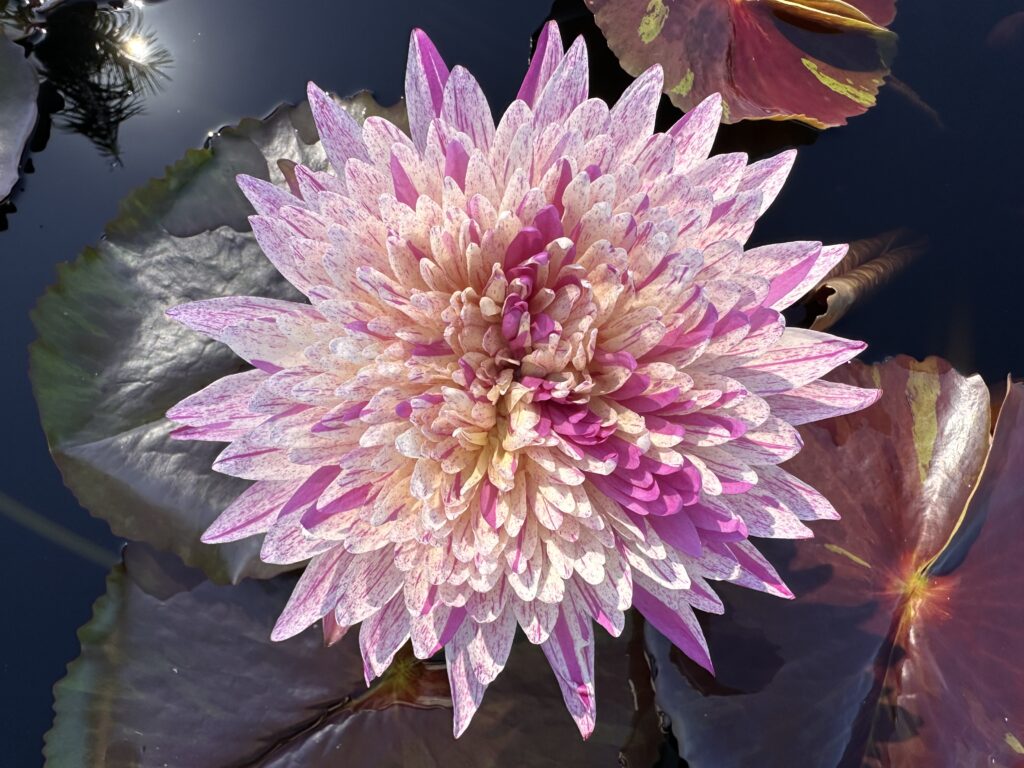
In the past 15 years, hybridizers have spurred an aquatic renaissance, producing new colors, forms, and increasing petal counts in newly developed waterlily hybrids. Beautiful-but-simple pink and blue tropical waterlily flowers have given way to deep maroons and saturated purples that look more like chrysanthemums than waterlilies. In 2009, a hybridizer crossed a tropical and a hardy-type waterlily and achieved a long-coveted blue-purple hardy specimen. This breakthrough led to the development of an entirely new class of waterlily, the Hardy Intersubgeneric (HISG), which possesses the growth habit and cold tolerance of hardy waterlilies combined with the flower colors and shapes of tropicals.
Our Garden is at the center of this revolution. Since 2019, we have been the host site and grower of the International Waterlily and Water Gardening Society’s (IWGS) New Waterlily Competition. This competition was first held in 1997 as a way for waterlily hybridizers to showcase their newest creations and to introduce remarkable new hybrids to water garden enthusiasts worldwide.
As a result of this partnership, we have been able to add dozens of the newest and most exciting hybrids to the waterlily collection, including the plants that are awarded the competition’s top honor: The IWGS Best Overall New Waterlily. Some of these internationally recognized specimens will be on display along with hundreds of other waterlilies during Waterlily Weekend, August 29 & 30.
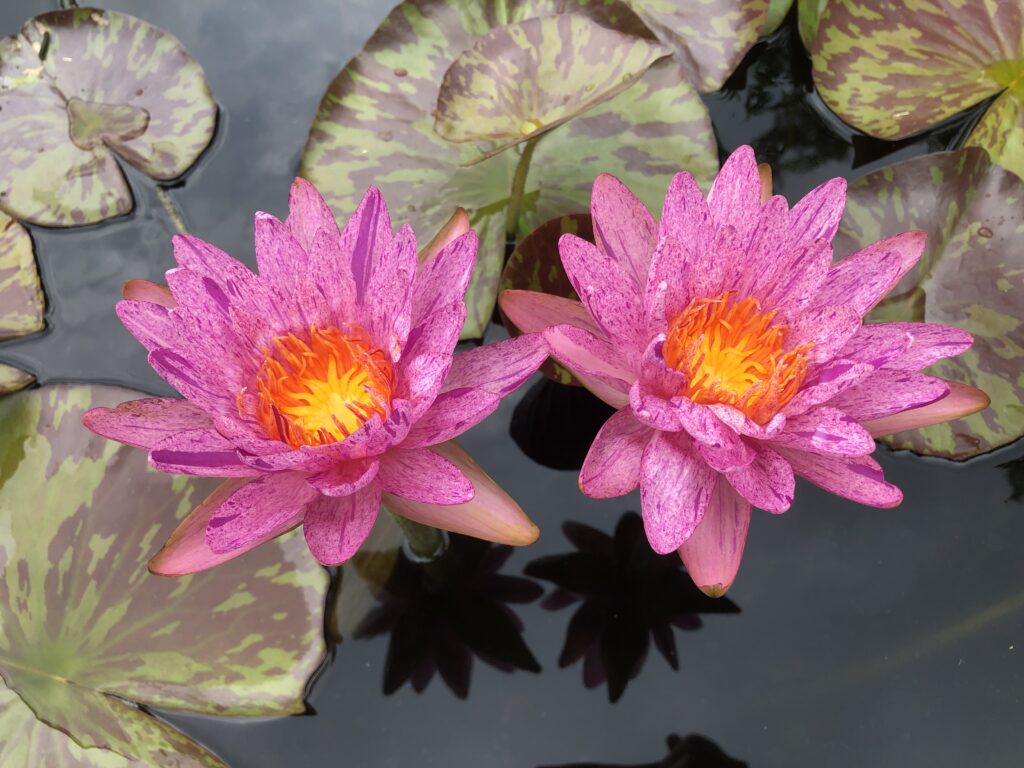
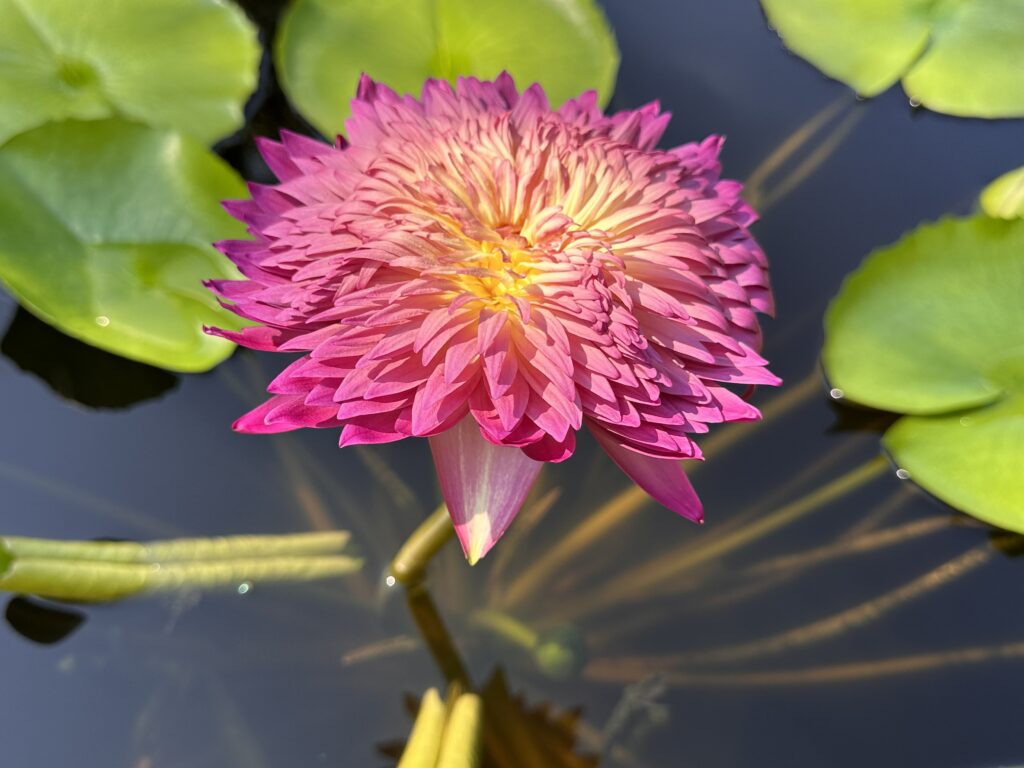
Our holdings include the 2021 winner, Nymphaea ‘Purple Zebra’ by hybridizer Pornchai Sukkasemsamranjit of Thailand. This plant set itself apart by featuring light lavender flowers flecked with splashes of dark purple and white streaks surrounding the fiery yellow anthers and central disc. The judges also rate the pads of the entries, and ‘Purple Zebra’ has marvelous maroon mottling making every leaf unique. The overall winner in 2024, Nymphaea ‘Dreaming Beans’ by Li Xiao of China, came from the miniature category. ‘Dreaming Beans’ produces an abundance of vibrant pink flowers that measure less than 3 inches across. This dainty hybrid is the perfect hardy waterlily to grow in smaller spaces or containers throughout the Garden. This past year, Nymphaea ‘Prueksakan’ by Arun Kobkaew of Thailand won the competition. This stunning hybrid features a deep royal purple flower with hundreds of densely packed petals. These intensely colored, chrysanthemum-like flowers are set atop a backdrop of burgundy mottled pads that make a bold statement in the pond.
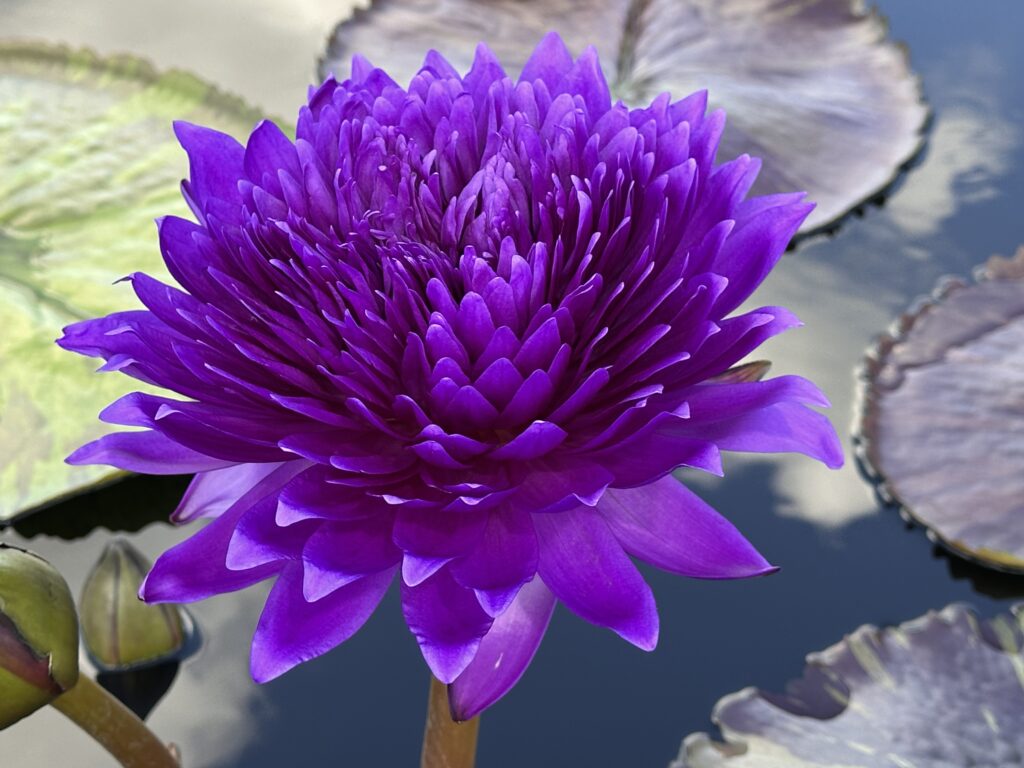
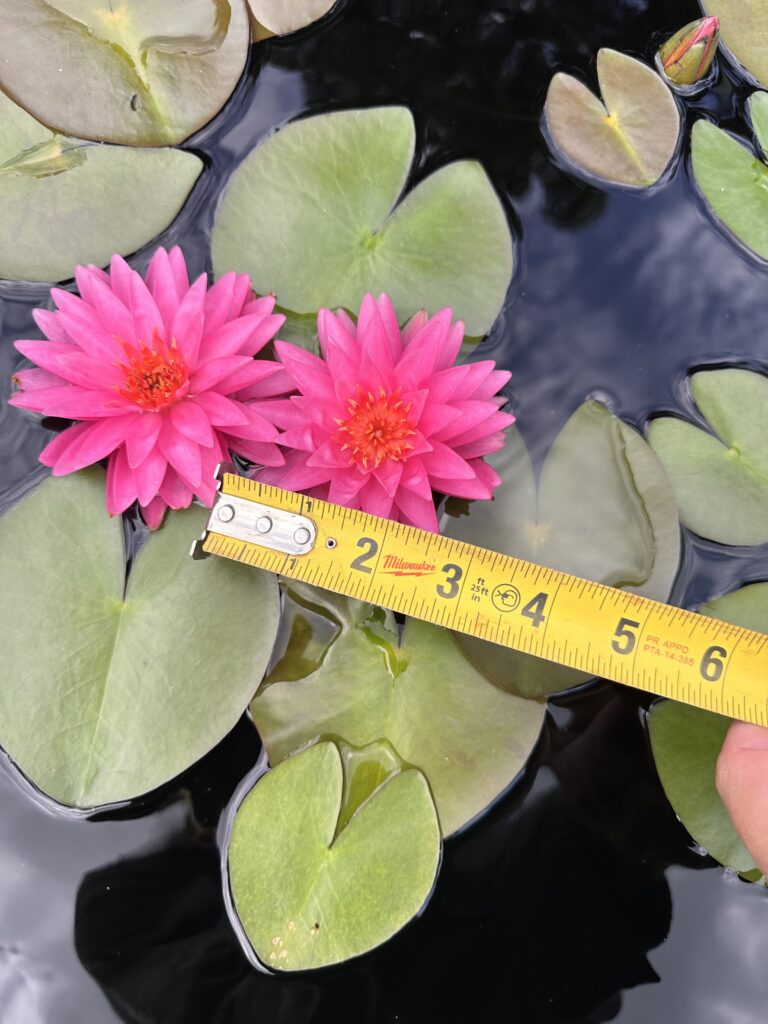
As you read this, we’re deep into the 2026 New Waterlily Competition. As the host, waterlily hybridizers from around the world send their latest and greatest creations to the Garden to be grown out under the care of our horticulture staff. Once the plants are full sized and blooming, we record detailed observations, measurements, and photographs. These data document the first-, second-, and third-day flowers of each plant as many waterlilies exhibit subtle changes as they open each successive day. Other data recorded include the flower measurements, height, overall size of the plants, and the number of new flowers produced each week. We monitor them for eight weeks.
After the observation period is complete, we compile the data and photos and forward them to the IWGS for submission to a panel of expert judges who will score the entries. The IWGS compiles the scores and awards a Best Overall New Waterlily, as well as winners in Tropical, Hardy, and Hardy Intersubgeneric (the tropical/hardy cross mentioned previously) Waterlily categories.
Hosting this competition is a significant undertaking for the Garden staff, requiring rigorous recordkeeping and correspondence with contestants and IWGS administrators—all the while maintaining our existing aquatic plant collection and nearly 2 acres of aquatic gardens. But the endeavor is worth it. Like their predecessors, nearly all of this year’s contestants have pledged to donate their entries to the Garden, giving our collection another infusion of aquatic gems to enjoy.