
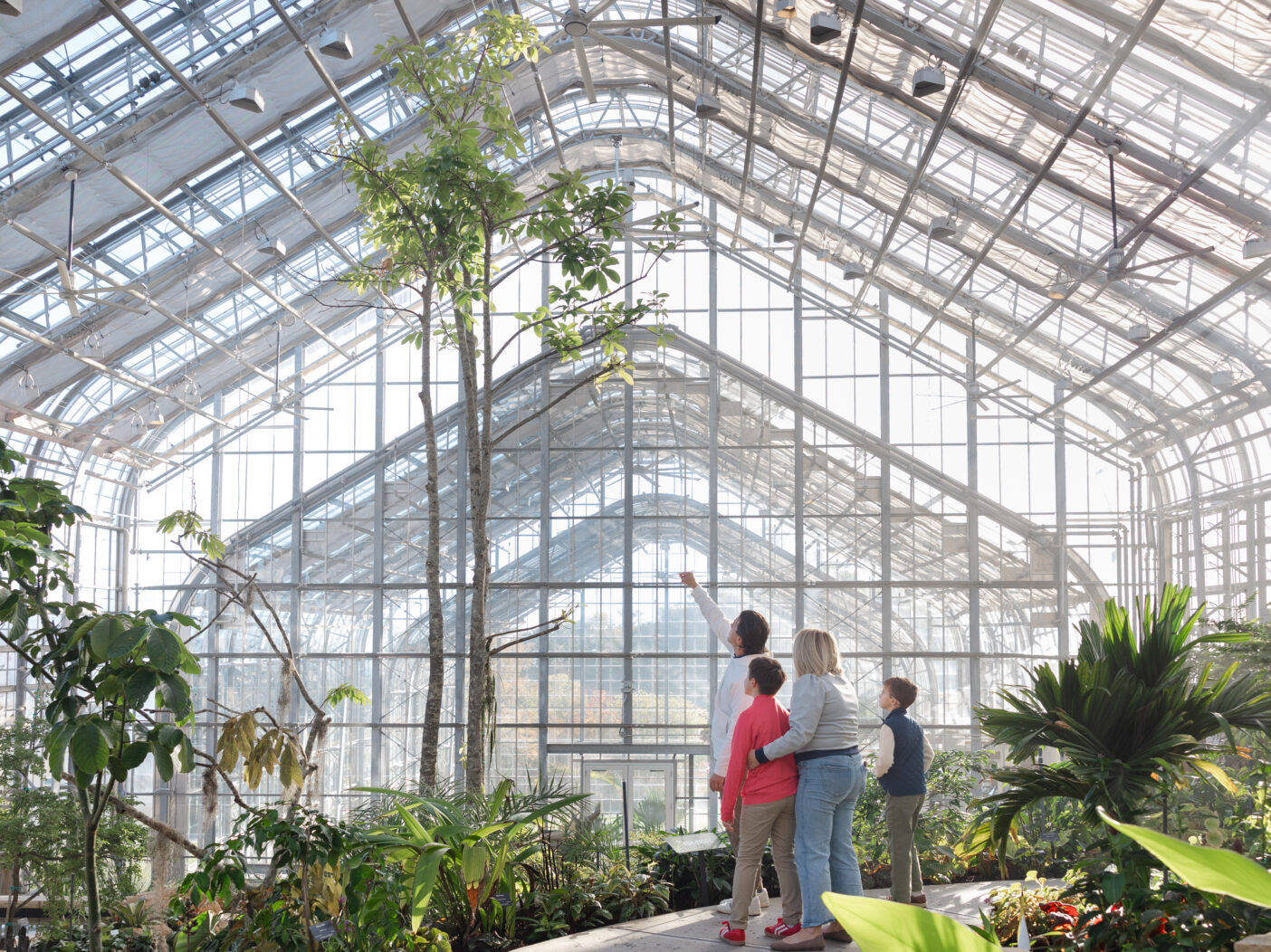
How do you create a tropical oasis in Omaha, Nebraska, where winter temperatures can dip to the teens, and summer rainfall amounts to a fraction of Florida’s wet season soaking?
At Lauritzen Gardens, a 100-acre botanical garden in the heart of that city, the answer lies in the rejuvenation of its 17,500-square-foot Marjorie K. Daugherty Conservatory and a partnership with Naples Botanical Garden to source and install iconic tropical plants.
Here, three members of our Horticulture Team—Associate Director of Horticulture Maintenance Stephen Jurek, Horticulture Maintenance Team Lead Lindsay McCoy, and Arborist Fernando Pereira share the story of this unique collaboration—and the behind-the-scenes challenges that go into taking trees on a 1,600-mile journey and installing them under glass.
The Partnership
Leaders from our two gardens first met at an American Public Gardens Association conference. Lauritzen CEO Ennis Anderson shared his vision for a new tropical oasis, and Brian Galligan, Naples’ Vice President of Horticulture, offered to help make it happen.
Built a decade ago, the Conservatory is an architectural and botanical showcase and a must-see attraction in Omaha. When Anderson took the helm in 2024, a renovation project was already underway to upgrade the operational systems and soil quality. He seized the opportunity to challenge the design team to think bigger in the project’s second phase, urging them to elevate the plant palette—what he described as “a few cool specimens and a lot of filler”—into an immersive display that celebrates the vast diversity of the plant world.
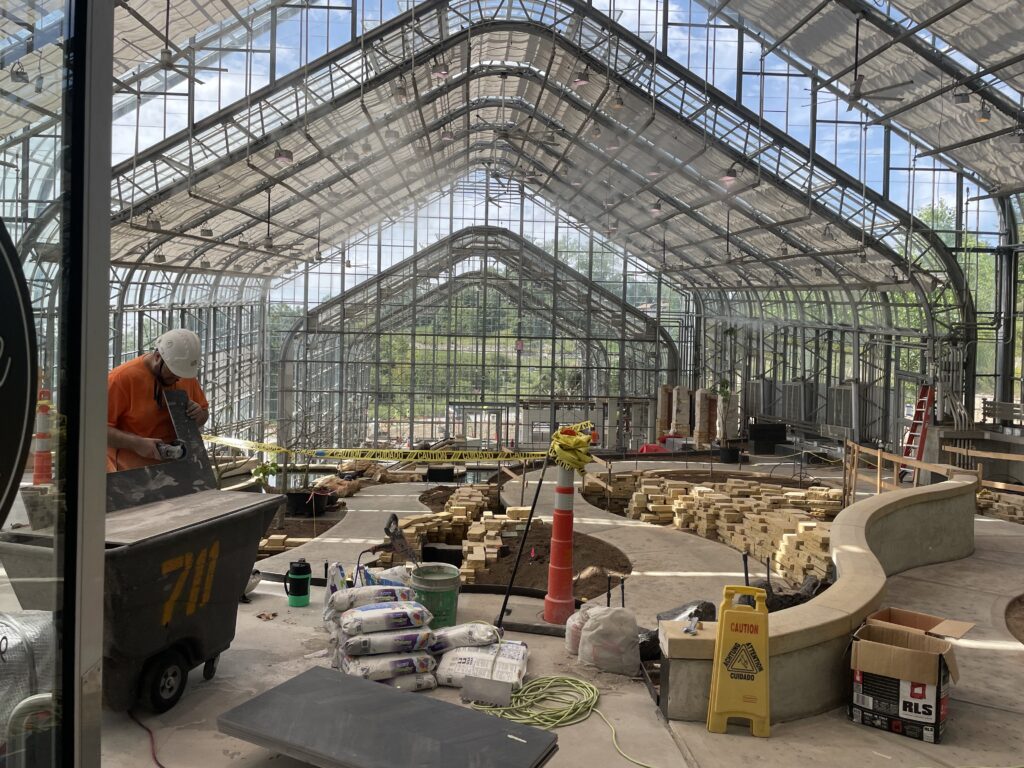
Photo by Stephen Jurek
“I want a world-class plant collection to complement the world-class architecture,” he told them. Furthermore, he wanted the revitalized collection to deepen visitors’ connection to plants. “What types of plants from around the world would spark curiosity?” he asked. “What are the once-in-a-lifetime plants that people might otherwise only see in a movie?”
Four Lauritzen staff members came to Naples in April to see our vast collection, much of which you’re not able to source from a nursery. Our staff helped guide them toward the trees that would give their conservatory the “wow” factor they were seeking, such as silk floss (Ceiba sp.), baobab (Adansonia digitata), and cannonball (Couroupita guianensis).
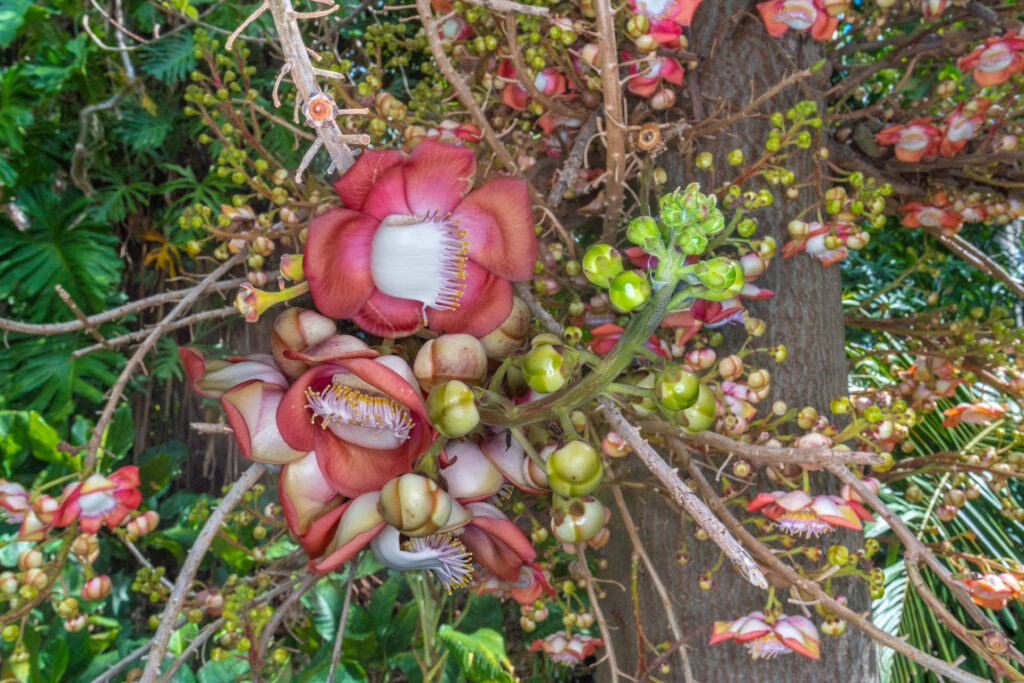
Photo by John Eder
“It was fantastic to walk through Naples Botanical Garden and to see plants curated in regions, similar to what we were trying to do in our re-envisioned conservatory,” said Lauritzen Chief Operating Officer Victoria Schoell-Schafer.
You may be wondering how we can part with trees without making holes in our landscape. The answer is simple: quantity. We are growing thousands of plants at any time in our expansive Evenstad Horticulture Campus, within in-ground nursery spaces around campus, and in an off-site, 5-acre growing facility. Because of our vast stock, the Laurtizen team was able to essentially “go shopping” here for a large portion of the plants they were seeking.
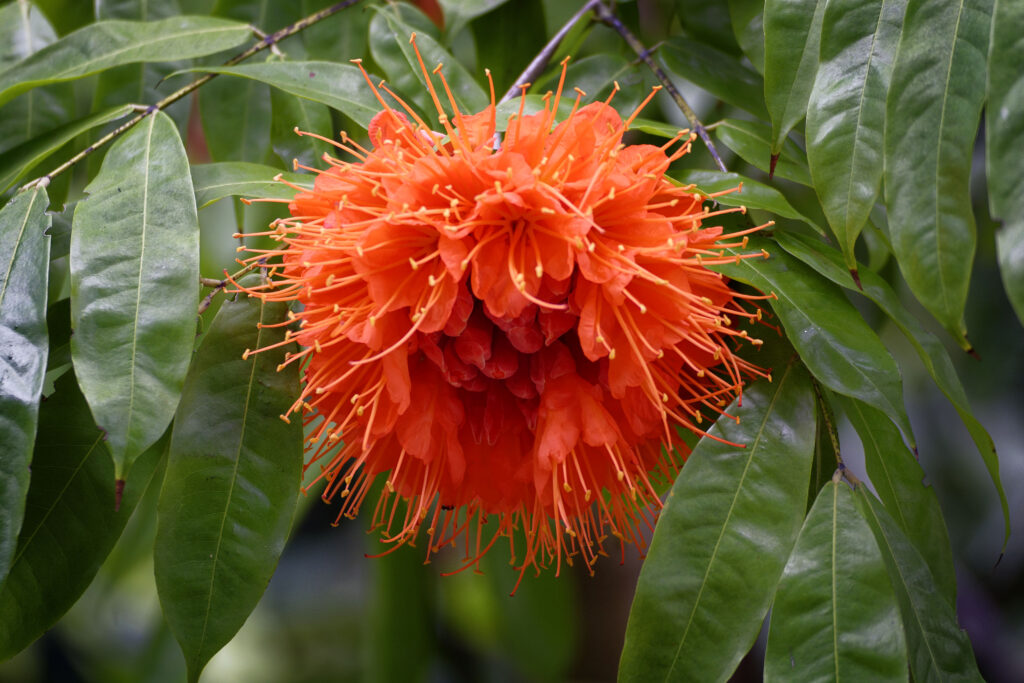
Now, the hard part. At our recommendation, our friends at Lauritzen chose some impressive trees, including a gumbo limbo (Bursera simaruba) and cannonball tree, both about 30 feet tall, and other tropical favorites such as: baobab, Rose of Venezuela (Brownea grandiceps), looking glass tree (Heritiera littoralis), shaving brush tree (Pseudobombax ellipticum), trumpet tree (Cecropia peltata) and pond apple (Annona glabra). We had to figure out how to safely transport these trees to Omaha.
Tree Moving
There are three major parts to a tree move: preparation, transport, and planting.
The Horticulture Maintenance Team started by root pruning. Root pruning is a process that involves digging a ring as wide and deep as a tree’s root ball and cutting the roots with saws. We started months before the anticipated moving date, giving the trees plenty of time to recover from shock. After the root ball was completely exposed, we wrapped it in a layer of burlap and plastic to hold in moisture and backfilled soil underneath the tree to stabilize it before transport. The team was diligent about watering these trees multiple times a day for weeks to give them the best chances of surviving their transplants.
Prior to transport, Fernando performed light, structural pruning to make the trees easier to load and to promote healthy regrowth in their new environment. Before loading, the team defoliated trees by hand, one leaf at a time. This technique is to reduce water loss due to transpiration. We tucked extra sphagnum moss inside the burlap layer of the three biggest trees to hold additional moisture for the long trip.
You can’t simply put trees on flatbeds like you do lumber. Loading is complex, delicate—and in this case, creative. Typically, a tree rack would be used. We didn’t have one, so we figured out an alternative. The Lauritzen team purchased a load of shell, which we packed into eight tote bags and tucked around the tree trunks for support on the 52-foot flatbed truck.
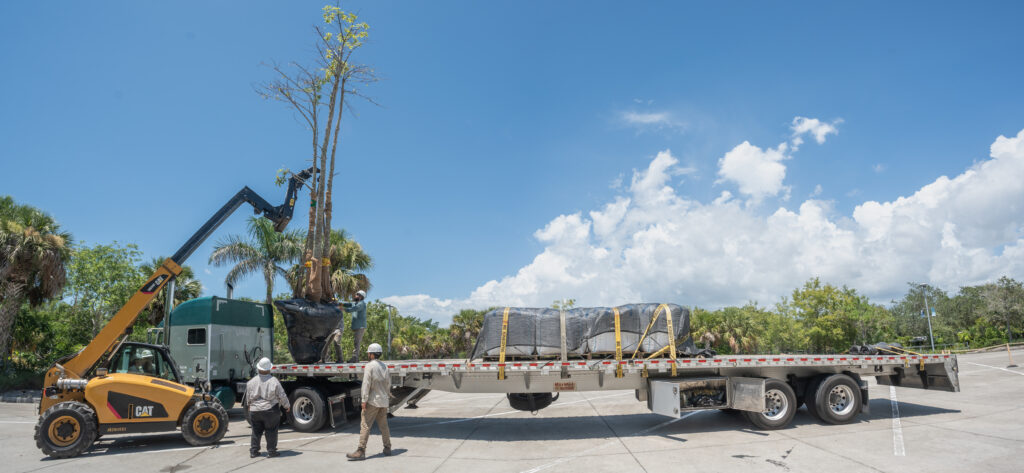
Photo by John Eder
A shade cloth was the final touch. Some of these trees grow in low-light conditions, so the shade cloth helped mitigate sun damage on trunks as well as wind damage during transport. The trees had a two-day journey, leaving Florida on Sunday and arriving in Nebraska on Tuesday morning.
Besides these large trees, we sent potted plants and small trees north as well, so that the Lauritzen team could complete their horticultural picture with layers of tropical foliage, just as we do here.
Before leaving the Garden, the load needed to have a phytosanitary certificate, which ensures the plants were inspected by the U.S. Department of Agriculture and confirmed to be clear of pests and diseases. There are no fire ants native to Nebraska, so we had to take care not to send any!
Unloading and Planting
Stephen flew to Omaha to help install the large trees and lay out the other plant material. Here’s his description of the installation process:
The Conservatory at this point was nearly empty. The Lauritzen team and I would first place the large plant material from our Garden and follow with the understory plantings.
Even a building this massive wasn’t easy to navigate. The access to the Conservatory was a narrow, winding pathway with rock walls on both sides, leading to a sharp 90-degree turn through an 8-foot double door. Adding to the complications, the doors had exhaust fans and electrical equipment on either side, so there was not much room to maneuver. We quickly realized that the 5,000-pound telehandler they used to unload the trees from the truck could not navigate the turns inside.
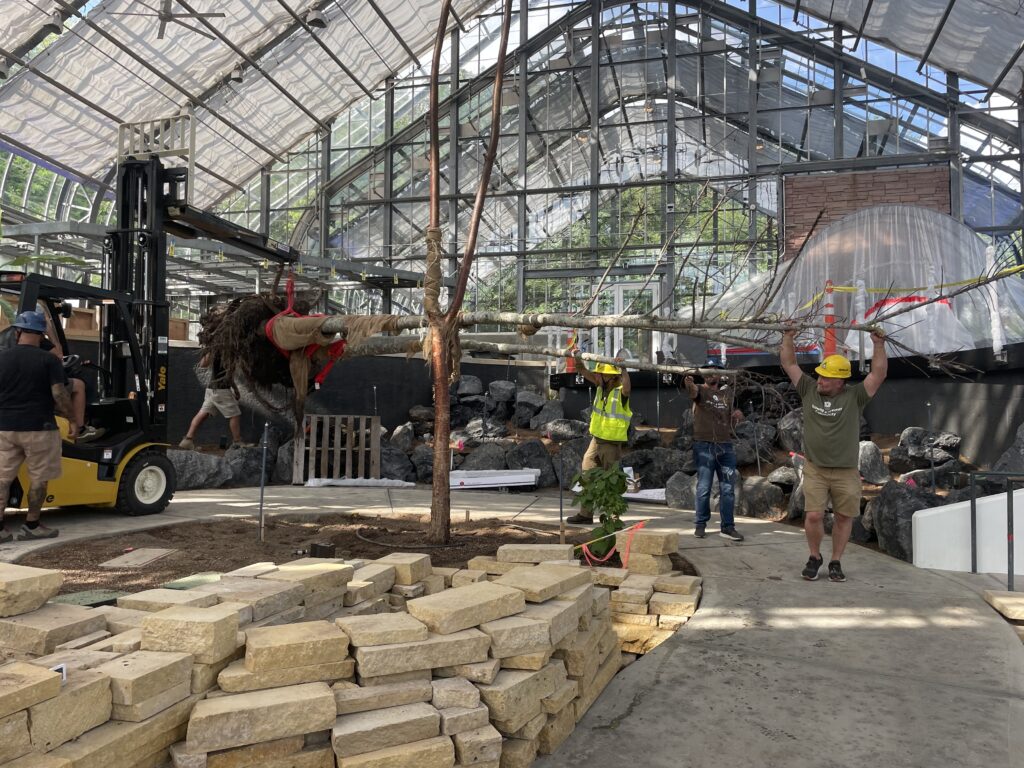
Photo by Stephen Jurek
The Lauritzen staff switched up the game plan and brought in an industrial forklift outfitted with a special, swiveling attachment known as a “truss jib” to better maneuver the big trees through the tight interior turns.
The machinery switch didn’t exactly make it easy. Just consider the cannonball tree—the most challenging one of the entire project. Its root ball was 6 feet wide, and its taproot was 54 inches deep. The original planting location was only 30 inches deep before we hit the concrete. We selected another location that was about 38 inches deep—still not deep enough—so we determined we needed to build a rock wall and create a bed deep enough to accommodate the giant root ball. Think of it as a massive planter pot. Luckily, all the material and the contractors were already on-site, and the rock wall was built in a few hours. We pushed the forklift to its absolute maximum limitations, but we were able to plant the tree successfully.
The trailer truck arrived later in the week, full of tropical plants. The Lauritzen staff was in awe. Staff assembled for an all-hands-on deck effort to unload this truck, and they were all so delighted to see their new collection: palms, including Areca vestiaria and Copernicia gigas, the sweet-smelling ylang-ylang (Cananga odorata), lignum vitae (Guaiacum sanctum), and jackfruit (Artocarpus heterophyllus), just to name a few.
The staff nicknamed the silk floss, their favorite tree, “Bowser” after the spiky Mario Kart video game character.
After unloading the truck, the assembled crew—at least 15 to 20 people—went on a six-hour blitz to place and plant these hundreds of specimens. We made decisions on the spot, shifting and moving plants until they felt just right. By about 6pm, the place had gone from bare dirt with our few big trees to a fully realized garden.
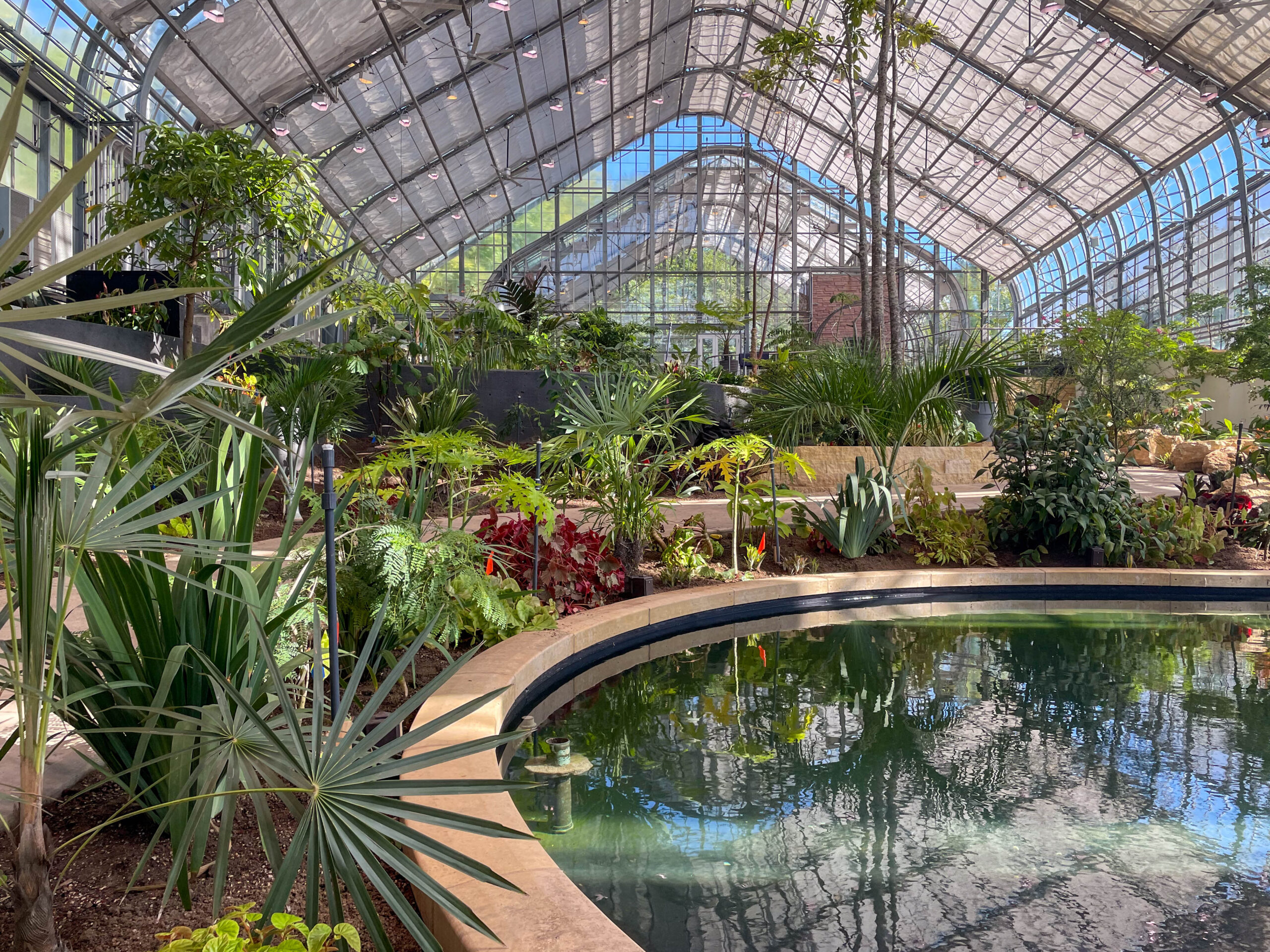
Photo courtesy of Lauritzen Gardens
The Conservatory’s grand reopening was celebrated October 20, and it’s already generating buzz. “People are saying, ‘I’ve never seen anything like this,’” Anderson said. “We’re really opening the plant palette to the community.”
Stephen and Brian returned to Omaha in mid-October for a follow-up with the team and donors involved in the project. They were able to see the plants’ growth, provide maintenance guidance, and make suggestions for additional plantings
“This project made me see our plants with new eyes,” Stephen says. “What was most exciting was unloading the truck and seeing the staff blown away by how cool the plants were. I’m glad we could share these plants with another community.”
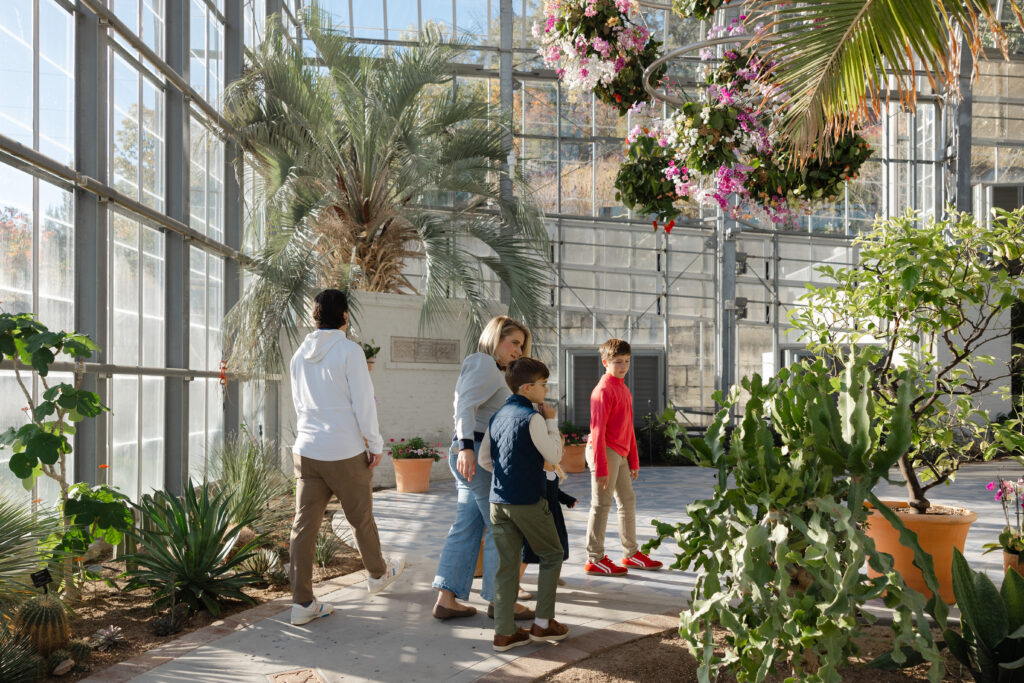
Photo courtesy of Lauritzen Gardens
About the Authors
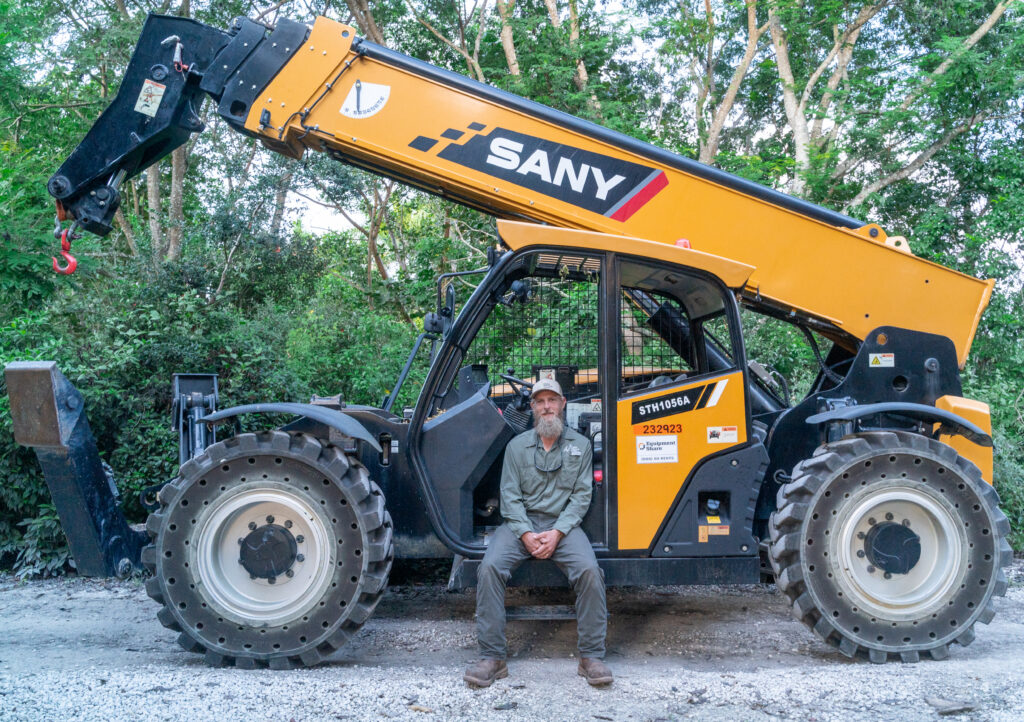
Stephen Jurek is the Garden’s Associate Director of Landscape Maintenance.
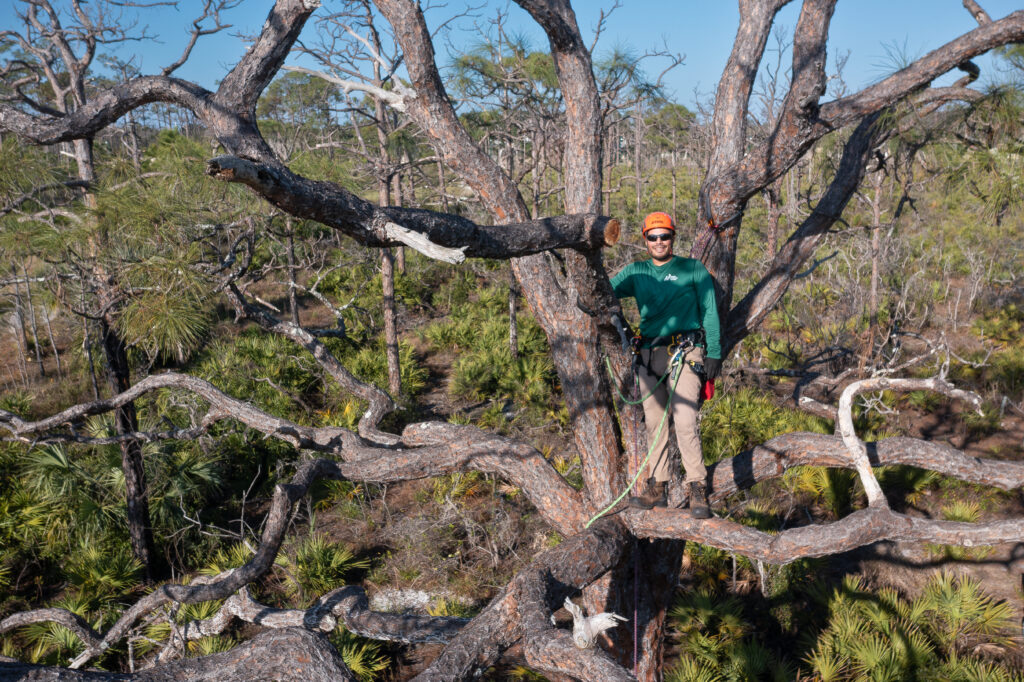
Fernando Pereira is the Garden’s Lead Arborist.
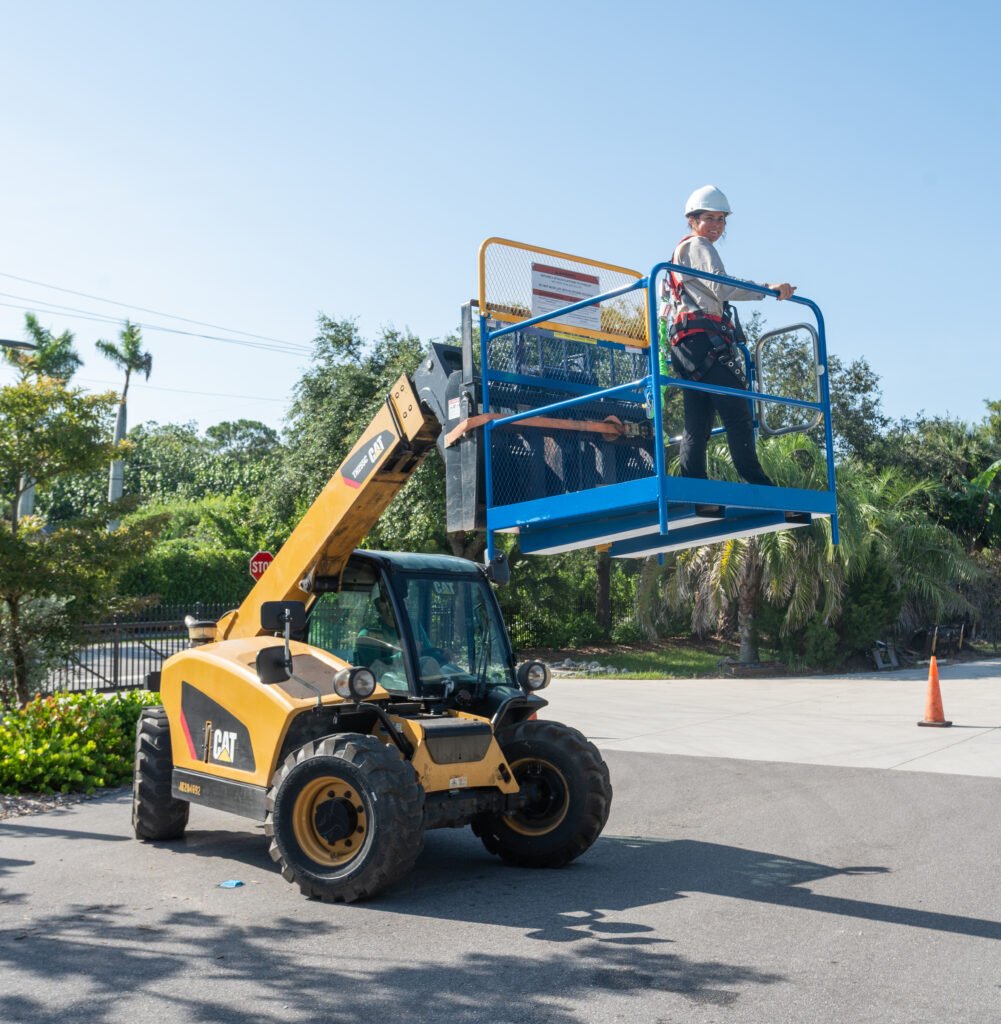
Lindsay McCoy is the Garden’s Horticulture Maintenance Supervisor.