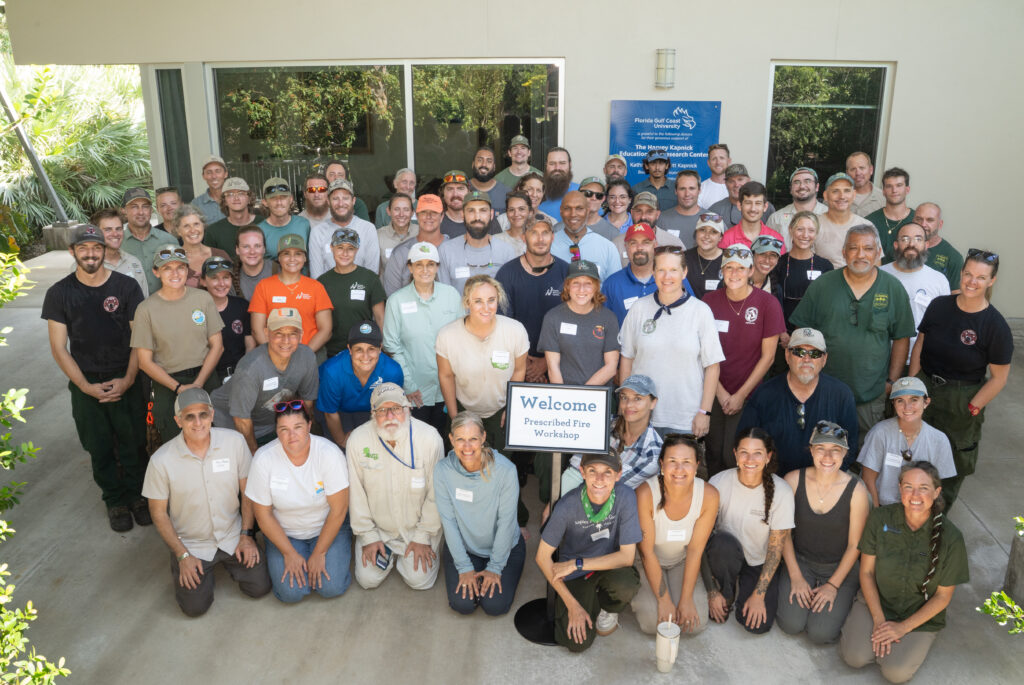
During a summer of headline-making wildfires around the world, about 80 land managers from across the region gathered at Naples Botanical Garden to practice preventing them.
They do that by setting fires on purpose.
Photos by John Eder
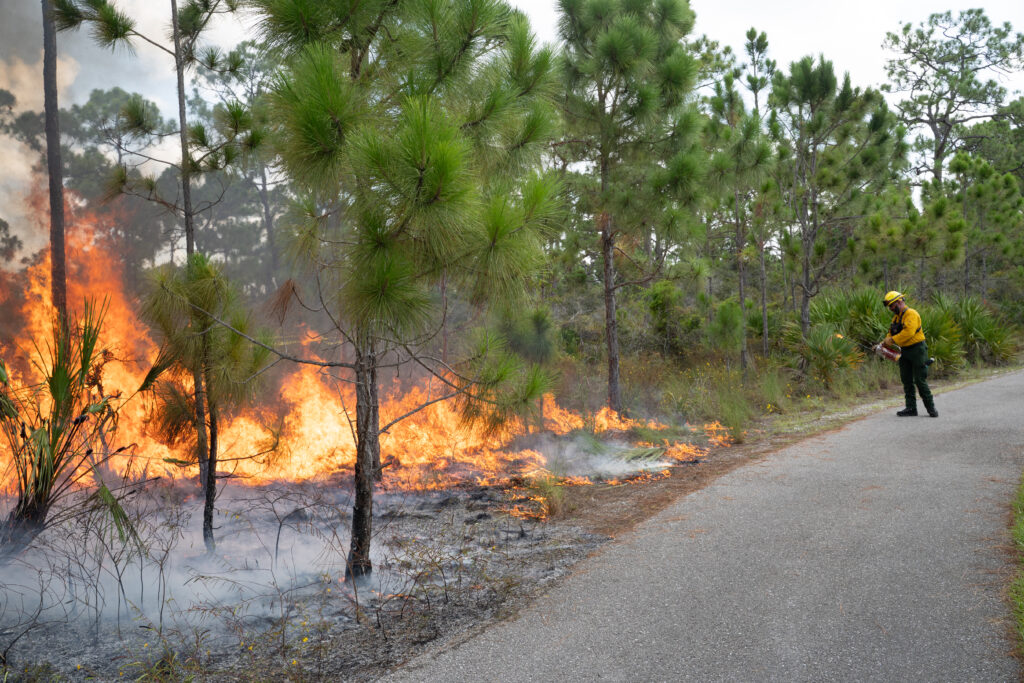
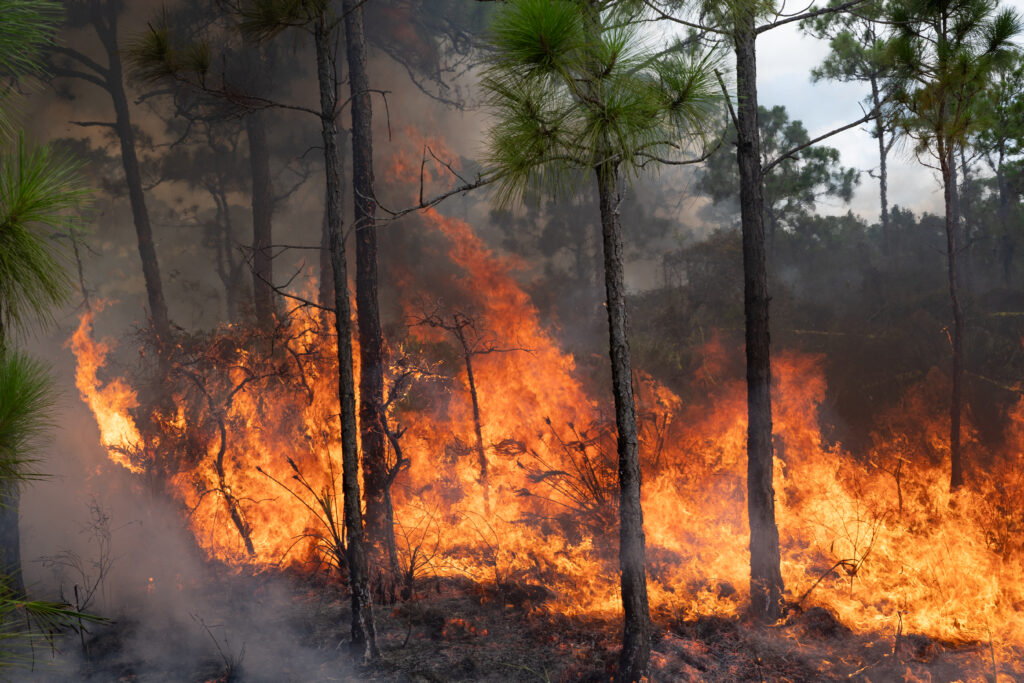
Prescribed fires—burns lit under carefully defined conditions—reduce dried leaves, pine needles, sticks, and related debris that can ignite with a stray spark or lightning strike. They are the single best means of preventing wildfire, said Eric Foht, the Garden’s Director of Natural Resources.
But even with precautions like fire breaks and plenty of personnel, prescribed burning carries risks. Among them are spot-overs. These are unintentional, secondary blazes that ignite outside the designated burn area, caused by smoldering plant material or embers carried by the wind.
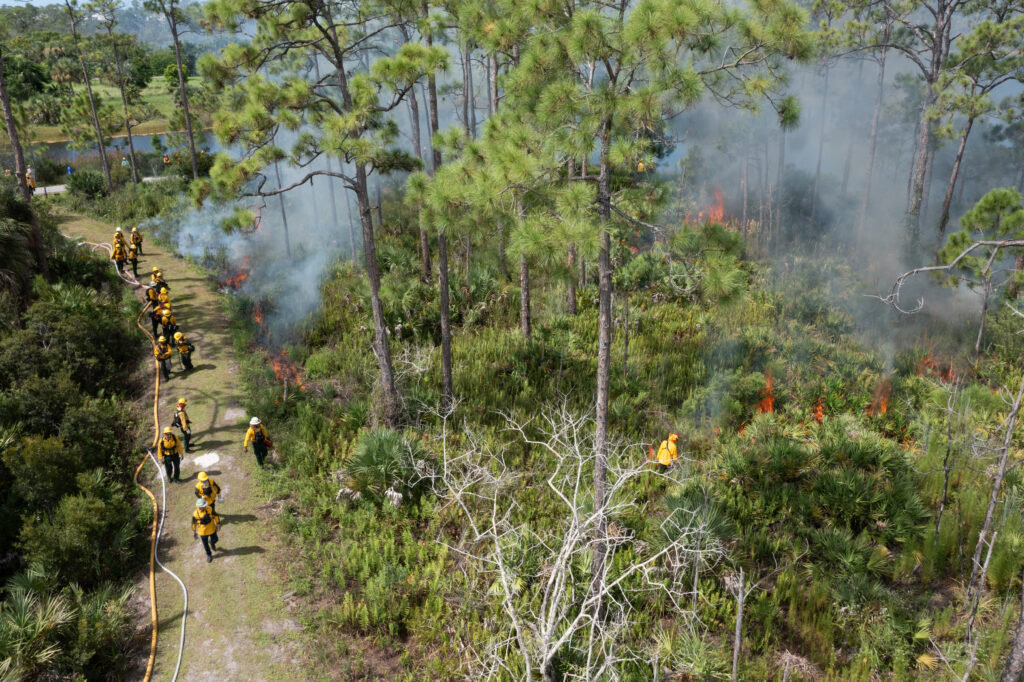
Foht and fellow organizers of the August 12 Prescribed Fire Workshop, the Garden’s second, decided to test participants’ responsiveness to such surprise ignitions.
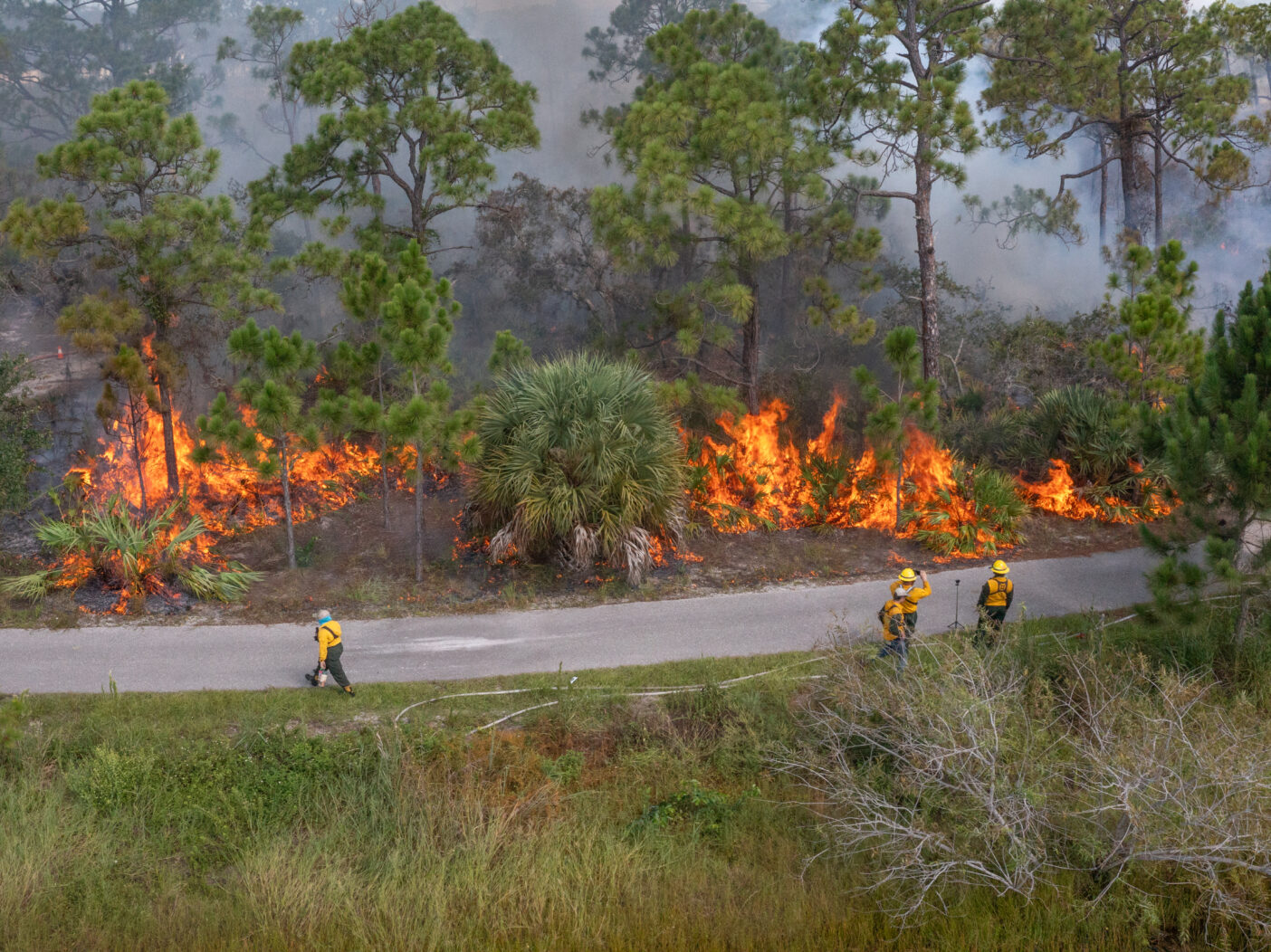
They lit a primary blaze in the Garden’s Preserve and assigned a team of certified fire practitioners to manage it. As they got to work, a second group snuck into a dense thicket nearby and lit another blaze, replicating a spot-over. Radios crackled with news of this unexpected fire and its approximate location. Firefighters hurried to the area, maneuvered a brush truck into the fire’s vicinity, and scrambled to unfurl hoses and extinguish it. They did the same in a third area.
Jean McCollom, a retired land manager who maintains a fire certification and helps with area burns, said hands-on training like this is critical.
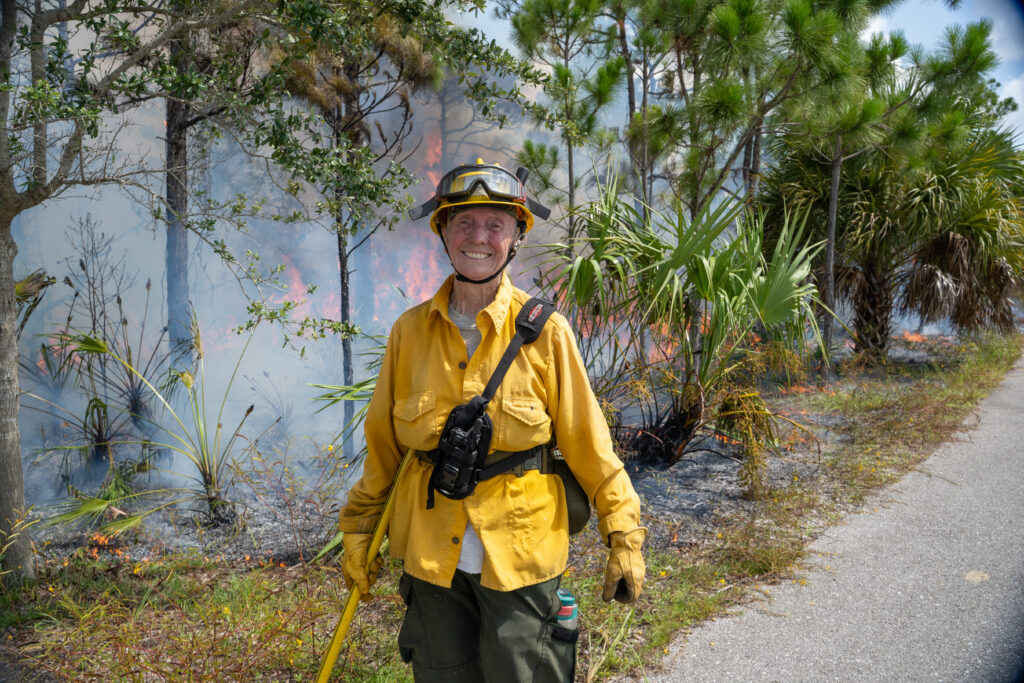
“(Spot-overs) are the kinds of things you never know what to do until you experience them,” she said. She had been burning for 10 years before she saw her first one.
The exercise gave practitioners a chance to discuss what went well, what went wrong, and how they can continue improving burning practices. Manny Porras of the South Florida Water Management District led a team responding to the first spot-over. His group struggled to find the right connectors to hook the hoses to the brush truck. “It was something really small, but it was crucial,” he said. They figured it out and successfully extinguished the blaze.
Brush truck training was among the exercises; agencies use different vehicles, each with their own setups. Because of regional collaboration, fire practitioners need to know how to operate different agencies’ equipment.
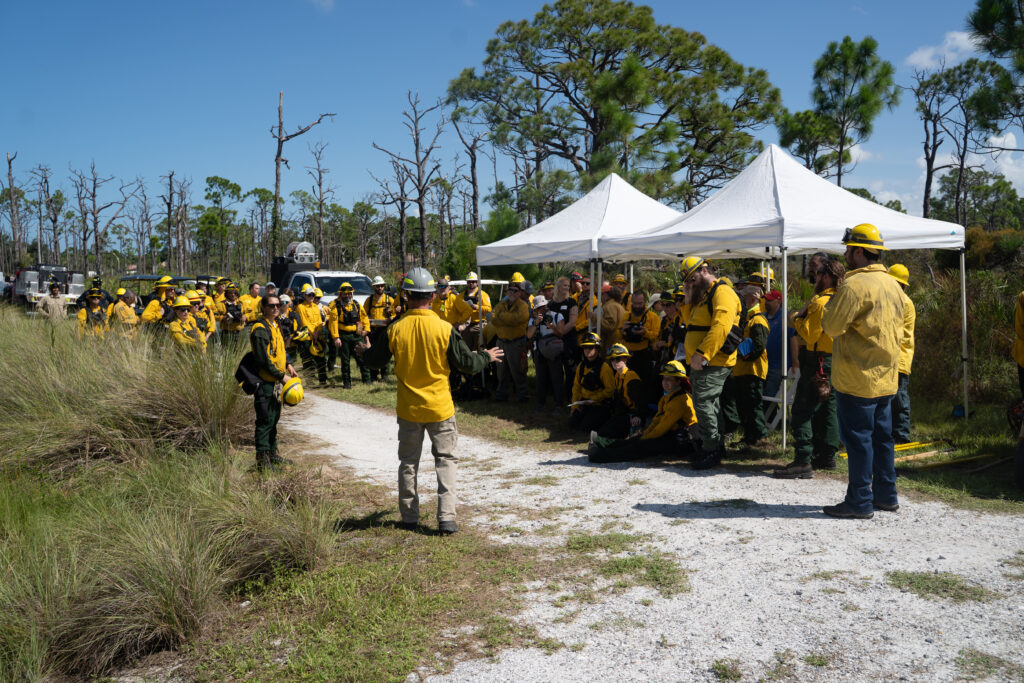
“This is your time to really ask questions,” Thaddeus Penfield, an independent burn manager whom the Garden hires to oversee its prescribed fires. Penfield, along with WynLyn McBride, a biologist and burn practitioner with the Florida Fish and Wildlife Conservation Commission, and Lauren Plussa, an independent fire practitioner, co-organized the workshop with Foht.
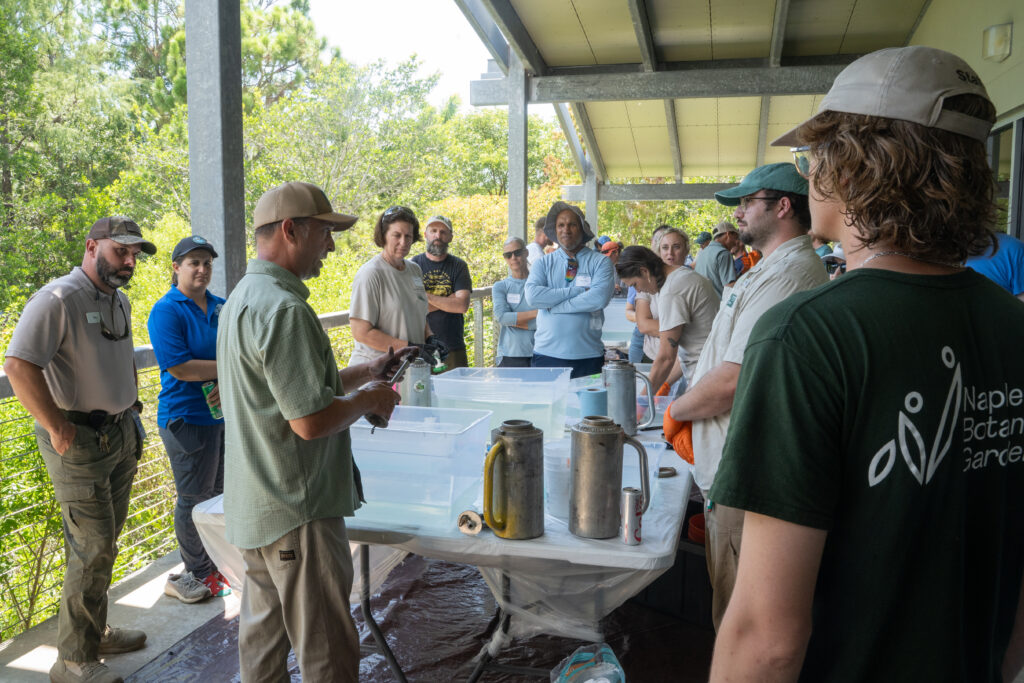
The workshop also provided an opportunity for experienced practitioners to swap strategies and mentor novices. Participants represented about 20 different organizations that manage a diverse range of habitats. “Everybody comes at this with different experiences and knowledge,” Porras said.
Safety isn’t the only reason for prescribed fires, Foht explained. Fire carries tremendous ecological benefits—opening tree canopies to let in more sunlight, managing invasive plants, prompting seeds to disperse, and encouraging the growth of new grasses for foraging wildlife. Following the spot-over drill, Foht and Penfield asked participants to ignite the Garden’s bioswale for ecological reasons. They used that exercise to show the importance of knowing one’s plant species before ignition. Spartina grass, which dominates the swale, burns spectacularly hot and fast—a risk if you’re not prepared to manage it.
The workshop came amid a troubling season of wildfires in the western United States, Canada, and Europe. Around the time of the workshop, there were 99 blazes throughout the U.S., affecting 3.3 million acres.
Fire is a natural occurrence—nature’s way of cleansing and reinvigorating the landscape. But it has come to be regarded as problematic as development pushes further into fire-prone habitats. In fact, in the early 1900s, the United States adopted a policy of fire suppression after large-scale incidents like the Great Fire of 1910, which consumed about 3 million acres in the West. That anti-fire philosophy allowed plant debris to accumulate over the years, making fires worse in the decades to come.
Florida maintained a more pro-fire philosophy. The state has led the nation in the use of prescribed fire as a land management tool, said Jesse Lavender, a spokesman for the Florida Forest Service. He believes fires would have been much worse during this year’s historic drought if the state had not been as diligent in conducting routine burns.
It takes years for natural land to accumulate enough dried plant matter to pose a significant wildfire risk, Foht says. “Prescribed fire has a lasting impact. A day of burning and several days of follow-up can have a multiyear mitigation of wildfire in that area.”
The Garden began its prescribed fire regimen in early 2023 and conducts small burns each year.