This Natural Resources Associate shares more about a career transition from grocery lines to firelines, and the unwavering pull to support Southwest Florida’s ecosystems.
Some people find peace in silence. I find it in the crackle of pine needles, the hum of cicadas, and the quiet thrill of spotting a gopher tortoise vanish into its burrow. As part of the Natural Resources team at Naples Botanical Garden, I work in a living, breathing ecosystem—and every day reminds me that conservation is as much about listening as it is about action.
I didn’t start my career in this field. For over a decade, I was a manager at Publix. The pace was fast, the responsibilities real, and the lessons in leadership ones I still use. But something was missing. I’d always felt a pull toward the natural world, and eventually, I realized I wanted a career that reflected that. So, I followed that pull—into the woods, the swamps, and fire. Along the way, I began to understand the inner workings of Southwest Florida’s ecosystems and how conservation specialists can help them heal and thrive.
Fire That Brings Life
Of all the lessons I learned, one still catches people off guard: To protect the land, sometimes you have to burn it.
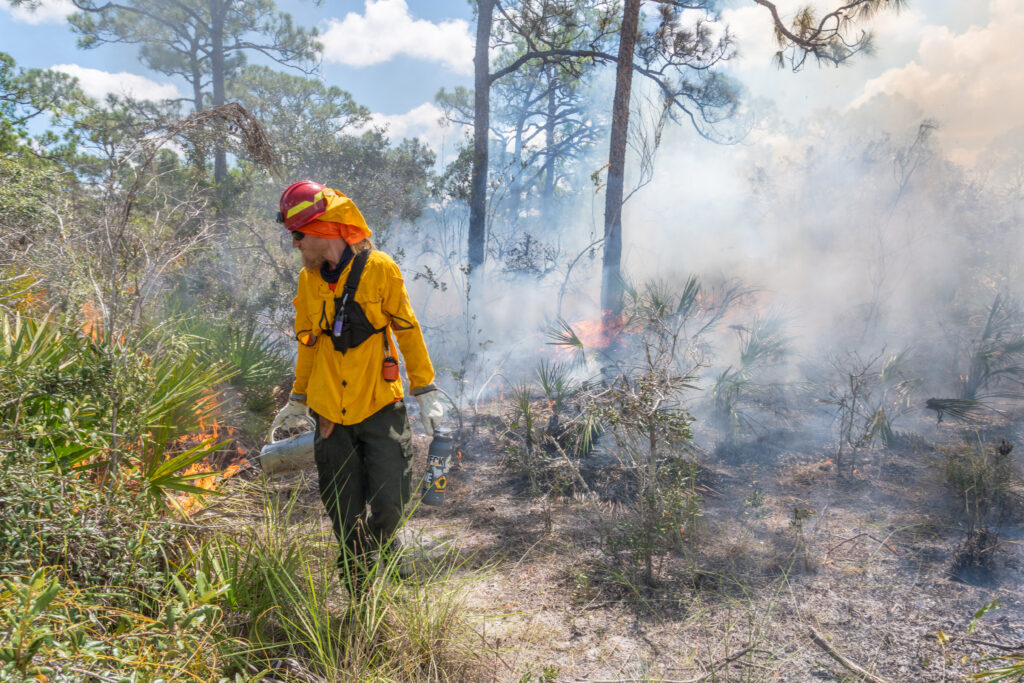
Fire can look like destruction to the untrained eye. But in Florida’s ecosystems, prescribed burns are essential. They renew the landscape, clear out invasive growth, and make space for native species to thrive. I’ve stood in smoldering pinelands as smoke curled skyward, only to return days later and find deer grazing on green shoots. I’ve seen frogs reclaim burned wetlands and red-shouldered hawks scanning the ground for prey. One morning, while surveying the charred ground after a recent burn, a powerful scene unfolded: two freshly shed, thick-bodied Eastern diamondback rattlesnakes engaged in courtship at the edge of a gopher tortoise burrow. It was a striking reminder of how deeply connected these species are, the tortoise providing shelter, the snakes courting in the cleared understory, and all of it made possible by fire.
These moments are wild, raw, and unforgettable. Fire doesn’t just reset the land—it reveals it.
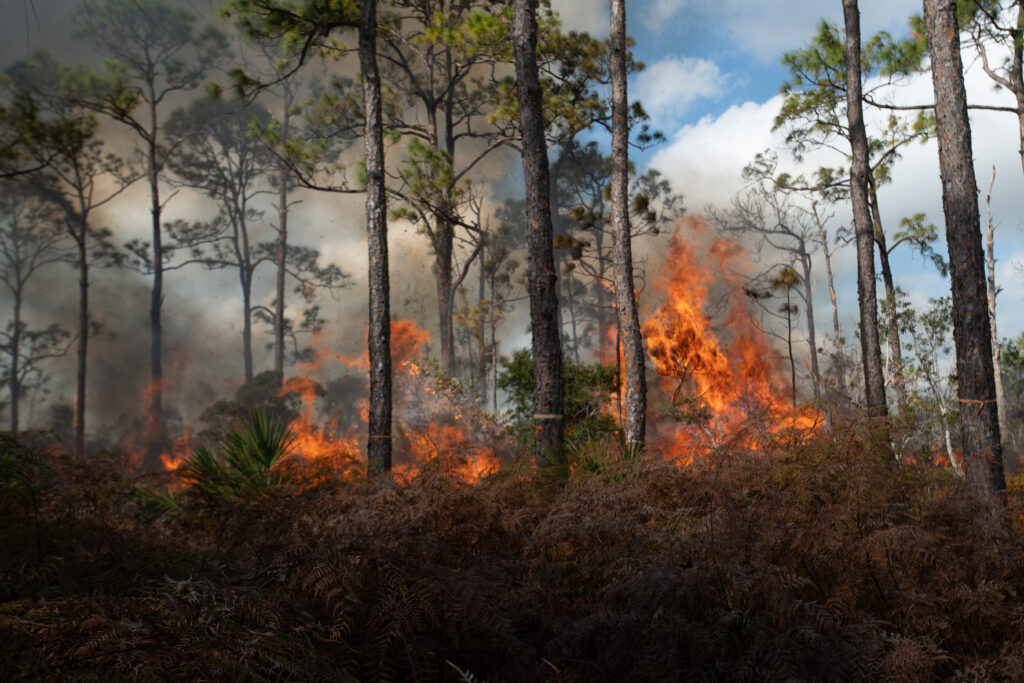
Photos by John Eder
When the Invaders Take Root
But not everything that grows back belongs.
Invasive species—both animal and plant—are constant battles. During my internship with the Conservancy of Southwest Florida, I worked with researchers removing Burmese pythons from the wild. Holding a 14-foot predator is sobering. It’s not just one snake, it’s what that snake represents: vanishing rabbits, missing bobcats, food webs out of balance. I’ve been fortunate to apply what I learned, most recently helping our team remove four invasive pythons from Southwest Florida natural areas this year.
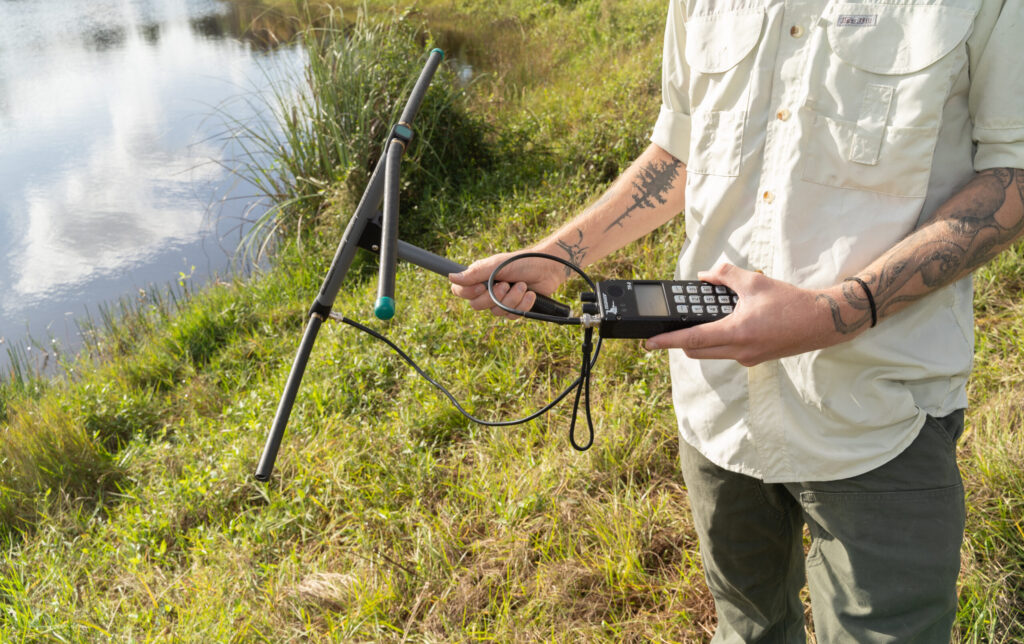
Invasive plants pose a quieter threat. Brazilian pepper (Schinus terebinthifolia) and air potato vines (Dioscorea bulbifera) may look lush, but they smother native plants, alter fire regimes by changing how often and how intensely fires burn, and create monocultures—areas dominated by a single species where native biodiversity can’t thrive. One of the most eye-opening parts of working at the Garden has been learning to read the vegetation. Seeing not just green, but what that green means.
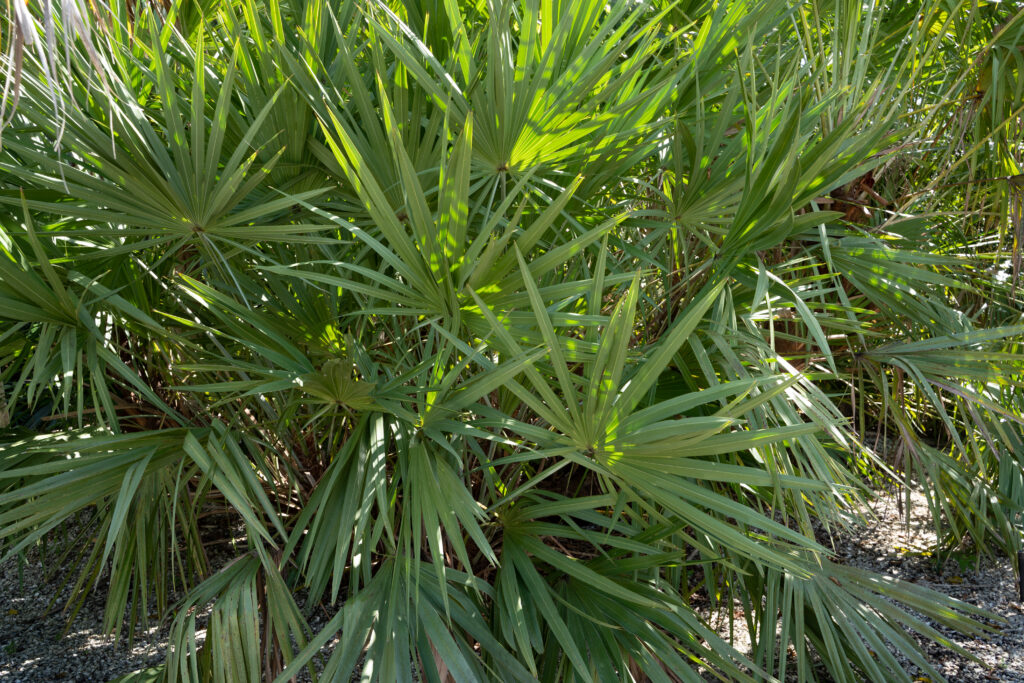
Through hands-on experience, I’ve come to understand how native plants like saw palmetto (Serenoa repens), sawgrass (Cladium jamaicense), and scrub oaks (Quercus spp.) form the backbone of the ecosystem. They feed pollinators, shelter wildlife, influence fire behavior, and hold habitats together. Protecting wildlife starts with protecting plants.
Learning from the Land
My journey into conservation didn’t begin at the Garden—it passed through classrooms, swamps, and even a beach in Costa Rica.
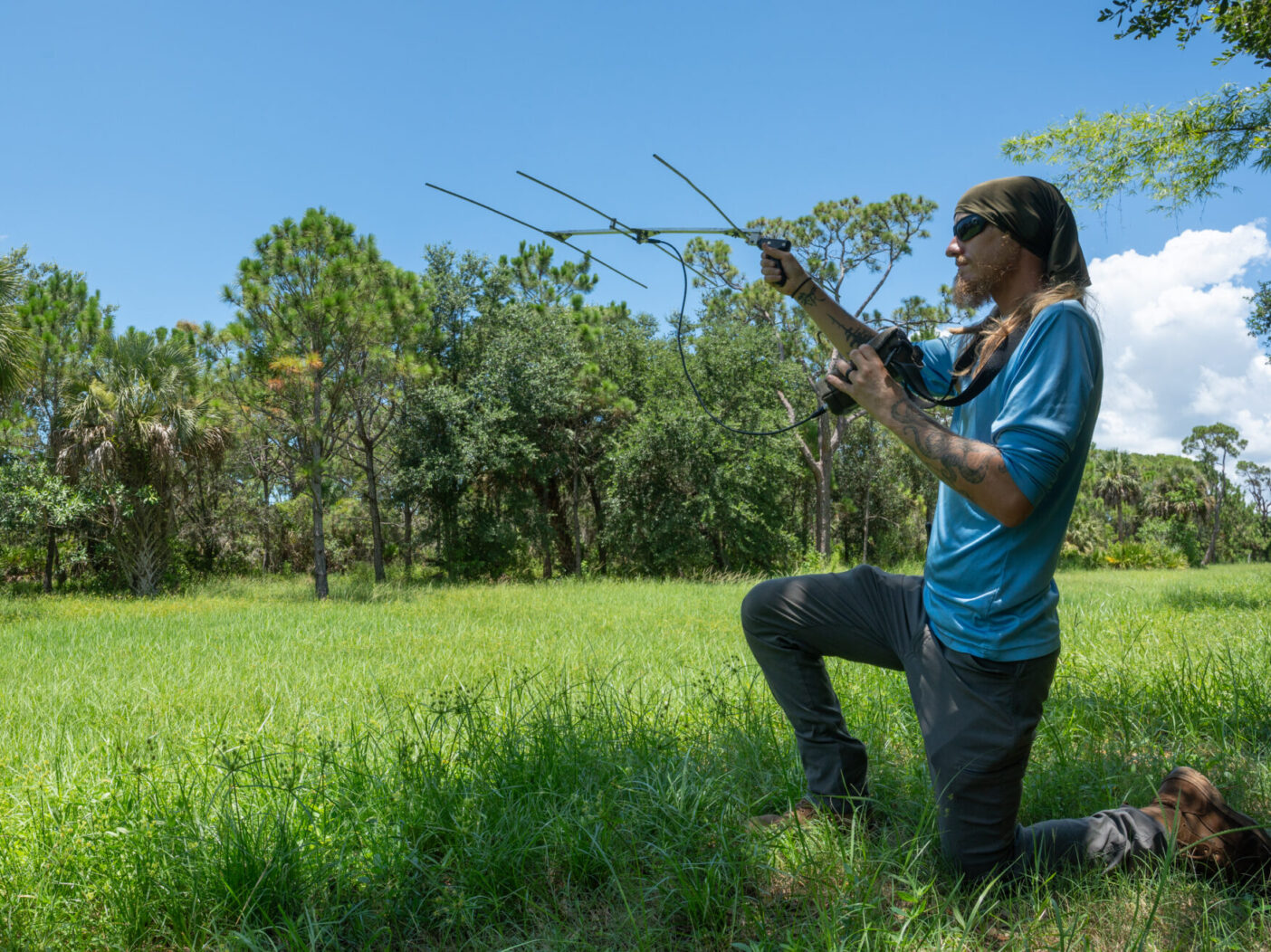
As a student at Florida SouthWestern State College, I studied freshwater turtles under the mentorship of biology professor Jordan Donini. We tracked Florida box turtles, Florida mud turtles, three-striped mud turtles, and diamondback terrapins across Southwest Florida. Before joining the staff, I was even part of a study tracking mud turtles released here at the Garden. That work led me to the Sanibel-Captiva Conservation Foundation, where I helped monitor Eastern indigo snakes and more turtle populations. Later, I studied abroad with Turtle Love in Costa Rica, assisting with sea turtle research—under stars, by red headlamp, seeing conservation at a global scale.
Each place taught me something different: how to listen, how to wait, how to respect the unpredictability of nature. Together, they grounded me in the science that supports what I do now.
From Management to Mission
I don’t regret my years in retail. They taught me how to lead, adapt, and stay calm under pressure. Patience under fluorescent lights turned into composure on a fire line; teamwork shifted from managing inventory to coordinating invasive species removal. But where I once tread across a polished floor, now I walk muddy trails. I’m not just learning the landscape. I’m helping shape it. With every gopher tortoise I spot, every native plant I protect, I see how fire, water, soil, and wildlife are woven together in ways I’m still learning to read.
Conservation isn’t just about saving what’s rare. It’s about restoring relationships. The Garden has become more than a workplace. It’s a living lab, a refuge, a reminder that healing the land can also heal something in ourselves. And, if you listen closely, beneath the crackle of pine needles and the hum of cicadas, you’ll hear it too: the wild calling back.
This article first appeared in the 2025 issue of Conserve, the Garden’s conservation magazine.