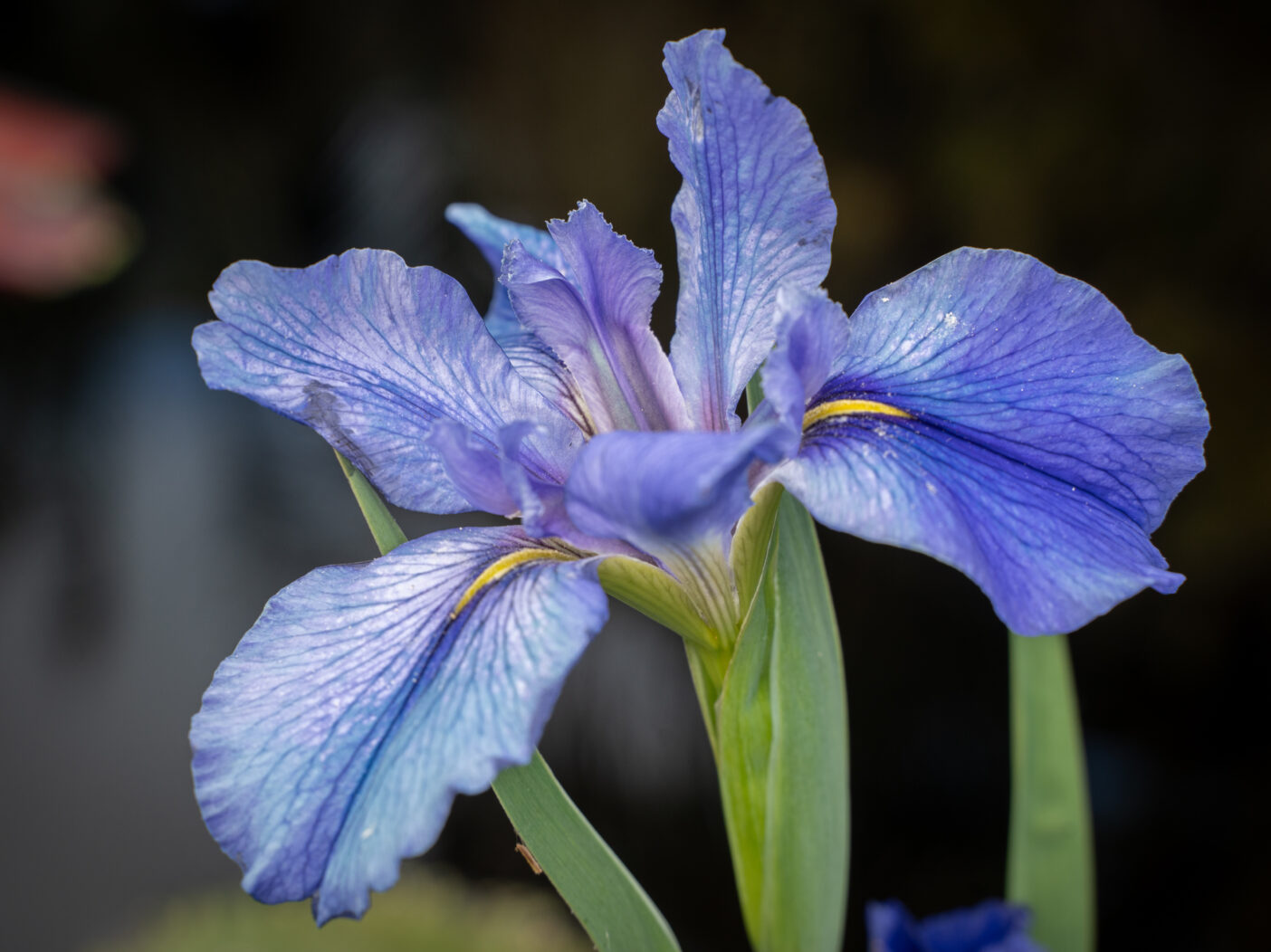
Across cultures and continents, blue is humanity’s most universally liked color. Maybe it’s because the shade reminds us of expansive sunny skies, twinkling nights, or the calming currents of our favorite oceans, rivers, and wetlands.
Yet, when you extend your gaze to the plant world, this popular hue is conspicuously sparse. Blue blooms—say that five times fast—are present on just 10% of species.
This is because flowers get their color from pigments they produce, and blue isn’t an easy color to conjure. Like a resourceful artist, plants blend pigments and chemicals to create the perfect azure shade.
The exact science of this process is a bit, well, in the weeds, but in the simplest terms, compounds known as flavonoids produce pigments. Different types of flavonoids are responsible for various color pigments. Anthocyanins are the largest group of pigment-producing flavonoids. They contribute to hues ranging from reds to purples to many in between.
Plants with anthocyanins don’t create a specifically blue pigment, but they can produce blue colors through a few ingenious methods. Sometimes, in defiance of basic color theory, a combination of yellow and red anthocyanins results in blue. Other times, anthocyanins must be paired with the presence of metals, like aluminum. The ratio of electrically charged atoms inside pigmented cells, specifically hydrogen and hydroxide, can also change anthocyanin hues to appear blue.
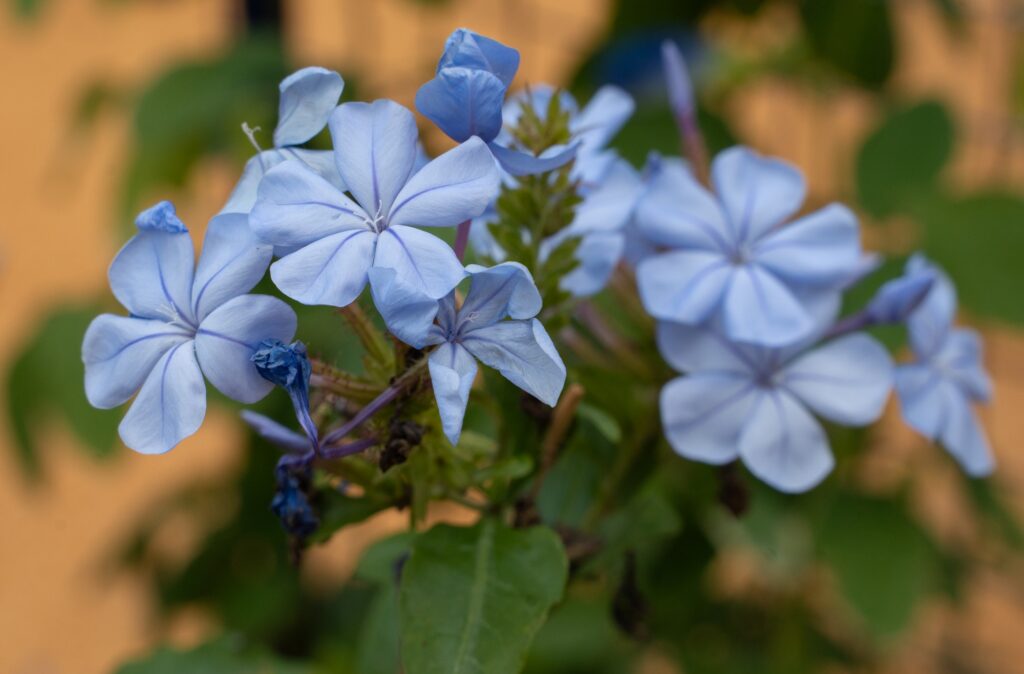
No matter the mechanics, blue flowers are worthy of admiration. Next time you are exploring the Garden, challenge yourself to spot a few of these rare blue-ties:
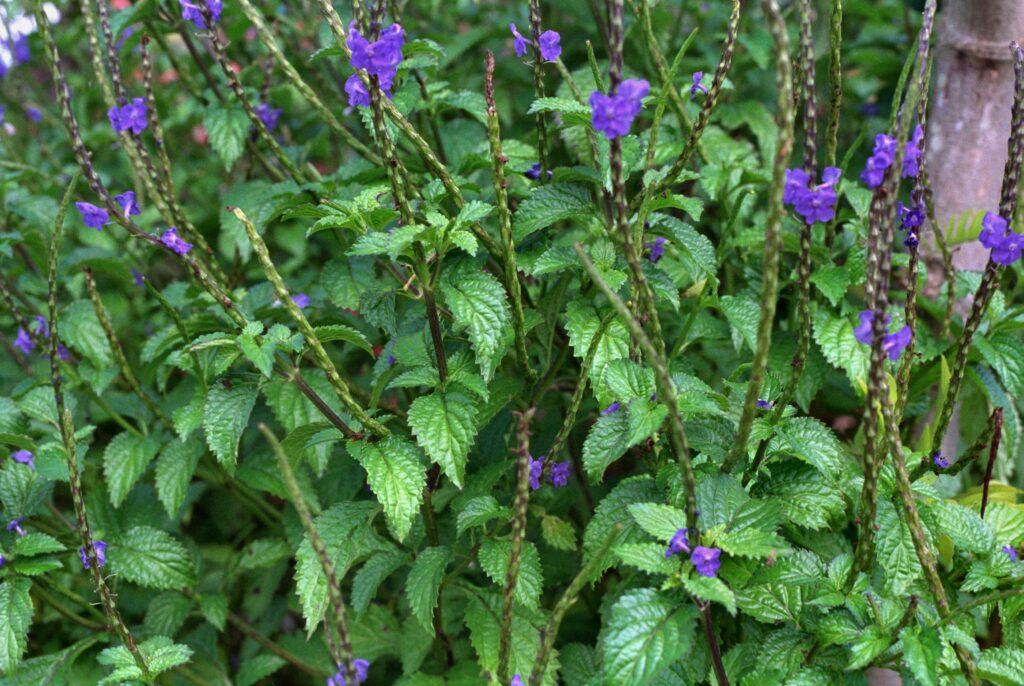
Blue porterweed (Stachytarpheta jamaicensis)
This evergreen groundcover is a native species that attracts hummingbirds, butterflies, and moths and can be found sprawling near sidewalks.
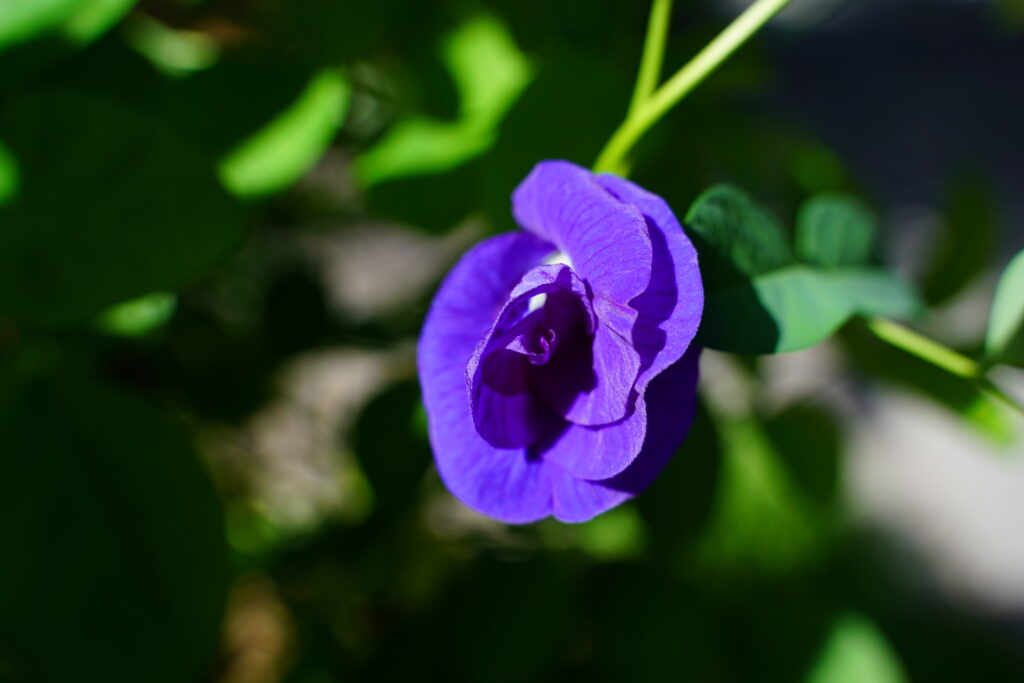
Butterfly pea (Clitoria ternatea)
While its native range isn’t fully agreed upon, this vibrant vine can be seen luring butterflies, moths, and birds in tropical regions around the world. Powder from the plant is a popular, edible blue dye that is used in teas and cocktails.
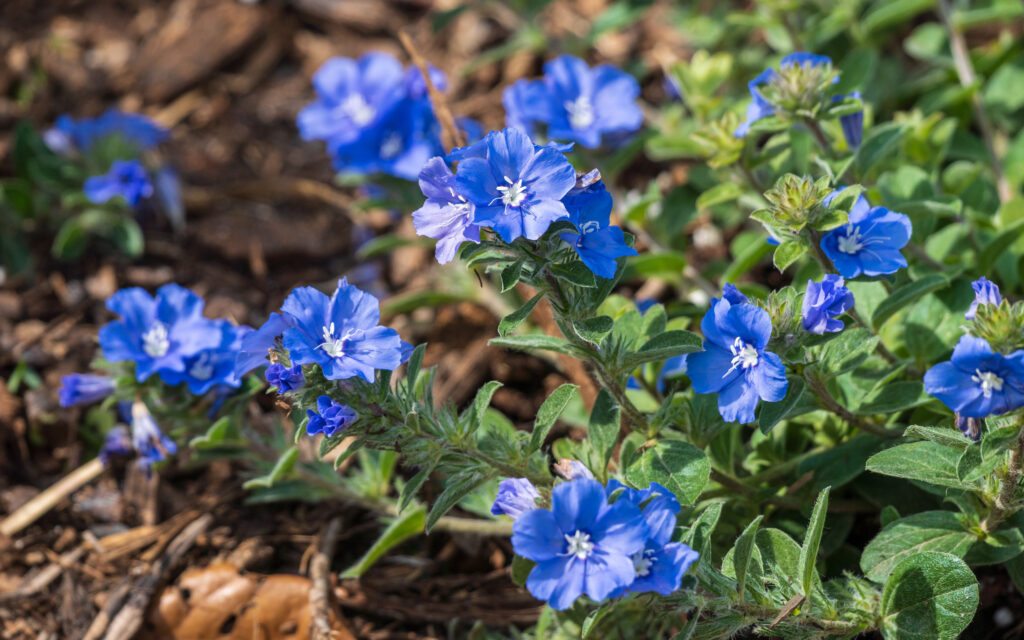
Blue my mind (Evolvulus glomeratus ‘Blue My Mind’)
Naples Garden Club Idea Garden
This dwarf cultivar of morning glory grows low in sprawling mounds and has flowers that often close at night and on cloudy days.
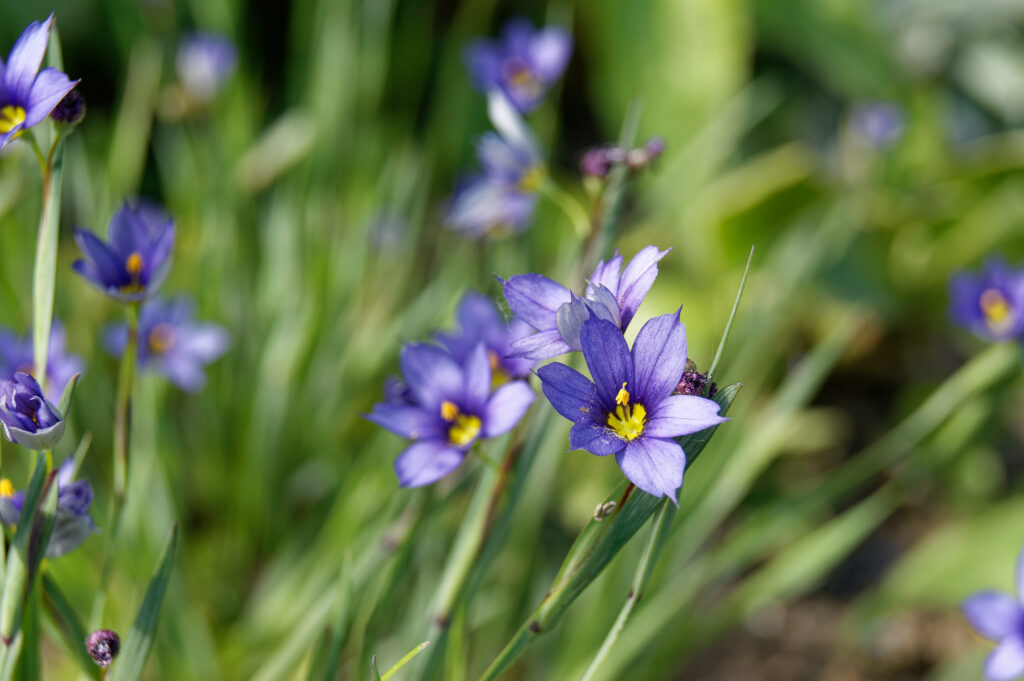
Blue-eyed grass (Sisyrinchium angustifolium)
This native spring bloomer is a groundcover that attracts bees and flies. The plant prefers wet environments like the Garden’s swamps.
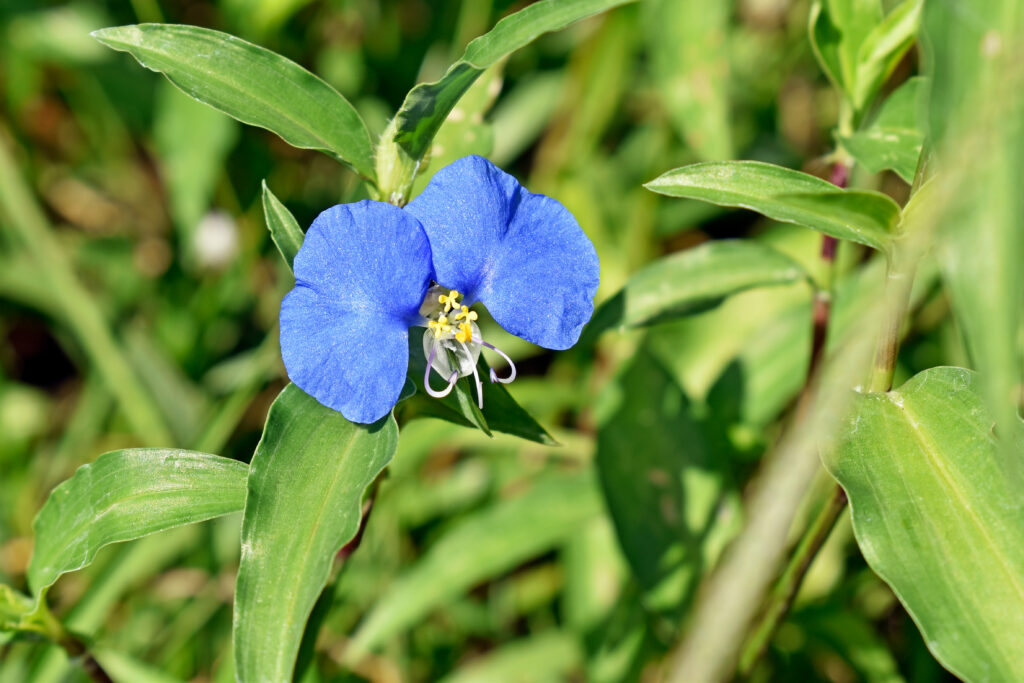
Dayflower (Commelina erecta)
This is a native plant that grows in the pine flatwoods or scrub ecosystems. It attracts pollinators, provides seeds for birds, and is sometimes a source of greens for hungry gopher tortoises.
Explore the botanical origin of pigments and purpose of floral hues, the use of color in landscape design, and much more at ChromaFlora, on display now – May 25, 2026.