
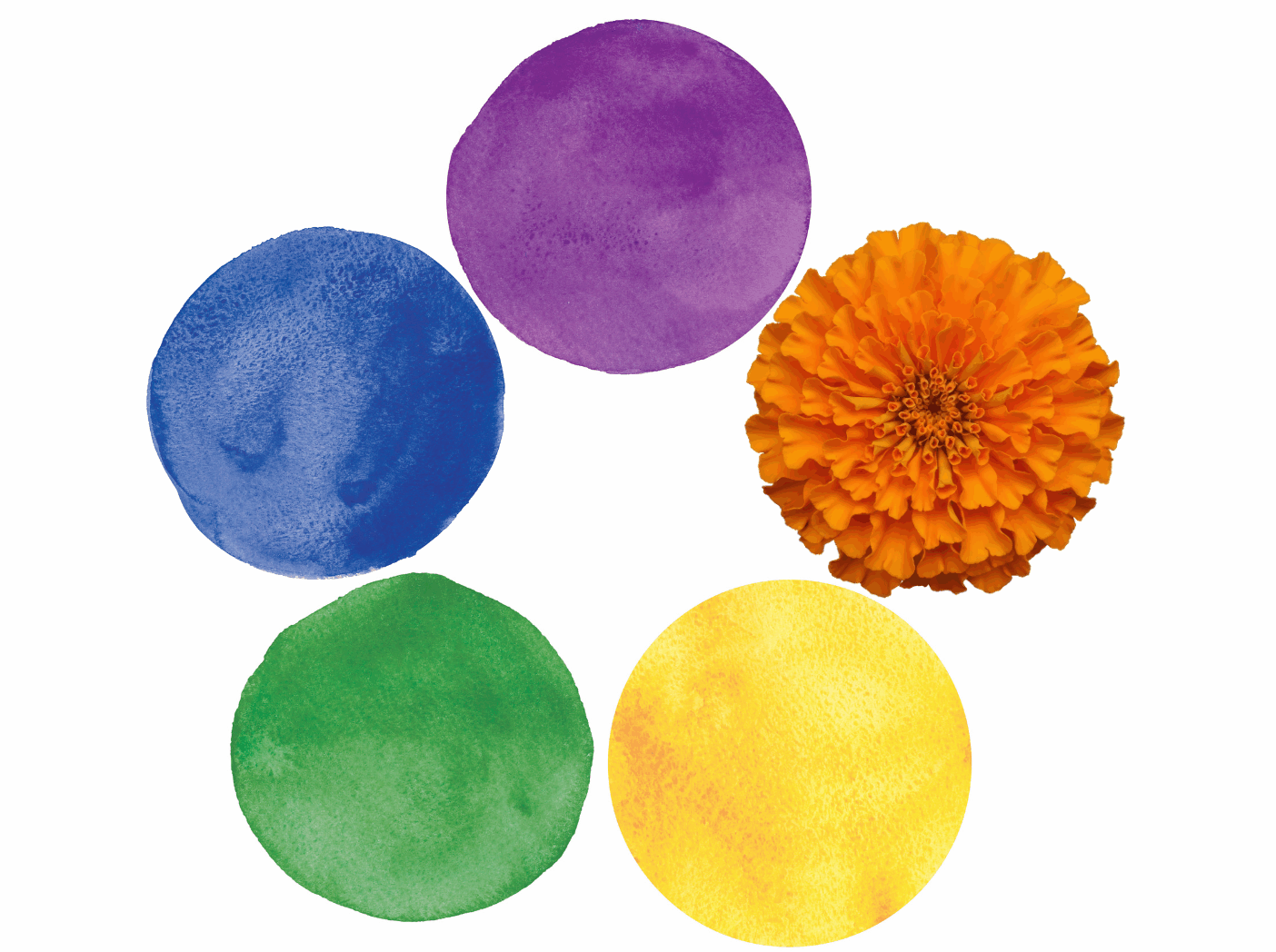
This winter, the Garden will burst into color with a new, staff-designed exhibition, ChromaFlora. While designing this upcoming exhibit, staff members involved continually found themselves asking “What is color?”
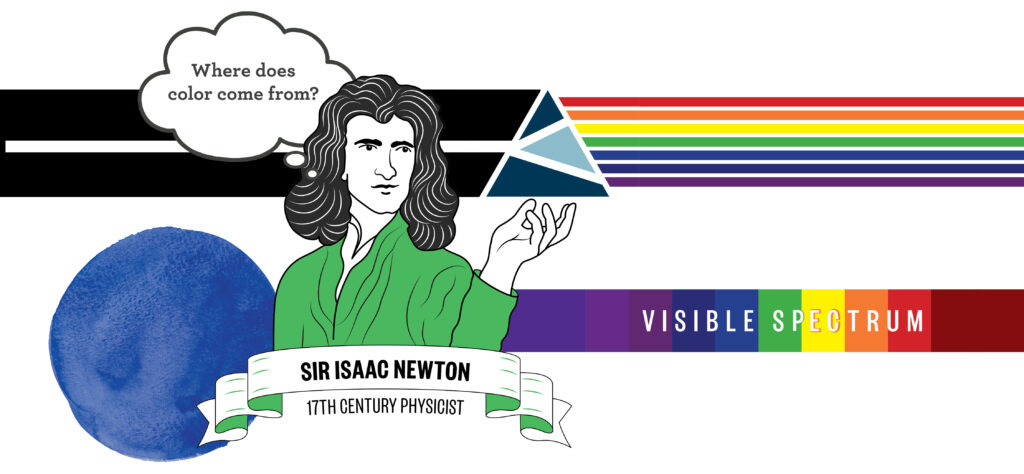
Color is in the eye—and mind—of the beholder. It is a function of how the brain interprets light that bounces off an object. In the 17th century, Sir Isaac Newton began experimenting with sunlight and prisms. When sunlight, or white light, enters a prism, the prism separates the white light into its components. These components—red, orange, yellow, green, blue, indigo, and violet—make up what is called the “visible spectrum.” The visible spectrum is the narrow portion within the electromagnetic spectrum that the human eye can see.
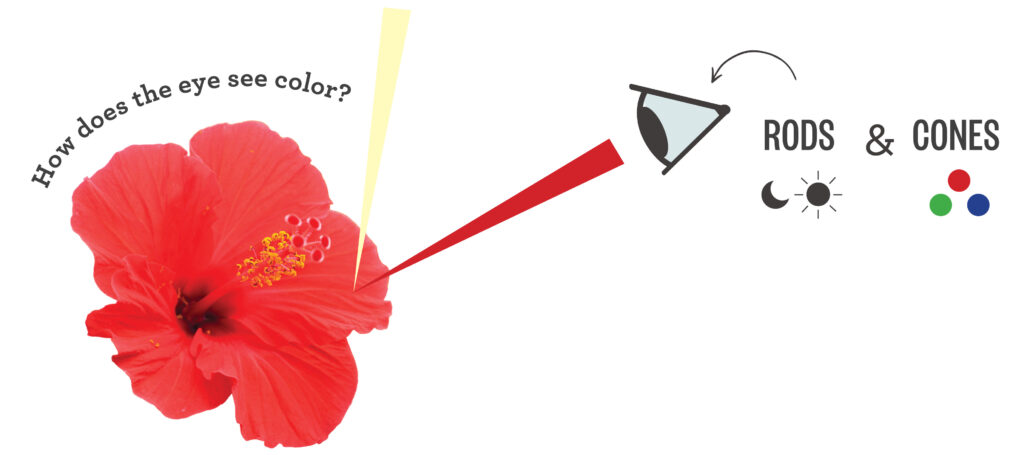
As light rays hit an object, the pigments in the object absorb certain wavelengths in the visible spectrum and reflect others. These reflected wavelengths are the colors you see. Within the human eye, there are millions of light-sensitive cells called rods and cones. These cells send signals to the brain along the optic nerve. Cone signals combine to form millions of hues.
How does the eye see color?
Do other species see color differently?
The number of color receptors varies between—and even among—species. Here, the numbers reflect the amount of receptors commonly associated with each species.
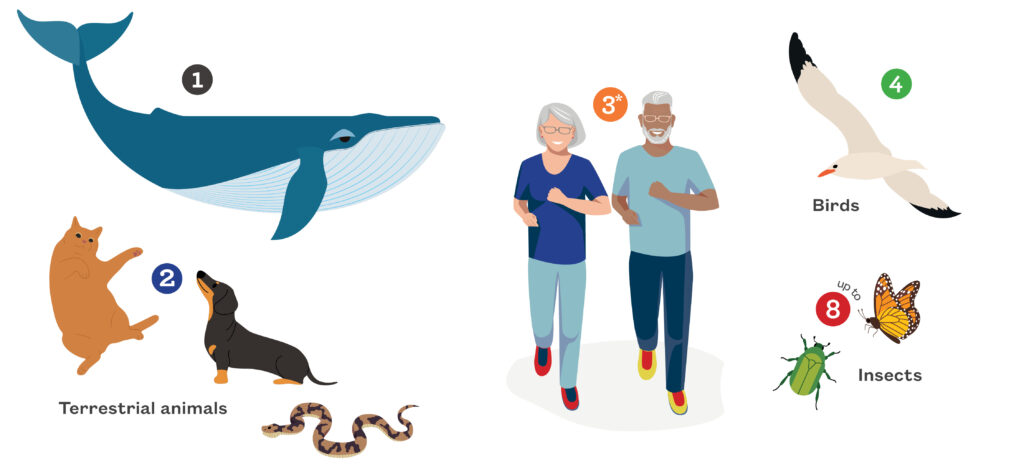
1 – Some marine animals have one color receptor and see the world in black and white. Others can see ultraviolet light.
2 – Terrestrial animals typically have two color receptors. Some animals, such as pit vipers, can see infrared light.
*3 – People have three color receptors. How humans see color can change if cones are missing, impaired, or interpret color atypically.
4 – Birds have four color receptors.
8 – Insects can have up to eight color receptors! Bees also can see in ultraviolet light.
Why do plants appear as different colors?
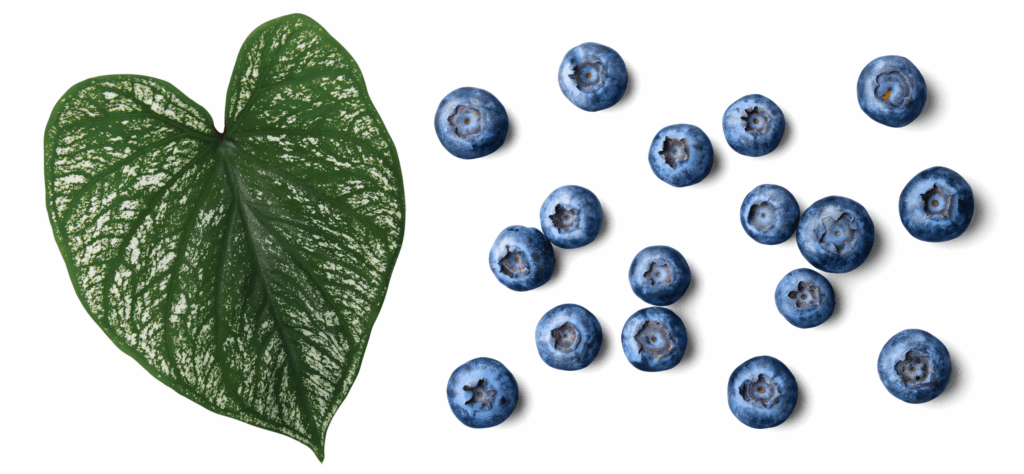
Leaves appear green because chlorophyll is the dominant pigment. Chlorophyll absorbs red, orange, blue, and violet light while reflecting green and yellow. Flavonoids are a family of compounds that produce a spectrum of colors. The most common types are anthocyanin, responsible for blues, violets, and reds and anthoxanthins, which create yellow. Carotenoids give us oranges, yellows, and reds—750 shades!
Why do plants change color?
Cold temperatures break down chlorophyll, allowing other pigments to become prominent. Soil acidity can change the color of Hydrangea blossoms. In acidic soil, the blooms are blue; in soil that is alkaline, Hydrangeas will be pink. Yesterday, today, and tomorrow (Brunfelsia pauciflora) blossoms begin as deep purple and fade to white as pigment degrades.
Explore the botanical origin of pigments and purpose of floral hues, the use of color in landscape design, and much more at ChromaFlora, on display January 24 – May 25, 2026.

This article first appeared in the Fall 2025 issue of Cultivate, the Garden’s magazine.