In 2025, the Garden introduced Nature Play, three kid-friendly spaces that beckon our youngest guests outdoors for adventures filled with creativity and imagination. Now, as a result of more than $3.8 million raised during the 22nd Annual Hats in the Garden, including the 2026 Fund-a-Need initiative, Nature Play: Harmony Ever After, the wonder continues to blossom. This next chapter will introduce music and artistic expression into the landscape in thoughtful and engaging ways—through hands-on discovery, outdoor instruments, and a Creative Artist-in-Residence program.
Here’s more in the Fall 2025 issue of Cultivate, the Garden’s magazine, on the origins and philosophy behind Nature Play.
When you are busy and wise to the world (read: a grown-up), a fallen flower is just that. A fallen flower.
When you are wide-eyed and new to the world (read: a child), well, that fallen flower might be a teacup, a fairy’s bed, a magic hat.
The same holds true for a climbing rock (Pirate ship? Mountain? Castle?) or a craggy tree trunk (Bridge? Fort? Truck?).
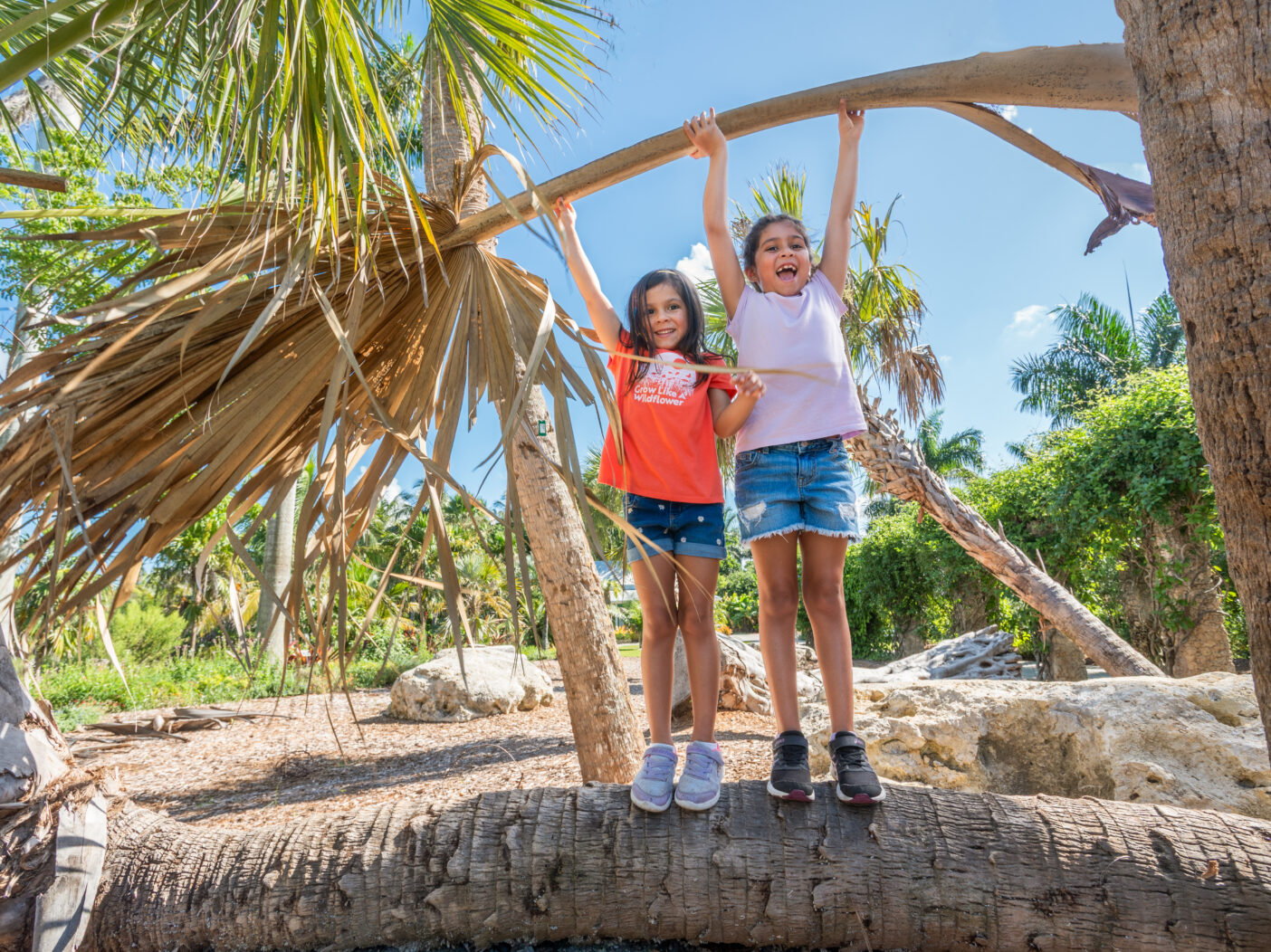
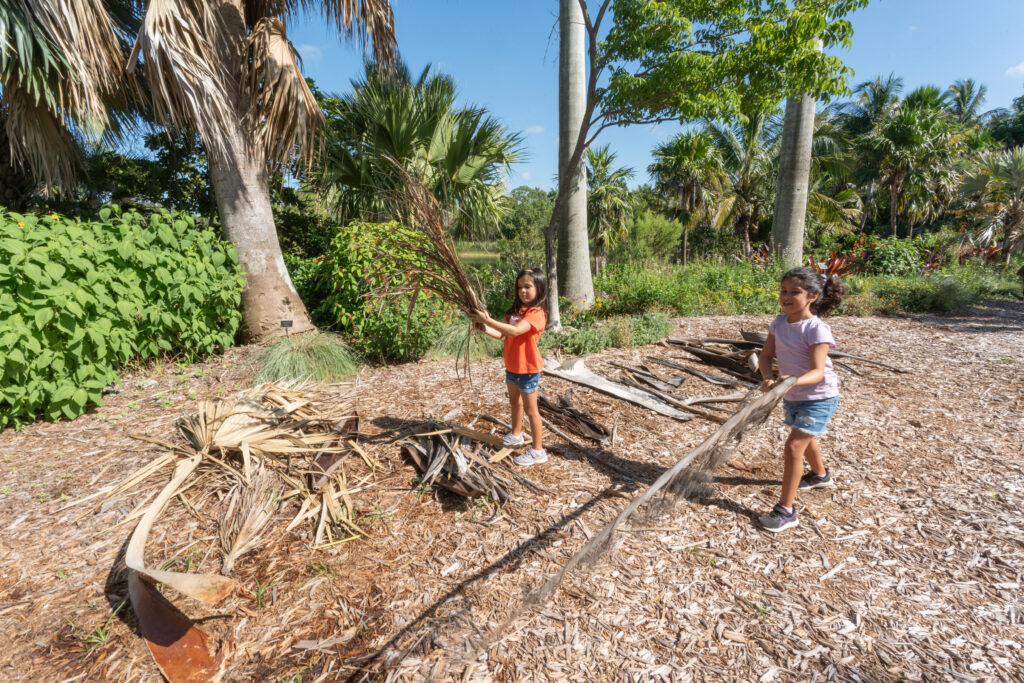
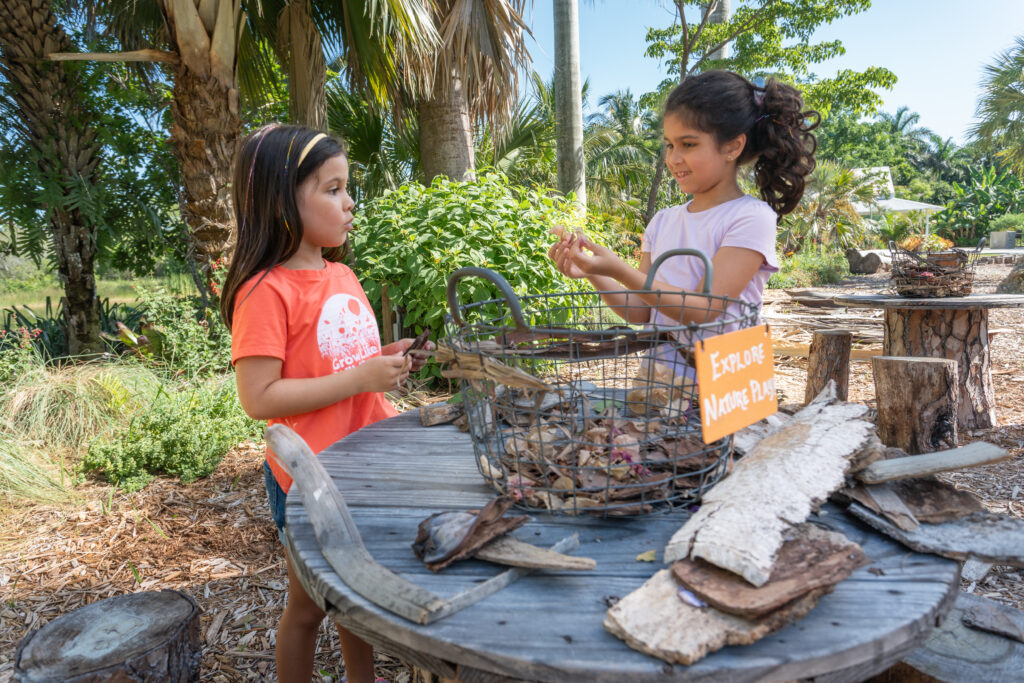
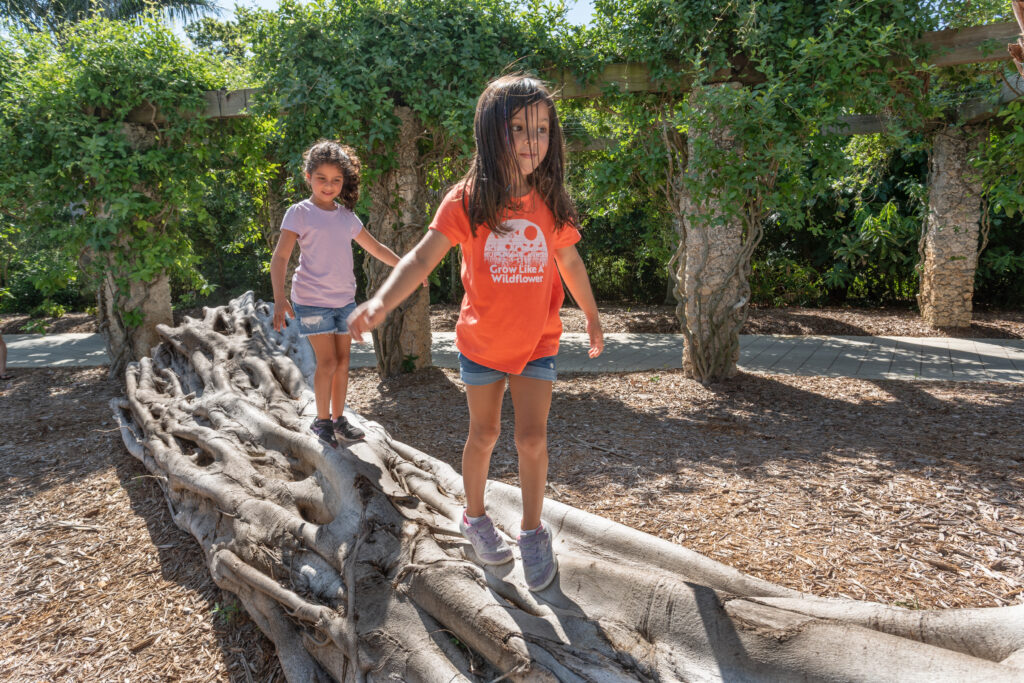
The Garden recently introduced Nature Play, three play spaces featuring elements such as stumps, trunks, and rocks, for climbing and balancing; “found objects,” including blossoms, palm fronds, bamboo stalks, sticks, and leaves for tinkering; and kid-sized tables and stools hand-crafted by our staff from tree stumps.
Photos by John Eder.
The new features transport Vice President of Education Britt Patterson-Weber, who oversaw Nature Play’s creation, back to her own childhood.
“I remember playing in a mangled maple tree root that was pulling up the sidewalk,” she reminisces. “It happened to collect little puddles in the roots, and I would bring things like my LEGO mini figures and some flowers out there and would create a story.” Whether playing independently or with other neighborhood kids, Patterson-Weber remembers long hours spent outdoors with minimal adult intervention.
But this kind of imaginative, independent play is no longer the norm. Researchers point to two key moments that sparked a rescripting of childhood.
In the 1980s, the National Child Safety Council and dairy distributors began printing photos of missing children on milk cartons. The campaign, though well intended, resulted in a loss of independence for young people. Parents replaced free-range, outdoor play with adult-led activities, such as youth sports. While such experiences impart important lessons, they don’t foster the same kinds of skills as unscripted play. Researchers warn that kids are lagging in their abilities to make decisions, solve problems, and manage peer-to-peer interactions.
Then, in 2007, the iPhone debuted. Childhood moved indoors and shrunk to the size of a cellphone screen.
Heavy technology use has impacted everything from physical development to socialization to creative thinking to mood, researchers warn. Kids are less likely to clamber up rocks, hills, and stumps—limiting balance, muscle development, and risk-taking. They don’t manipulate physical objects as often, affecting fine-motor skills. Researchers such as psychologist Jonathan Haidt, author of “The Anxious Generation,” fault technology for a surge in depression and anxiety among teens and young adults.
Children have also withdrawn from nature. Richard Louv, author of “Last Child in the Woods,” coined the term “nature deficit disorder” to describe the human costs of this alienation from nature. He argues children need outside time just as much as they need proper nutrition and adequate sleep.
That’s where Nature Play comes in.
Garden leaders plunged into child development research and toured nature play spaces throughout the country. These take many forms, but all encourage unstructured, child-directed play that takes place in nature and with nature. It’s what generations past might have called, more simply, “playing in the woods.”
“When you give kids that opportunity, they’re all over it,” says Patterson-Weber. She says they seem to have an innate understanding of how to play on natural elements.
What is Nature Play?
Nature Play is unstructured, child-directed play that takes place in nature and with nature. Although simple in appearance, these researched-backed play areas counter today’s technology-heavy, sedentary lifestyles and encourage tremendous physical, social, and emotional development in children.
Through nature play, children gain:
- Balance, coordination, and strength
- Fine motor skills
- A willingness to take risks
- Imagination and creative thinking
- Emotional well-being and reduced anxiety
- Social development and collaborative problem-solving
- Family bonding and memory making
Since the Garden introduced Nature Play last winter, thousands of families have explored the areas. Among them are Members Maulik and Jess Patel and their daughters, Nisha, 5, and Avaani, 7.
“This allows them the opportunity to touch and explore and jump and move,” says Jess Patel, who shares how the girls have interacted with the new features.
Her younger daughter, “obsessed” with anything kitchen-related, promptly transformed the treetrunk tables into a restaurant and the assemblage of flowers, leaves, sticks, and fronds into food during her first visit to Palm Hop, an expansive play area on the Kapnick Caribbean Garden lawn. “She’s big into imaginative play,” Patel says.
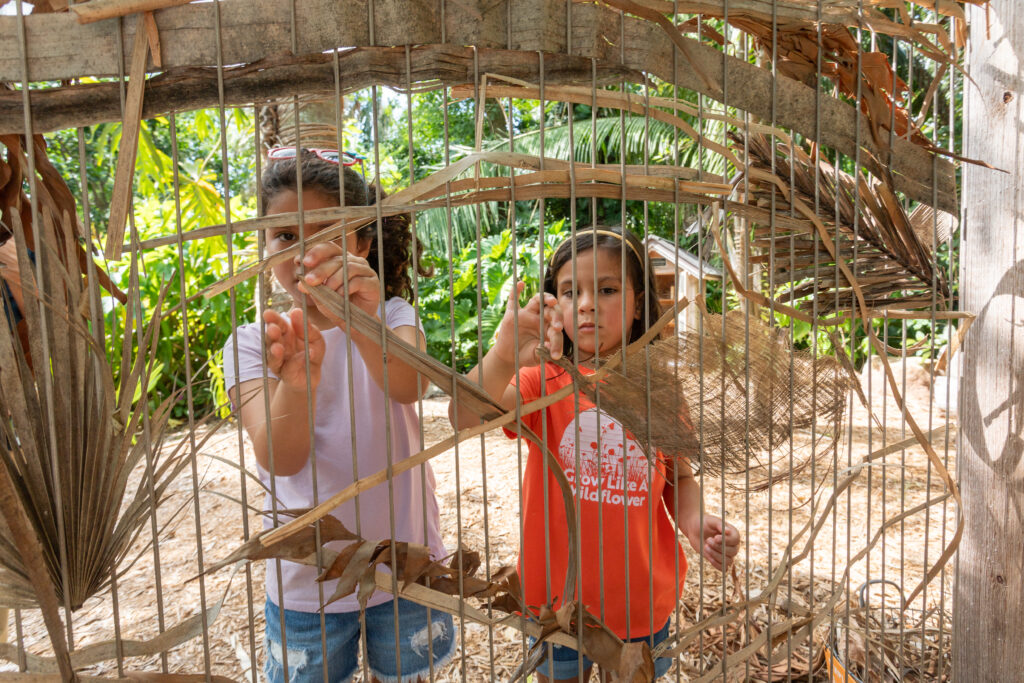
Those “loose parts” have proven to be the most utilized feature of Nature Play, Patterson-Weber says.
“Something like two-thirds of the groups that went through used them,” she says.
Garden educators and trained volunteers routinely observe the play spaces to understand how kids interact with various features. The educators witnessed tea parties and the making of floral arrangements (inspired by the Naples Flower Show & Garden Market). Once, they overheard a trio of children making a “fort” for their imaginary bunny friend. Educators have even seen teenagers weaving botanical items into flower crowns.
They’ve also noticed that children seem drawn to the “stair steppers” in Palm Hop, a set of lowlying but uneven stumps. Small children often work to cross them without adult assistance, developing balance, coordination, and healthy risk taking.
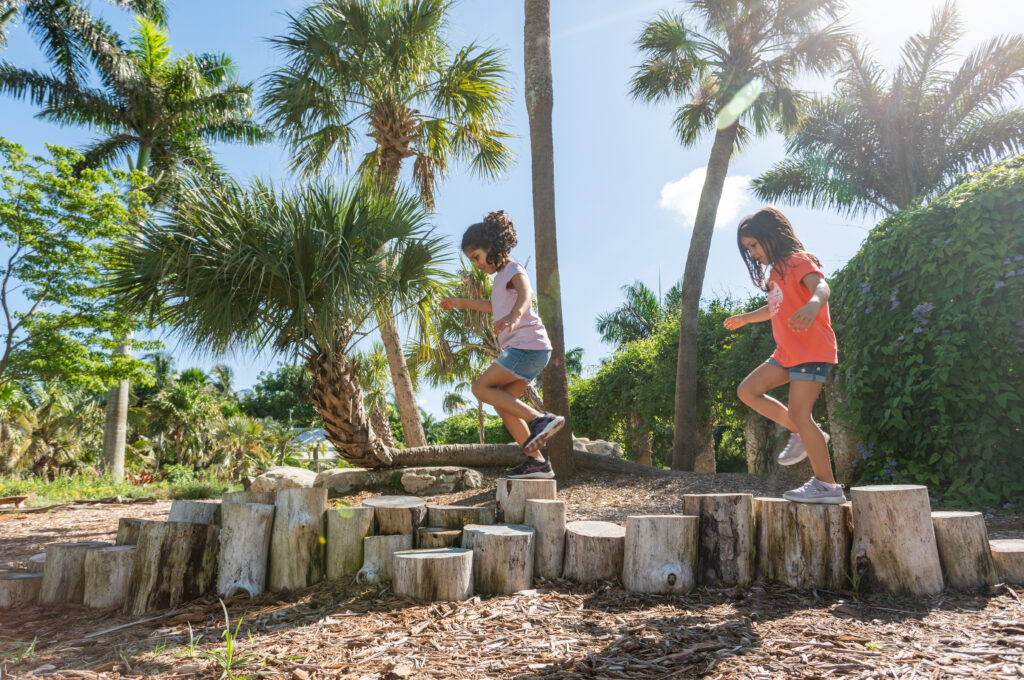
“They love to go back and forth and back and forth,” Patterson-Weber says. “Especially if you’re little, it’s challenging.”
The educators’ observations will guide future additions to the Nature Play spaces.
Nature Play attracts multigenerational crowds. Many family groups visiting the spaces include grandparents, who seem to relate to the unfettered play style, the norm when they were kids.
Patel, likewise, notes that both children and adults might learn to see everyday natural objects in a new light.
“(Nature Play),” she says, “is making them see the world in a different way—or showing us how to see the world in a different way by watching what they do.”
Nature Play at Naples Botanical Garden
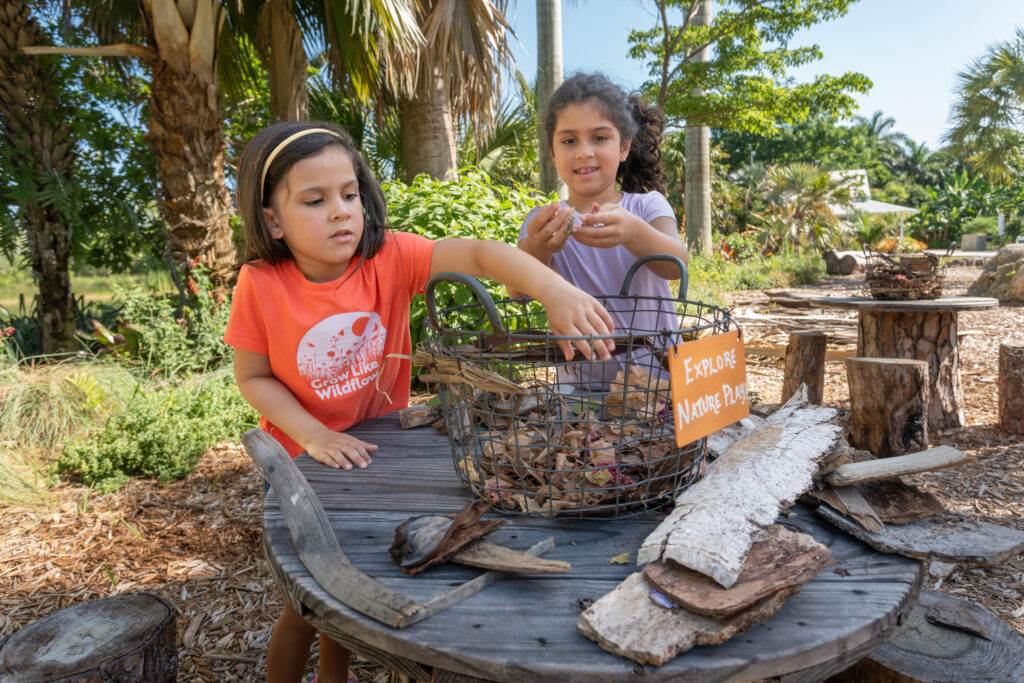
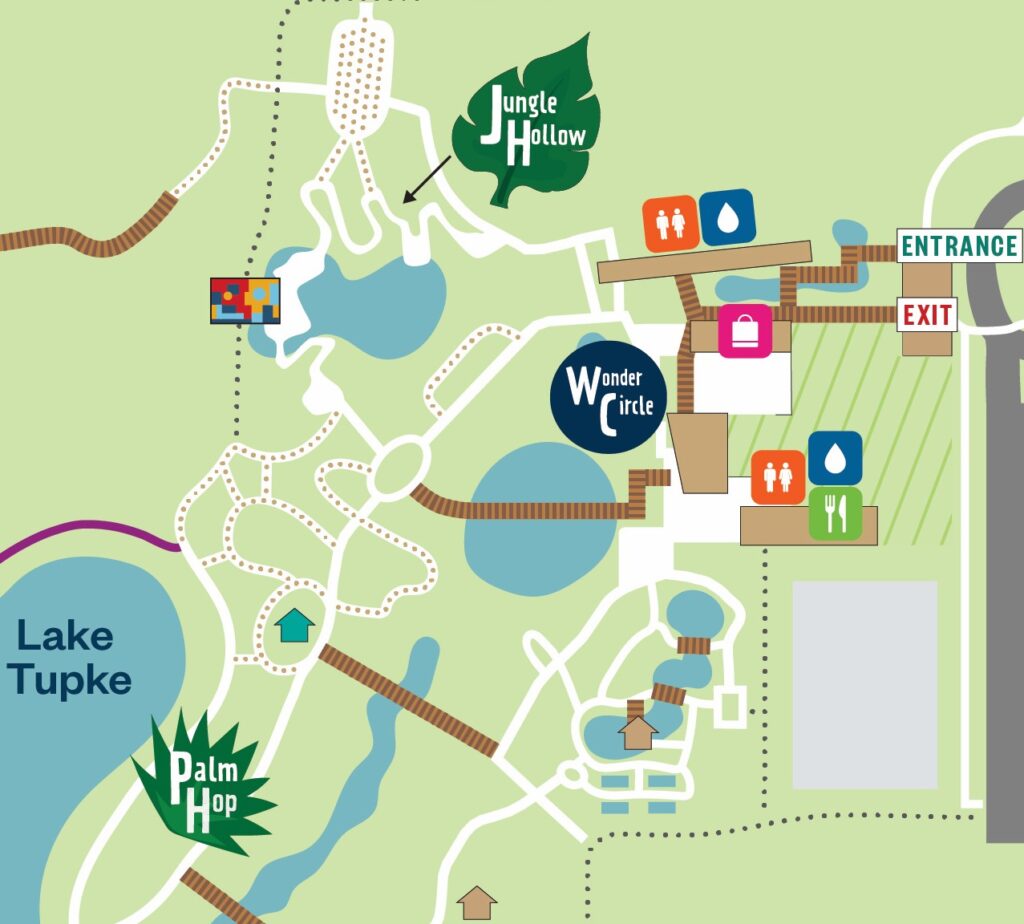
Palm Hop
A felled ficus, craggy rocks, and stair-like stumps beckon young adventurers to test their physical prowess in the Kapnick Caribbean Garden. Baskets filled with nature’s equivalent of a craft closet—bark, blooms, sticks, palm fronds, and fallen leaves ready to be transformed into playthings.
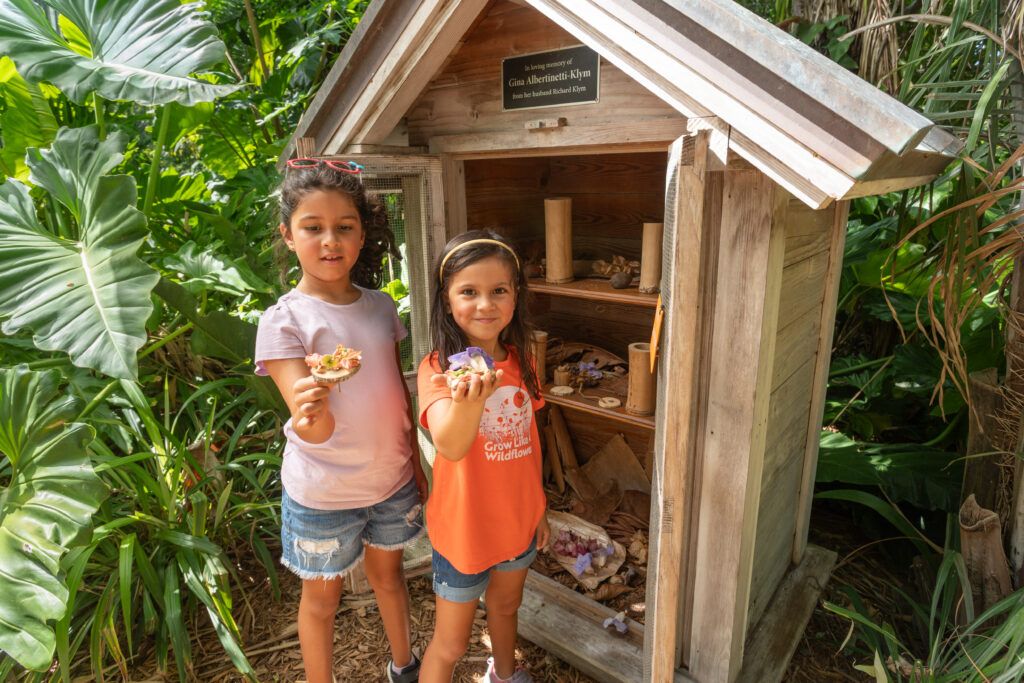
Jungle Hollow
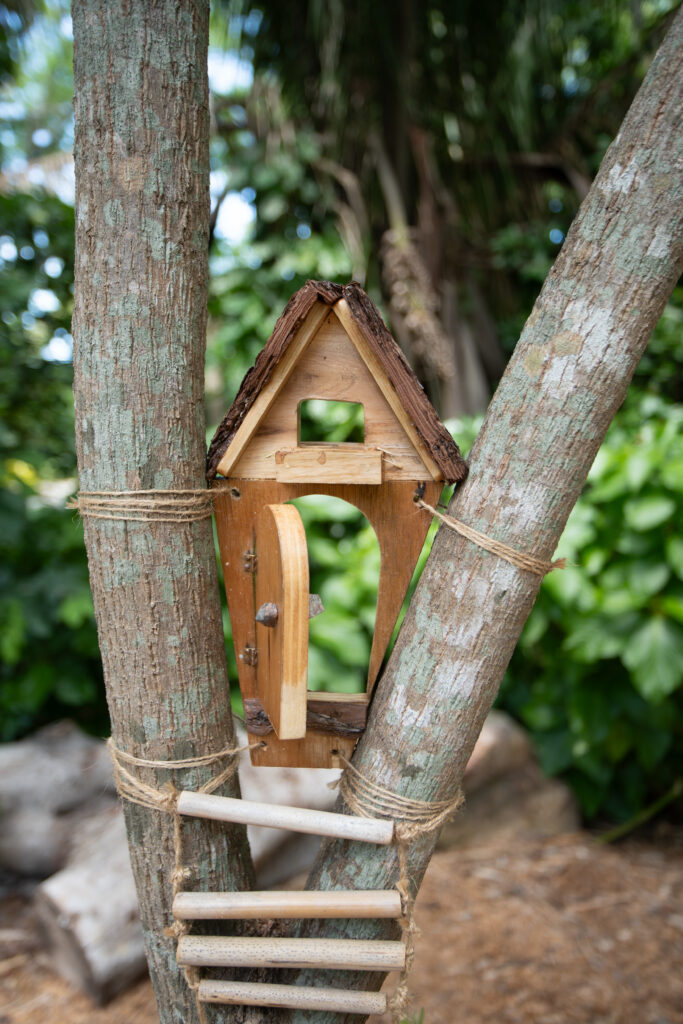
Entering this thicket in the Kapnick Brazilian Garden is like stepping into a magical world. Children will discover a curio cabinet filled with botanical treasures, a fairy door, and plenty of nooks and crannies. Kids and parents can contribute to a tapestry of woven fronds, leaves, and flowers using our staff-made nature looms.
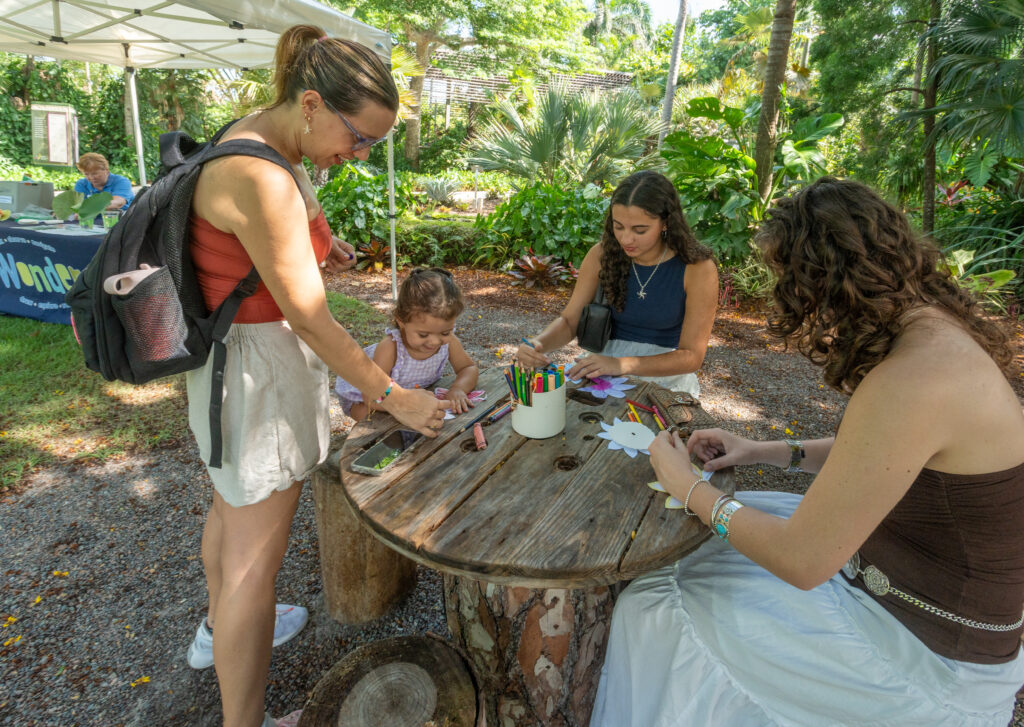
Wonder Circle
The Garden’s popular W.O.N.D.E.R. (Walk, Observe, Navigate, Draw, Explore, Read) program has moved to this shady spot on the Performance Lawn where families can participate in educator-led botanical crafts, games, and enrichment activities.
This article first appeared in the Fall 2025 issue of Cultivate, the Garden’s magazine.